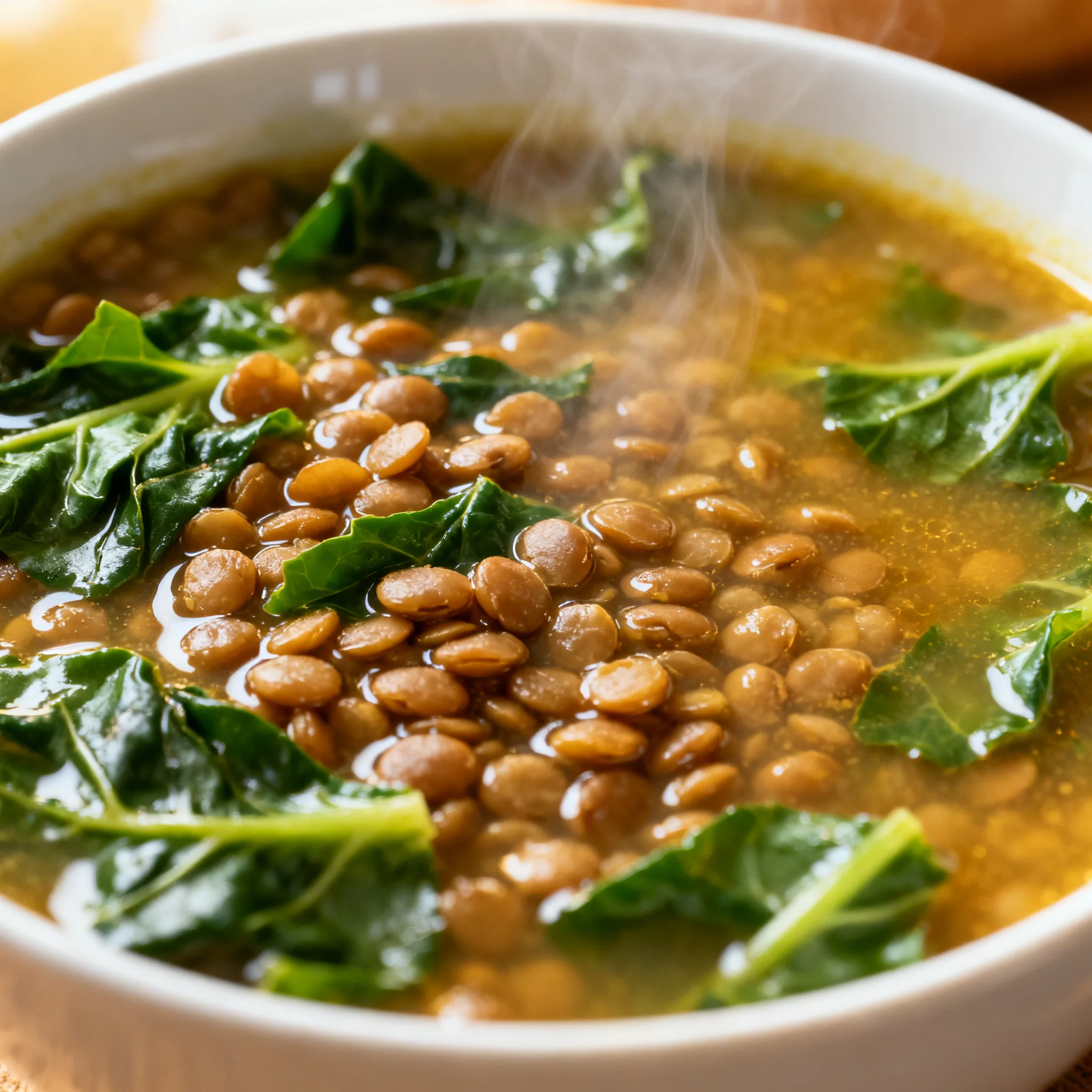
Lucky Lentil and Collard Greens Soup
This lentil and collard greens soup recipe leans on the old New Year's trick of eating your way to good fortune: lentils standing in for coins, collard greens for folded bills, all simmered low until the kitchen smells like the year is starting out right. The part most versions get wrong is the greens. Dump the stems and leaves into the pot at the same moment as the lentils, and you end up with beans gone to mush and collards the color and texture of a wet dishrag by the time dinner's ready.
If a pot that simmers itself into dinner is your kind of weeknight, this one sits right alongside my other slow-built soups and stews for cold weather.
Collard stems are basically a root vegetable hiding inside a leafy green. They're fibrous and take nearly as long to soften as dried lentils do, so they belong in the pot early, chopped small. The leaves are a different story: thin, quick to wilt, and only a few minutes away from falling apart if you let them simmer the whole time. Treat the two parts of the plant separately and the whole pot comes together instead of fighting itself.
What you get is a broth that's a little smoky, lentils that still hold their shape on the spoon, and greens with real backbone left in them. It tastes like a soup that was built in stages, because it was, and that's exactly what makes it worth the extra few minutes of chopping.
PrintLucky Lentil and Collard Greens Soup
A smoky, hearty lentil and collard greens soup built for a lucky New Year’s dinner or any cold weeknight.
- Prep Time: 15 minutes
- Cook Time: 45 minutes
- Total Time: 1 hour
- Yield: 6 1x
- Method: Stovetop
- Cuisine: American
Ingredients
- 2 tablespoons olive oil
- 1 small yellow onion, diced
- 2 carrots, diced
- 2 celery stalks, diced
- 1 bunch collard greens, stems chopped small and leaves chopped separately (about 6 cups chopped leaves)
- 4 cloves garlic, minced
- 8 ounces diced ham or sliced smoked kielbasa (optional)
- 1 cup dried brown or green lentils, rinsed
- 1 bay leaf
- 1 teaspoon smoked paprika
- 1/2 teaspoon ground cumin
- 6 cups chicken or vegetable broth
- 1 can (14.5 ounces) diced tomatoes
- 1 tablespoon apple cider vinegar
- Salt and black pepper, to taste
Instructions
- Heat the olive oil in a large Dutch oven or heavy soup pot over medium heat. Add the onion, carrots, celery, and the chopped collard stems. Cook for 6 to 8 minutes, until the onion is soft and translucent.
- Add the garlic and the ham or kielbasa, if using, and cook for 1 to 2 minutes, until fragrant.
- Stir in the lentils, bay leaf, smoked paprika, cumin, and broth. Bring to a boil, then reduce the heat to a gentle simmer. Cook uncovered, stirring occasionally, for 20 to 25 minutes, until the lentils are just tender but still holding their shape.
- Stir in the chopped collard leaves and the diced tomatoes. Simmer for another 8 to 10 minutes, until the leaves are tender but still bright green.
- Remove the pot from the heat and discard the bay leaf. Stir in the apple cider vinegar, then season with salt and pepper to taste.
- Ladle into bowls and serve hot.
Notes
Chop the collard stems small, no bigger than a diced carrot, so they soften in the same time as the lentils. For a smokier broth without meat, stir in a few drops of liquid smoke with the broth in step 3.
Why Cooking the Collards in Two Stages Makes This Soup Work
Brown or green lentils are the right choice here, not red or yellow. Red lentils break down fast and would turn this into more of a dal than a soup, while brown and green lentils hold their shape through a 20 to 25 minute simmer, so you still get a spoonful of distinct beans instead of silt at the bottom of the bowl.
Holding back the acid matters just as much here. The diced tomatoes and the splash of cider vinegar go in with the greens near the end, not with the lentils at the start. Acidic ingredients slow down how fast legumes soften, which is why some lentil soups stay a little chalky in the center even after half an hour on the stove. Let the lentils simmer in plain broth first, then bring in the tomatoes once they’re already tender.
I pull the pot off the heat the moment the collard leaves have gone fully tender but are still bright green, closer to spinach after a quick wilt than to the long-braised, olive drab greens you’d cook all afternoon. That color is the cue that the timing worked.
The Pot, the Heat, and Why a Rolling Boil Ruins the Lentils
A heavy Dutch oven or a wide soup pot works better here than a tall, narrow one. The extra surface area means the collard leaves wilt down evenly instead of steaming in one clumped mass sitting on top of the broth.
Keep the lentils at a gentle simmer, not a rolling boil. A hard boil knocks the lentils against the pot and each other, which is what causes them to split and go mushy at the edges while the centers stay firm. Medium-low heat is usually right once the broth comes up to temperature, just enough to see small bubbles breaking the surface rather than big ones rolling.
Chop the collard stems small, no bigger than a diced carrot, so they’re actually tender by the time the lentils are done. Leave them in long ribbons and they’ll stay tough no matter how long the soup simmers.
Storing and Reheating Lentil and Collard Greens Soup
Let the soup cool slightly and get it into the fridge within 2 hours of cooking. It keeps well for 3 to 4 days in an airtight container, and the flavor is honestly better on day two, once the garlic and smoked paprika have had time to settle into the broth.
Reheat it gently on the stovetop over medium-low heat, stirring occasionally, until it reaches 165°F throughout. The lentils keep absorbing broth as the soup sits, so stir in a splash of water or extra broth if the pot looks thicker than you’d like before serving.
For longer storage, freeze it in airtight containers and thaw it overnight in the fridge before reheating on the stove the same way.
Swaps for a Vegetarian, Spicier, or Heartier Pot
For a vegetarian version, skip the ham or kielbasa and use vegetable broth in place of chicken broth. Stir in an extra pinch of smoked paprika, or a few drops of liquid smoke, to keep some of the smoky backbone the pork would normally bring.
- Swap the collard greens for curly kale or mustard greens if that’s what you have on hand; kale wilts faster, so add it in the last 5 minutes instead of 8 to 10.
- Stir in a cup of cooked rice or diced potatoes near the end for a heartier, stew-like pot.
- Add a pinch of crushed red pepper or a diced jalapeño with the onions if you want more heat in the broth.
The soup is naturally gluten-free and dairy-free as written. Just check the label on whatever smoked sausage or kielbasa you use, since some brands include fillers that contain gluten.
What to Serve With Your Lucky Soup
A big pot of soup wants something crisp on the side. Try this easy homemade salad with fresh ingredients, tossed with this basil pesto vinaigrette if you want something brighter than a plain dressing.
Frequently Asked Questions
Why is lentil and collard greens soup considered lucky?
It comes from an old New Year's tradition where lentils are thought to represent coins and collard greens represent folded paper money, so eating them together is supposed to bring good fortune in the year ahead. It's a custom, not a guarantee, but it's a good excuse for a pot of soup in January.
Can I use canned lentils instead of dried?
Yes, but add them later in the process since they're already soft. Skip the 20 to 25 minute simmer for dried lentils and just stir the canned, drained lentils in with the tomatoes and greens, simmering only until everything is heated through.
Do I need to peel or remove the collard stems?
No, just trim off the very dry, woody ends and chop the rest small. The stems add flavor and a little texture once they've had time to soften, so there's no reason to throw them away.
Can I make this soup vegetarian?
Yes, leave out the ham or kielbasa and use vegetable broth instead of chicken broth. A little extra smoked paprika or a few drops of liquid smoke will keep the broth from tasting flat without the meat.
Why are my lentils still firm after simmering?
The most common cause is adding acidic ingredients like tomatoes or vinegar too early, since acid slows down how fast lentils soften. Very old lentils or hard tap water can also keep them firmer for longer, so give them extra simmering time in plain broth before adding anything acidic.
Get our 10 best recipes - free
Join the Receipster newsletter and we’ll send you Dorothy’s 10 most-loved recipes as a free PDF.
Free PDF + new recipes every week. Unsubscribe anytime.