Cinnamon Roll Focaccia Recipe
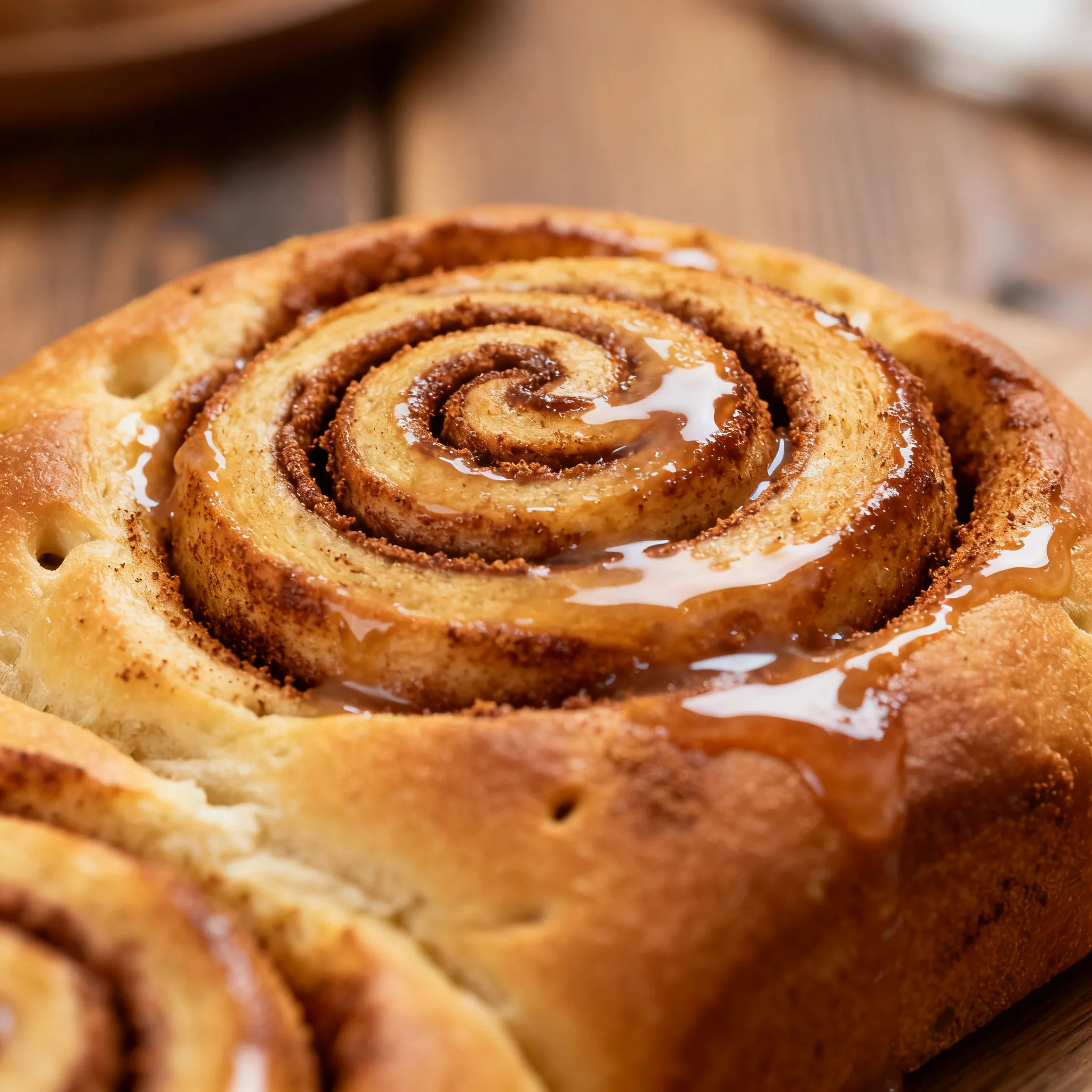
This cinnamon roll focaccia recipe treats a classic focaccia dough like a blank canvas: the usual olive oil pools get replaced with a thick cinnamon brown sugar paste pressed into every dimple before baking. What comes out of the oven is a pan of golden, deeply caramelized pockets of cinnamon sugar sitting in a soft, airy bread that pulls apart in sheets.
If weekend baking in your house usually ends with coffee and something warm from a pan, this one fits right in with the rest of my brunch-ready bread and bake recipes.
Most of the trouble with this bake comes from treating the filling like melted cinnamon butter. Melted butter is thin enough to run straight to the edges of the pan, where the sugar hits bare metal and turns bitter long before the center sets. I mix mine into a paste instead, with just enough flour added to hold it together, so it stays put in the dimples and caramelizes rather than scorching.
The payoff is a focaccia that tastes like the center of a cinnamon roll with a real crust, finished with a cream cheese glaze poured on while it's still warm so it melts slightly into the cracks. It's built for a 9×13 pan, cut into squares, and eaten with your hands.
PrintCinnamon Roll Focaccia Recipe
A pan of soft focaccia dimpled with caramelized cinnamon brown sugar pockets and finished with a tangy cream cheese glaze.
- Prep Time: 25 minutes (plus about 2 hours rising)
- Cook Time: 24 minutes
- Total Time: 2 hours 50 minutes
- Yield: 12 squares 1x
- Method: Baked
- Cuisine: American
Ingredients
- For the dough:
- 4 cups all-purpose flour
- 2 1/4 tsp instant yeast
- 2 tbsp granulated sugar
- 1 1/2 tsp salt
- 1 1/2 cups warm water (110°F)
- 1/3 cup olive oil, plus more for the pan
- For the cinnamon paste filling:
- 6 tbsp unsalted butter, softened
- 3/4 cup packed brown sugar
- 1 tbsp all-purpose flour
- 1 tbsp ground cinnamon
- pinch of salt
- For the cream cheese glaze:
- 4 oz cream cheese, softened
- 1/4 cup unsalted butter, softened
- 1 cup powdered sugar
- 1/2 tsp vanilla extract
- 1 - 2 tbsp milk, to thin
Instructions
- Whisk warm water with the yeast and granulated sugar; let sit 5 minutes until foamy.
- In a large bowl, whisk the flour and salt. Pour in the yeast mixture and olive oil; mix until a shaggy dough forms.
- Knead 5-6 minutes by hand, or 4 minutes with a stand mixer dough hook, until smooth and elastic.
- Oil a large bowl, add the dough, cover, and let rise 1 to 1.5 hours until doubled.
- Coat a 9×13 pan with 2 tbsp olive oil. Turn the dough into the pan and stretch gently toward the corners.
- Cover and let rise again 30-45 minutes, until puffy.
- Meanwhile, beat the softened butter, brown sugar, flour, cinnamon, and salt into a thick paste.
- Oil your fingers and dimple the dough deeply all over, pressing nearly to the bottom of the pan.
- Dollop the cinnamon paste into the dimples and over the surface.
- Bake at 375°F for 22-26 minutes, until deep golden brown and the pockets look set.
- Cool in the pan 10 minutes. Whisk the cream cheese, butter, powdered sugar, vanilla, and milk into a glaze.
- Drizzle the glaze over the warm focaccia. Cool slightly before slicing into squares.
Notes
Press the dimples firmly and deep, nearly to the bottom of the pan: shallow dimples let the filling slide out onto the flat top and burn there instead of caramelizing in a well. If your kitchen runs cool, the second rise can take closer to 45 minutes - go by how puffy and jiggly the dough looks rather than the clock alone.
Why a Butter and Flour Paste Beats Melted Cinnamon Butter Here
Softened butter beaten with brown sugar and a spoonful of flour behaves completely differently in the oven than butter you’ve melted on the stove first. Softened butter holds air and sugar in a thick emulsion, so in the oven it slowly renders while the sugar around it caramelizes in place. Melted butter has already separated from the sugar, so instead of caramel you get a layer of sugar syrup sitting on a layer of grease, and the dimples nearest the edge of the pan burn before the bread underneath is even fully baked.
The flour in the filling does one more job: it keeps the paste from thinning out again once it warms back up in the oven. Skip it, and the butter re-melts around the 10 minute mark and runs anyway. A single tablespoon per batch is enough to hold the paste together without making the pockets taste floury.
I pull the pan when the top is a deep amber, not just golden, and the cinnamon pockets look glossy and slightly sunken rather than wet and raised. If the center dimples still look pale, the dough underneath them is usually still doughy in the middle, so give it another 3 to 4 minutes rather than pulling it early to save the edges.
Pan, Rack, and Oven Temperature That Keep the Edges From Scorching
Use a light colored metal 9×13 pan or a glass baking dish lined with parchment, not a dark nonstick one. Dark pans run hotter at the edges, and since the cinnamon paste in this cinnamon roll focaccia recipe sits right against the pan on the outer dimples, that extra heat is exactly what scorches the sugar first.
Bake on the middle rack at 375°F. Any hotter and the sugar on top sets and darkens before the dense center of the dough has a chance to finish; any cooler and you lose the deep amber caramelization that makes the pockets worth the trouble. Check at the 22 minute mark, then every couple of minutes after that.
For dimpling, use oiled fingers rather than a chopstick or dough poker. You want wide, deep wells that go nearly to the bottom of the pan, not narrow pokes, since narrow holes close back up during baking and push the filling right back onto the flat surface where it has nothing to caramelize against but open air.
Storing and Reheating Cinnamon Roll Focaccia With a Cream Cheese Glaze
Because this focaccia is finished with a cream cheese glaze, it belongs in the fridge, not out on the counter overnight. Let it cool, then cover the pan or move squares to an airtight container and refrigerate within 2 hours of baking. It keeps well for 3 to 4 days.
To reheat, warm squares in a 300°F oven, tented loosely with foil, until the center reaches 165°F on an instant read thermometer, usually about 8 to 10 minutes depending on the size of the piece. Pull the foil off for the last minute or two to recrisp the sugar pockets. The microwave works in a pinch for a single square, but it steams the crust soft instead of leaving it glossy.
The dough itself freezes well before its second rise if you want to get ahead: shape it in the pan, wrap tightly, and freeze up to a month, then thaw in the fridge overnight before dimpling and baking as usual.
Swaps and Variations for Cinnamon Roll Focaccia
For a dairy-free version, swap the butter in both the filling and the glaze for a dairy-free butter alternative, use a dairy-free cream cheese alternative in the glaze, and thin it with a dairy-free milk like almond or oat milk instead of regular milk; the dough itself is already dairy-free since it’s built on water and olive oil.
Maple sugar or a mix of maple syrup and extra flour can stand in for the brown sugar in the filling if you want a less sweet, more caramel-forward pocket. A handful of chopped pecans or walnuts pressed into the filling before baking adds crunch against the soft crumb. Orange zest whisked into the glaze turns this into something closer to a cinnamon roll with a citrus edge, which is worth trying once you’ve made the base version and know how your oven runs.
What to Bake Next If You Love Cinnamon Rolls
If the cinnamon sugar pockets in this focaccia got you, you’ll probably like pumpkin spice cinnamon rolls with properly set centers, or go classic with apple cider cinnamon rolls.
Frequently Asked Questions
Can I make the dough the night before?
Yes. After the first rise, press it into the pan, cover tightly, and refrigerate overnight instead of doing the second rise at room temperature. Let it sit out for 30 to 45 minutes the next morning to puff back up before dimpling and filling, since cold dough won't hold the dimples well.
Why did my cinnamon filling leak out and burn on the edges?
That usually means the butter in the filling was melted rather than just softened, or the dimples weren't deep enough to hold it. A thick, spreadable paste with a tablespoon of flour mixed in stays put in deep wells; thin, runny filling slides straight to the edge of the pan and scorches there first.
Does this taste more like a cinnamon roll or like bread?
It lands in between. The crumb is open and chewy like good focaccia, but the cinnamon sugar pockets and the cream cheese glaze on top give you that same flavor hit as a cinnamon roll, just spread across a whole pan instead of rolled into individual swirls.
Can I use active dry yeast instead of instant?
Yes, just dissolve it in the warm water with the sugar first and wait for it to look foamy and active, about 5 to 10 minutes, before mixing it into the flour. The rise may take a few extra minutes since active dry yeast works a little slower than instant.
Can I skip the cream cheese glaze?
You can, and the focaccia is still good with just the caramelized cinnamon sugar pockets on top. If you want some sweetness without the dairy, a simple powdered sugar and water drizzle works, though it won't have the same tang as the cream cheese version.
Get our 10 best recipes - free
Join the Receipster newsletter and we’ll send you Dorothy’s 10 most-loved recipes as a free PDF.
Free PDF + new recipes every week. Unsubscribe anytime.