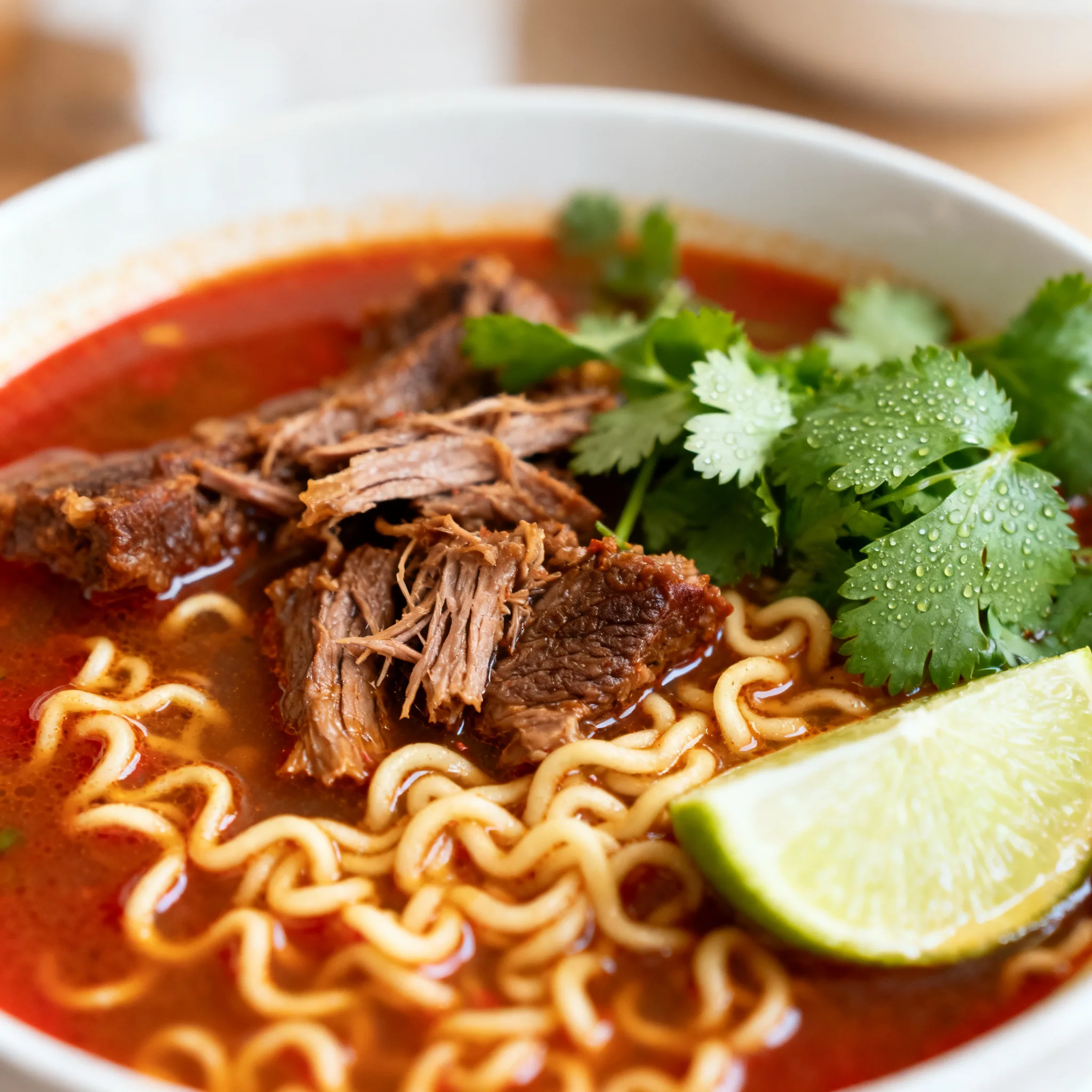
Birria Ramen Bowl Recipe
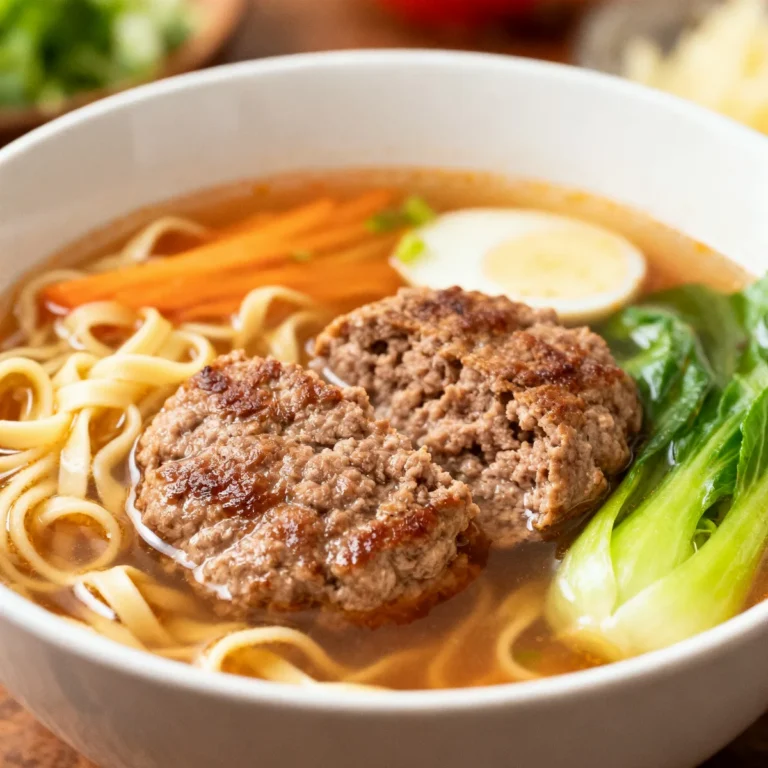
The best birria ramen recipe keeps the noodles out of the stew pot until the very last second, because birria consommé is thick with rendered fat and dried chile, and noodles cooked straight in it turn swollen and gummy instead of springy. This bowl takes the slow braised, chile rich beef from birria tacos and pairs it with noodles the way a taco gets dipped in consommé: hot broth poured over at the end, not simmered together.
If you’re building out a rotation of slow-braised beef dinners beyond this one, I keep adding to my collection of hearty braised dinners and stews that work the same low and slow way.
I like my birria broth deep red-brown and a little fatty on top, with a spoonful of that chile oil ladled over the noodles right before serving. That layer of fat is doing real work: it carries the smoky, slightly sweet flavor of the guajillo and ancho chiles across every bite instead of being diluted into the broth.
Shredded chuck roast, a strained chile broth, and a tangle of ramen noodles turn into something richer than either tacos or a basic beef stew, and it reheats well enough for a second bowl the next night.
PrintBirria Ramen Bowl Recipe
Rich, chile-braised shredded beef and consommé ladled over springy ramen noodles.
- Prep Time: 20 minutes
- Cook Time: 3 hours
- Total Time: 3 hours 20 minutes
- Yield: 4 1x
- Method: Braised
- Cuisine: Mexican
Ingredients
- 3 lbs boneless beef chuck roast, cut into 3 - 4 inch chunks
- 4 dried guajillo chiles, stems and seeds removed
- 2 dried ancho chiles, stems and seeds removed
- 1 - 2 dried chile de árbol, stems removed (for heat)
- 1 white onion, half roughly chopped, half finely diced for garnish
- 6 cloves garlic
- 2 Roma tomatoes, quartered
- 2 tsp ground cumin
- 1 tsp dried oregano
- 1 cinnamon stick (or 1/4 tsp ground cinnamon)
- 2 bay leaves
- 2 tbsp apple cider vinegar
- 6 cups beef broth, divided
- 2 tbsp neutral oil, for searing
- Salt, to taste
- 12 oz ramen noodles (fresh or dried, flavor packets discarded)
- Chopped fresh cilantro, for serving
- Lime wedges, for serving
- Shredded Oaxaca or mozzarella cheese, for serving (optional)
Instructions
- Heat a dry skillet over medium heat and toast the guajillo, ancho, and chile de árbol for about 1-2 minutes per side, pressing them flat, until fragrant and pliable but not scorched.
- Transfer the chiles to a bowl, cover with hot water, and soak for 15 minutes until soft.
- Drain the chiles and add them to a blender with the chopped half of the onion, garlic, tomatoes, cumin, oregano, vinegar, and 1 cup of the beef broth. Blend until completely smooth, then strain through a fine mesh sieve into a bowl, discarding the solids.
- Pat the beef chunks dry and season with salt. Heat the oil in a Dutch oven over medium-high heat and sear the beef in batches, 2-3 minutes per side, until deeply browned. Don’t crowd the pot.
- Return all the beef to the pot and pour in the strained chile puree and the remaining 5 cups of broth. Add the cinnamon stick and bay leaves. Bring to a simmer, then cover and cook on low, 2.5 to 3 hours, until the beef shreds easily with a fork.
- Remove the beef to a cutting board and shred it, discarding any large pieces of fat. Skim the orange fat layer from the top of the broth into a small bowl and set it aside. Discard the bay leaves and cinnamon stick, then taste the broth and adjust the salt.
- Just before serving, cook the ramen noodles in a separate pot of boiling water according to the package directions, then drain well.
- Divide the noodles among bowls, top with shredded beef, and ladle the hot consommé over everything. Spoon a little of the reserved chile fat over the top, then finish with diced onion, cilantro, cheese, and a lime wedge.
Notes
Strain the chile puree through a fine mesh sieve for a silky broth with no bits of skin left behind. Don’t skip toasting the dried chiles for 1-2 minutes per side, it blooms their flavor and keeps the broth from tasting flat. If the broth tastes thin once it’s done, simmer it uncovered for an extra 10 minutes to concentrate it before serving.
Why the Broth and Noodles Cook Separately
Birria consommé gets its body from rendered beef fat and the starch that leaches out of long simmered chuck, which makes it heavier than a typical ramen broth. Boil ramen noodles directly in it and they drink up that fat fast, bloating into something soft and gummy within a couple of minutes. Cooking the noodles in plain water and pouring the hot consommé over them right before serving keeps the noodles springy while they still soak up plenty of flavor from the broth sitting on top.
The other move that pays off is straining the chile puree through a fine mesh sieve before it goes back in the pot. Guajillo and ancho skins never fully break down in a blender, and skipping this step leaves grit in every spoonful. I pull the beef out the moment it shreds under light pressure from a fork, not a minute before, because chuck that’s gone truly tender falls apart on its own without needing to be forced.
Equipment and Heat Settings for a Silky Consommé
A heavy Dutch oven holds steady, even heat through the multi hour braise, which matters more here than a fancier pot; thin cookware scorches the chile puree on the bottom before the beef is tender. A blender handles the chile puree easily, but you do need a fine mesh strainer afterward, a regular colander lets too much pulp through.
- Toast the dried chiles over medium heat, not high, scorched chile turns bitter in seconds
- Sear the beef in batches over medium-high heat so the pot stays hot enough to brown, not steam, the meat
- Simmer the braise on low, just enough to keep a few slow bubbles breaking the surface, a hard boil toughens the meat before it has time to tenderize
- If you’d rather braise in the oven, 325°F for the same 2.5 to 3 hours works just as well and frees up your stovetop
A fat separator or just a wide spoon works for skimming the orange layer of chile oil off the top once the broth is done; that reserved fat is what you’ll spoon over the noodles at the end, so don’t skip it even if your pot looks clean enough without it.
Storing and Reheating Birria Ramen Without Mushy Noodles
Get the meat and broth into the fridge within 2 hours of cooking. Stored together in an airtight container, they keep for 3-4 days and the flavor actually improves overnight as the chiles keep settling into the beef. Reheat the meat and broth together in a saucepan over medium heat until steaming hot throughout, to at least 165°F, then pour it over freshly cooked noodles.
Never store the noodles sitting in the broth, even in the fridge, they’ll keep absorbing liquid and turn to mush by the next day. Cook a fresh batch of noodles each time you serve a bowl, it only takes a couple of minutes and it’s the difference between a bowl that tastes freshly made and one that tastes reheated.
Variations and Swaps for Your Birria Ramen Bowl
Short ribs or a boneless beef shank both shred just as well as chuck roast if that’s what your butcher has, and short ribs add even more richness to the broth from their extra fat. For more heat, add a second chile de árbol or a chipotle in adobo to the puree, the ancho and guajillo on their own stay closer to mild.
- Swap the ramen noodles for rice noodles to keep the bowl gluten-free (check that your beef broth is labeled gluten-free too)
- Leave off the shredded cheese garnish to keep the bowl dairy-free, everything else in the broth and beef is naturally dairy-free
- Stir a spoonful of the reserved chile fat into the broth instead of spooning it on top, for a bowl that’s spicier all the way through
- Top with thinly sliced radish or shredded cabbage for crunch against the soft noodles and beef
More Ramen Bowls to Try Next
If you want another weeknight ramen with a built-up sauce instead of a thin broth, my spicy chicken ramen with a creamy sauce follows the same pour-it-over-noodles logic. For something richer and egg based, a creamy, fiery buldak carbonara ramen is worth making on a night you want heat and richness together.
Frequently Asked Questions
Do I have to use chuck roast for this birria ramen recipe?
No, chuck roast is just the easiest cut to find and it shreds beautifully, but boneless beef shank or short ribs work the same way. Short ribs add even more fat to the broth, which some people love for an extra rich consommé. Whatever cut you use, braise until it shreds easily with a fork rather than going by the clock alone.
Can I make the birria broth in a slow cooker or Instant Pot?
Yes. In a slow cooker, sear the beef first, then cook the chile broth and beef on low for about 7-8 hours. In an Instant Pot, pressure cook on high for around 60 minutes, then let the pressure release naturally before shredding the meat.
What if I can't find guajillo or ancho chiles?
Chipotle in adobo is the easiest substitute and adds a smokier, spicier edge to the broth. You can also use more chile de árbol, just start with less since it's hotter than guajillo or ancho and easy to overdo.
Is birria ramen spicy?
As written it's mild to medium, since guajillo and ancho chiles are more about color and fruitiness than heat. The chile de árbol is what brings the heat, so add or skip it depending on how spicy you want the bowl.
Can I make the broth ahead of time?
Yes, and I'd actually recommend it. The shredded beef and broth taste better the next day once the chiles have had more time to settle into the meat. Just cook the noodles fresh right before serving instead of storing them in the broth.
Get our 10 best recipes - free
Join the Receipster newsletter and we’ll send you Dorothy’s 10 most-loved recipes as a free PDF.
Free PDF + new recipes every week. Unsubscribe anytime.