Spiced Pear and Almond Baked Oatmeal
Diced pears look harmless going into a baked oatmeal recipe, but they're almost 85 percent water, and all of that liquid has to land somewhere once the dish is in a 375°F oven. Most of the time it pools under the fruit and turns the center to paste while the top looks perfectly golden. Spiced pear and almond baked oatmeal only works if you deal with that water before it ever hits the baking dish.
If mornings like this are becoming a habit, I keep a growing collection of warm breakfast bakes worth setting an alarm for that work the same make-ahead way.
My fix is to macerate the diced pears in a little brown sugar for 10-15 minutes first, then drain off the juice they release and use it to replace part of the milk. The pears go in already lightened of their extra water, and the custard base still gets all that pear flavor, just under control. Toasting the almonds before they go anywhere near the batter matters just as much, since raw almonds just steam under all that egg and milk and taste flabby instead of toasted.
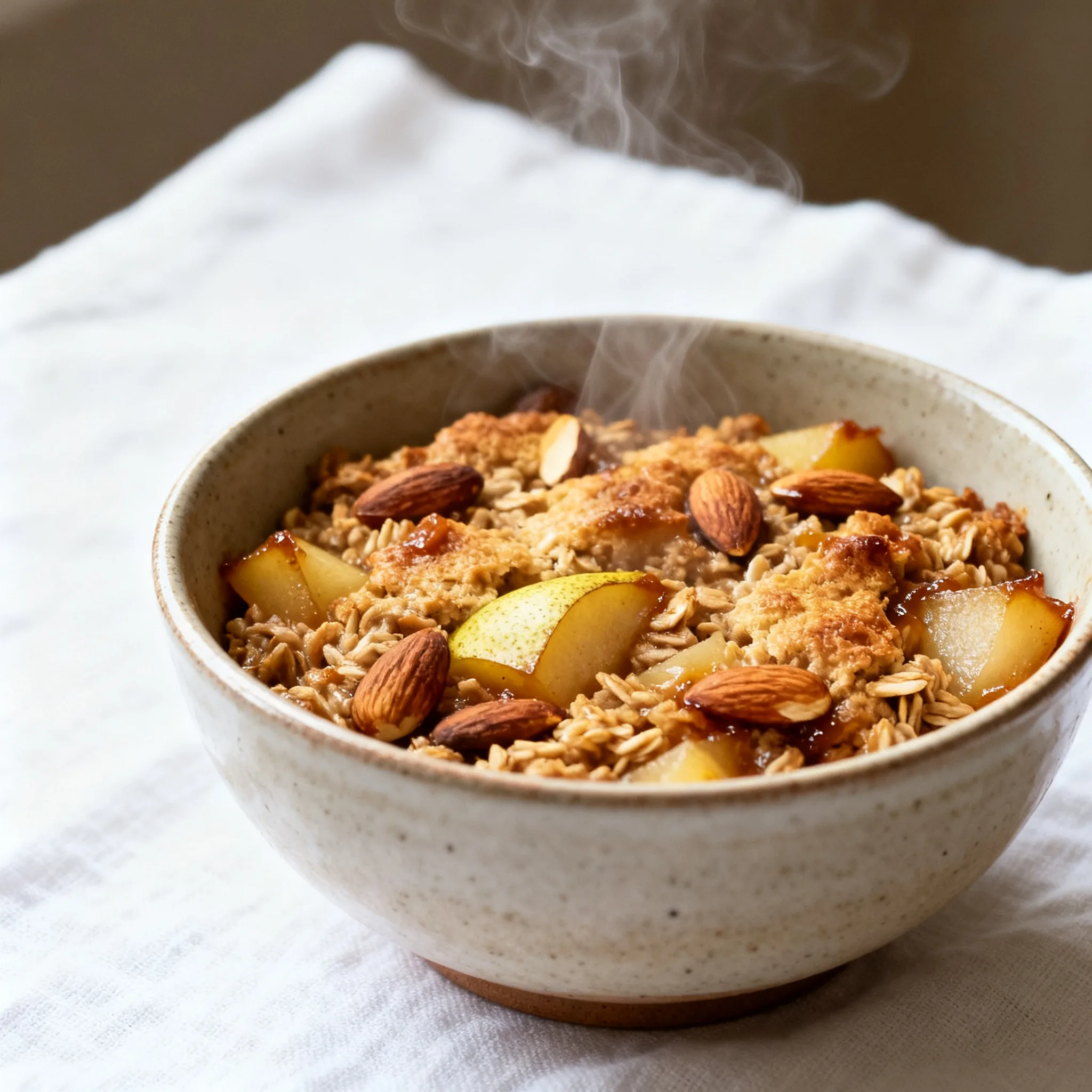
What comes out of the oven is a dense, custardy oatmeal with a set center, soft cooked pear in every bite, and almonds that stayed crunchy on top instead of going soft. It's warm with cinnamon and cardamom, sweetened mostly with maple syrup, and it reheats well enough to make ahead for a week of breakfasts.
PrintSpiced Pear and Almond Baked Oatmeal
A custardy baked oatmeal with spiced pears, toasted almonds, and maple syrup, with no soggy center.
- Prep Time: 20 minutes
- Cook Time: 35-40 minutes
- Total Time: 55 minutes
- Yield: 6 1x
- Method: Baked
- Cuisine: American
Ingredients
- 2 cups old-fashioned rolled oats (not quick oats)
- 1 tsp baking powder
- 1 tsp ground cinnamon
- 1/2 tsp ground cardamom
- 1/4 tsp salt
- 1/2 cup sliced almonds, toasted and divided
- 2 ripe pears (Bosc or Anjou), diced small
- 2 tbsp packed brown sugar
- 2 large eggs
- 1 3/4 cups whole milk (plus reserved pear juice, see notes)
- 1/3 cup maple syrup
- 4 tbsp unsalted butter, melted, plus more for the dish
- 1 tsp vanilla extract
- 1/2 tsp almond extract
Instructions
- Toss diced pears with brown sugar and a pinch of cinnamon in a bowl. Let sit 10-15 minutes until juice pools at the bottom, then drain the juice into a liquid measuring cup and set the pears aside.
- Toast sliced almonds in a dry skillet over medium heat, 3-4 minutes, stirring often, until golden and fragrant. Watch closely, they go from pale to burnt fast. Cool, then divide in half.
- Preheat the oven to 375°F. Butter an 8×8 or 9-inch baking dish.
- Add enough milk to the reserved pear juice to measure 1 3/4 cups total liquid, then whisk in the eggs, maple syrup, melted butter, vanilla extract, and almond extract.
- In a large bowl, combine the oats, baking powder, cinnamon, cardamom, salt, and half the toasted almonds. Fold in the drained pears.
- Pour the wet mixture over the oat mixture and stir until every oat is moistened. Pour into the prepared dish and scatter the remaining almonds on top.
- Bake 35-40 minutes, until the center is set and no longer jiggles when you nudge the dish, and the top is deep golden.
- Let rest 10 minutes before cutting, the custard keeps setting as it cools.
Notes
Drain the pears over a bowl, not the sink, so you don’t lose track of how much juice you’re adding back as milk. If the top browns too fast before the center sets, tent it loosely with foil for the last 10 minutes. Leftovers keep in the fridge for 3-4 days in an airtight container.
Why Draining the Pears Is What Actually Sets This Oatmeal
Pears release more liquid than people expect, especially ripe ones, and baked oatmeal has no crust or structure to hold that liquid back. If you stir raw diced pear straight into the batter, the juice seeps out slowly during the 35-40 minute bake and collects right where the oats are thickest, which is the center. The edges, closer to the hot pan walls, dry out and set fine, but the middle stays gummy no matter how long you leave it in.
Macerating the pears first with a little brown sugar pulls most of that water out before baking even starts. I drain it into my liquid measuring cup and top it off with milk to the full amount the recipe calls for, so I’m not losing any volume, just moving the pear’s water where I can control it. The oats absorb a measured amount of liquid instead of an unpredictable flood, and that’s the difference between a custardy center and a wet one.
The Pan and Oven Setting That Keep the Center From Steaming
I bake this in an 8×8 or 9-inch round dish, glass or ceramic rather than metal. Glass and ceramic heat more slowly and evenly, which matters here because the oats need a steady, gentle rise in temperature to set into a custard instead of scrambling at the edges while the middle lags behind. A dark metal pan heats up faster at the edges and can leave you with an overbaked rim before the center ever catches up.
375°F on the middle rack is hotter than a lot of baked oatmeal recipes call for, and that’s deliberate. At 350°F this dish can take closer to 50 minutes to set, which gives the pears even more time to weep liquid into the oats. The higher heat sets the egg and milk faster, so the structure locks in before the fruit has a chance to undo the work the maceration already did. I pull mine at the 35-minute mark if the center has stopped jiggling when I nudge the dish, and give it the full 40 if it’s still loose.
Keeping Leftover Baked Oatmeal From Drying Out
Let the baked oatmeal cool, then move leftovers into the fridge within 2 hours of coming out of the oven. Covered well, it holds for 3-4 days without the almonds going soft or the pear turning mushy, as long as the container is airtight so the oats don’t pull moisture from everything else in the fridge.
Reheat portions in the microwave or in a 350°F oven until warmed through to about 165°F, with a splash of milk stirred over the top first. Oats keep absorbing liquid even after baking, so day-two and day-three portions are noticeably thicker than fresh out of the oven, and that splash of milk brings it back to the texture you started with instead of something dry and tight. I don’t recommend freezing this one, the pear’s texture turns watery and soft once it thaws.
Swapping the Fruit, Nuts, and Milk Without Losing the Set
Apples work the same way as the pears here, diced small and macerated the same 10-15 minutes before draining, just expect a slightly firmer bite since apples hold their shape more than ripe pears do. Pecans or walnuts can stand in for the almonds, toasted the same way in a dry skillet so they don’t taste raw under the custard.
For a dairy-free version, swap the 4 tablespoons of butter for melted coconut oil and use a full-fat oat milk or almond milk in place of the whole milk, both swaps together keep the texture rich enough that you won’t miss the dairy. For gluten-free, just make sure the oats themselves are labeled certified gluten-free, since oats are naturally gluten-free but are often processed alongside wheat. A handful of dried cranberries or golden raisins stirred in with the pears adds a tart note that plays well against the maple syrup.
What to Serve Alongside This Baked Oatmeal for a Brunch Spread
If you’re setting out a full brunch table, pair the oatmeal’s warm spice with something to pass around before the main dish. The baked brie with apple cider caramel drizzle leans into the same fall, pear-and-spice flavors, and the baked brie in puff pastry with honey and walnuts covers the nutty, savory side of the spread.
Frequently Asked Questions
Can I assemble this baked oatmeal the night before?
Yes. Mix the dry oat mixture and the wet egg mixture separately, cover both, and refrigerate overnight, then combine and bake in the morning. You can also fully assemble it in the baking dish and refrigerate overnight, just add 5-10 extra minutes to the bake time since it's starting cold.
Can I use quick oats instead of old-fashioned rolled oats?
I'd stick with old-fashioned rolled oats. Quick oats are cut smaller and break down faster, so the texture turns closer to porridge than the sliceable, custardy bake this recipe is built around.
Do I need to peel the pears?
No, the skin is fine left on if you're using ripe pears and dicing them small. It softens during baking and adds a little texture without any noticeable toughness.
Why is the center of my baked oatmeal still wet after baking?
The most common reason is skipping the pear maceration step, which leaves extra liquid to seep into the oats while baking. Underbaking is the other culprit, the center should stop jiggling when you nudge the dish, and it keeps firming up for another 10 minutes once it's out of the oven.
Can I double this recipe for a crowd?
Yes, double all the ingredients and bake in a 9×13 dish. The bake time runs closer to 45-50 minutes since the batter is deeper, so check for a set center rather than going by time alone.
Get our 10 best recipes - free
Join the Receipster newsletter and we’ll send you Dorothy’s 10 most-loved recipes as a free PDF.
Free PDF + new recipes every week. Unsubscribe anytime.