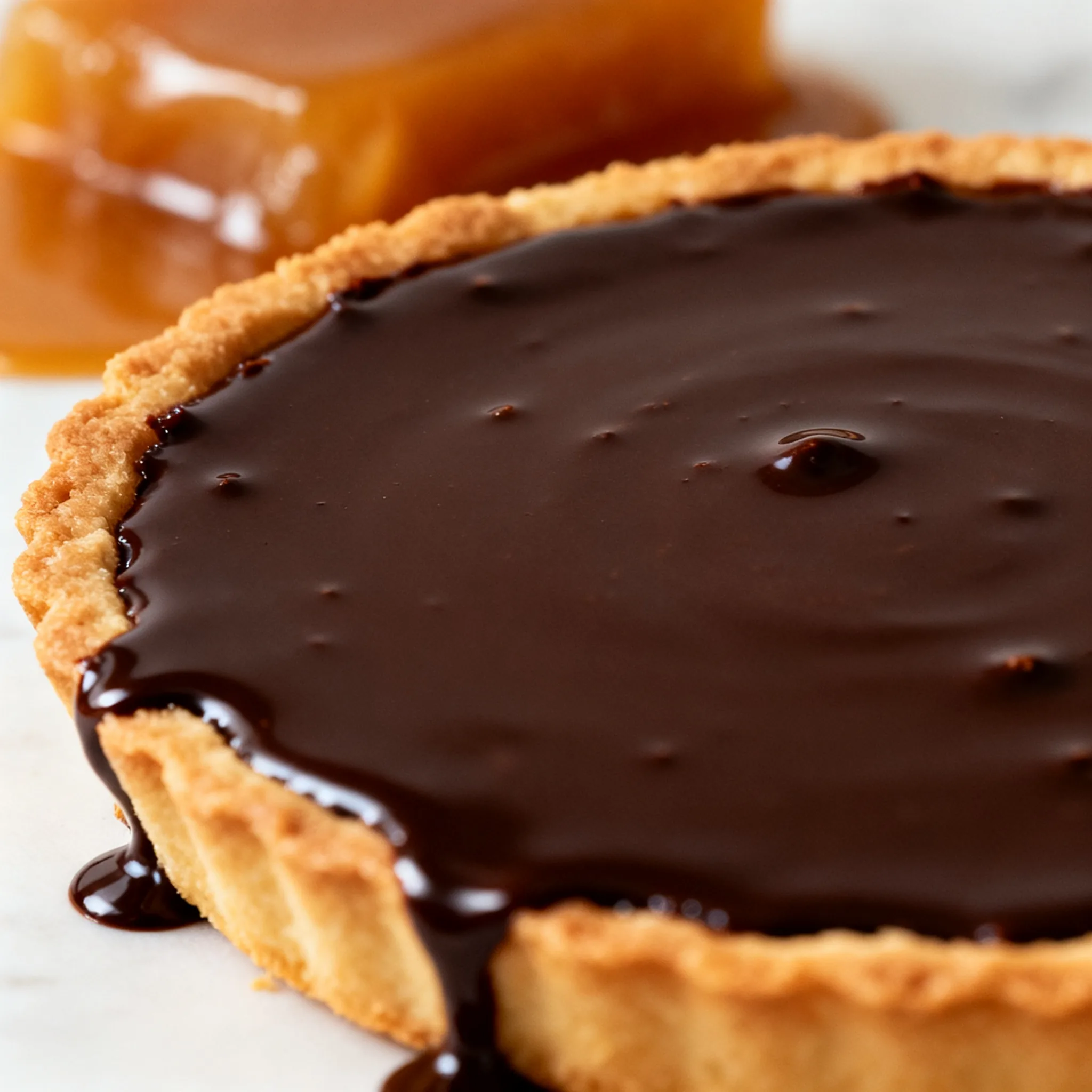
Bittersweet Chocolate Amaro Tart Recipe
A bittersweet chocolate amaro tart should taste like a really good dark chocolate truffle with a layer of orange peel and bitter herbs running through it, not like a plain ganache pie with a shot of liqueur dumped on top. The difference comes down to one step nobody mentions: when the amaro goes into the ganache. Add it while the chocolate and cream are still warm from the stove and the alcohol burns off fast, taking the citrus and herbal notes with it, so this chocolate amaro tart recipe only works if you let the ganache cool first.
If a dense, chilled slice like this is your kind of dessert, you’ll find more make-ahead pies and bars worth keeping in the fridge in my dessert archive.
I let the ganache sit on the counter until it drops to roughly body temperature before I whisk in the amaro and a little espresso powder. At that point the ganache is already thick enough to hold the booze without turning soupy, and the bitter orange notes in the amaro stay sharp instead of going flat. The crust matters just as much: a cold, fully set chocolate cookie crust holds its snap under the filling, while a crust that's still warm from the oven will soften and let the ganache seep in at the edges.
This tart leans bittersweet on purpose: dark chocolate, an amaro with real bitter edge like Averna or Montenegro, and just enough salt and orange zest on top to keep every slice from tasting one note sweet. Serve it cold straight from the fridge or let it sit out for 15 minutes first, and either way the ganache stays dense and sliceable instead of sloppy.
PrintBittersweet Chocolate Amaro Tart Recipe
A bittersweet dark chocolate ganache tart spiked with amaro, set in a chocolate cookie crust and finished with flaky salt and orange zest.
- Prep Time: 20 minutes
- Cook Time: 15 minutes
- Total Time: 4 hours 35 minutes
- Yield: 10 slices 1x
- Method: Bake and chill
- Cuisine: American
Ingredients
- 1 3/4 cups finely crushed chocolate wafer cookies (about 28 cookies)
- 6 tablespoons unsalted butter, melted
- 1/8 teaspoon fine salt
- 10 ounces bittersweet chocolate (60-70%), finely chopped
- 1 1/4 cups heavy cream
- 2 tablespoons unsalted butter, softened and cut into pieces
- 3 tablespoons amaro, such as Averna or Montenegro
- 1/2 teaspoon espresso powder
- 1/4 teaspoon flaky salt, for topping
- 1 teaspoon orange zest, for topping
Instructions
- Preheat the oven to 350°F. Pulse the chocolate wafer cookies in a food processor (or crush in a zip-top bag) until finely ground. Stir in the melted butter and salt until the crumbs look like wet sand.
- Press the crumbs firmly into the bottom and up the sides of a 9-inch tart pan with a removable bottom. Bake for 10 minutes, until set and fragrant. Cool completely on a wire rack, at least 30 minutes, before filling.
- Put the chopped chocolate in a heatproof bowl. Heat the cream in a saucepan over medium heat just until small bubbles ring the edge of the pot; don’t let it come to a full boil.
- Pour the hot cream over the chocolate and let it sit, undisturbed, for 2 minutes. Whisk from the center outward until the ganache is smooth and glossy.
- Whisk in the butter, one piece at a time, until fully incorporated and shiny.
- Let the ganache cool at room temperature until it’s lukewarm, about 90°F, 10-15 minutes. Whisk in the amaro and espresso powder until smooth.
- Pour the ganache into the cooled crust and tap the pan gently on the counter to level it. Refrigerate, uncovered, until fully set, at least 4 hours or overnight.
- Before serving, sprinkle with flaky salt and orange zest. Slice with a thin knife run under hot water and wiped dry between cuts.
Notes
Chop the chocolate evenly and finely so it melts at the same rate once the hot cream hits it; uneven pieces are the main cause of a grainy ganache. Let the crust cool completely before pouring, and let the ganache cool to lukewarm before adding the amaro so you keep the citrus and herbal notes instead of boiling them off.
Why This Ganache Sets Glossy Instead of Grainy
The ganache here is a straightforward chocolate and cream base, but the order of operations is what keeps it from turning grainy or runny. I heat the cream only until small bubbles ring the edge of the pot, not a rolling boil, because cream that gets too hot can scorch and throw off the emulsion when it hits the chocolate. Pour it over finely chopped chocolate, let it sit for two minutes without touching it, then whisk from the center out so the fat and cocoa solids come together slowly instead of all at once.
Butter goes in next, a piece at a time, for shine and a slightly softer bite once the tart is cold. The amaro is the part people rush. I wait until the ganache drops to roughly body temperature, warm to the touch but no longer hot, before whisking it in. Add it any earlier and the heat cooks off the orange peel and bitter herb notes that make amaro worth using in the first place, leaving behind mostly alcohol and sugar. Add it at lukewarm and the ganache holds the liqueur without thinning out, so every slice tastes like dark chocolate with a bitter, citrusy edge instead of a boozy aftertaste.
The Pan, the Crumbs, and the Temperature Checks That Matter
A 9-inch tart pan with a removable bottom makes unmolding this one easy and keeps the crust edges from caving in when you press the crumbs up the sides. A food processor gets the cookies into fine, even crumbs fast, but a zip-top bag and a rolling pin work fine too, just crush until no large pieces remain or the crust won’t hold together.
Bake the crust at 350°F for 10 minutes, just until it looks set and smells toasted. Don’t skip the full cool down afterward: a warm crust will soften the first layer of ganache and let it seep into the crumbs instead of sitting on top in a clean layer. For the ganache, a small saucepan and a flexible whisk give you better control over how hot the cream gets than a pot that’s too big for the amount of liquid. If you want to check the lukewarm point for the amaro instead of guessing by touch, an instant read thermometer should land around 90°F before you add it.
Keeping This Tart Cold Without Losing Its Snap
Once the tart is sliced, cover the pan tightly and keep it in the fridge, where it holds its texture and flavor well for 3 to 4 days. Get it back into the fridge within 2 hours of slicing or serving, since this is a cream-based filling, not a baked custard, and it’s happiest cold.
This isn’t a tart you reheat. Pulling it warm would just melt the ganache back into a puddle, so serve it straight from the fridge for a dense, truffle-like bite, or let a slice sit on the counter for 15 to 20 minutes if you prefer it a little softer. I don’t recommend freezing the whole tart because the crumb crust can turn soft and wet as it thaws, but individual slices wrapped well will hold for about a month if you’re short on fridge space.
Swapping the Amaro, the Crust, and Making It Dairy-Free
Averna and Montenegro are my go-to amaros here because the orange peel in both plays well against dark chocolate instead of competing with it. A more bitter amaro like Fernet-Branca will push the tart further into herbal territory, so start with 2 tablespoons if you go that route and taste before adding the rest.
- Swap the chocolate wafer cookies for gluten-free chocolate sandwich cookies or gluten-free graham crackers to make the crust gluten-free.
- For a dairy-free version, use full-fat coconut cream in place of the heavy cream, dairy-free butter in both the crust and the ganache, and a dairy-free bittersweet chocolate.
- No amaro on hand: use strong brewed espresso plus a little orange zest instead. The flavor will be less bitter and herbal, but still good.
- Top with toasted chopped hazelnuts or a few curls of orange peel instead of the espresso powder and salt for a different finish.
More Chocolate Desserts Worth Chilling Ahead
If this one worked for you, try the stovetop chocolate espresso pots de creme for another make-ahead chocolate dessert, or go in a different direction with pecan chocolate turtle bars for something with more crunch.
Frequently Asked Questions
Can I leave the alcohol out of this chocolate amaro tart recipe?
Yes. Replace the 3 tablespoons of amaro with strong brewed espresso or cold coffee, plus a little extra orange zest if you want that citrus note back. The tart won't have the same bitter, herbal backbone, but the chocolate and crust still work well together.
What's the best amaro to use?
Averna and Montenegro are both good choices because they lean more orange and caramel than medicinal. If you want a sharper, more bitter result, Fernet-Branca works too, just start with less and taste as you go since it's noticeably stronger.
Why is my ganache grainy or split instead of smooth?
This usually happens when the cream boils too hard before it hits the chocolate, or when the chocolate isn't chopped finely enough to melt evenly. Whisking too fast too early can also break the emulsion; whisk slowly from the center outward until it comes together, then pick up speed.
Can I make this tart ahead of time?
Yes, that's actually the easiest way to serve it. Make it up to the end of the chilling step a day or two ahead, keep it covered in the fridge, and add the salt and orange zest right before serving.
Can I use a store-bought crust instead?
You can use a store-bought chocolate cookie crust to save time, just make sure it's fully cooled if it needs baking before you pour in the warm ganache. The texture will be slightly different, but the filling is the part that makes this tart work.
Get our 10 best recipes - free
Join the Receipster newsletter and we’ll send you Dorothy’s 10 most-loved recipes as a free PDF.
Free PDF + new recipes every week. Unsubscribe anytime.