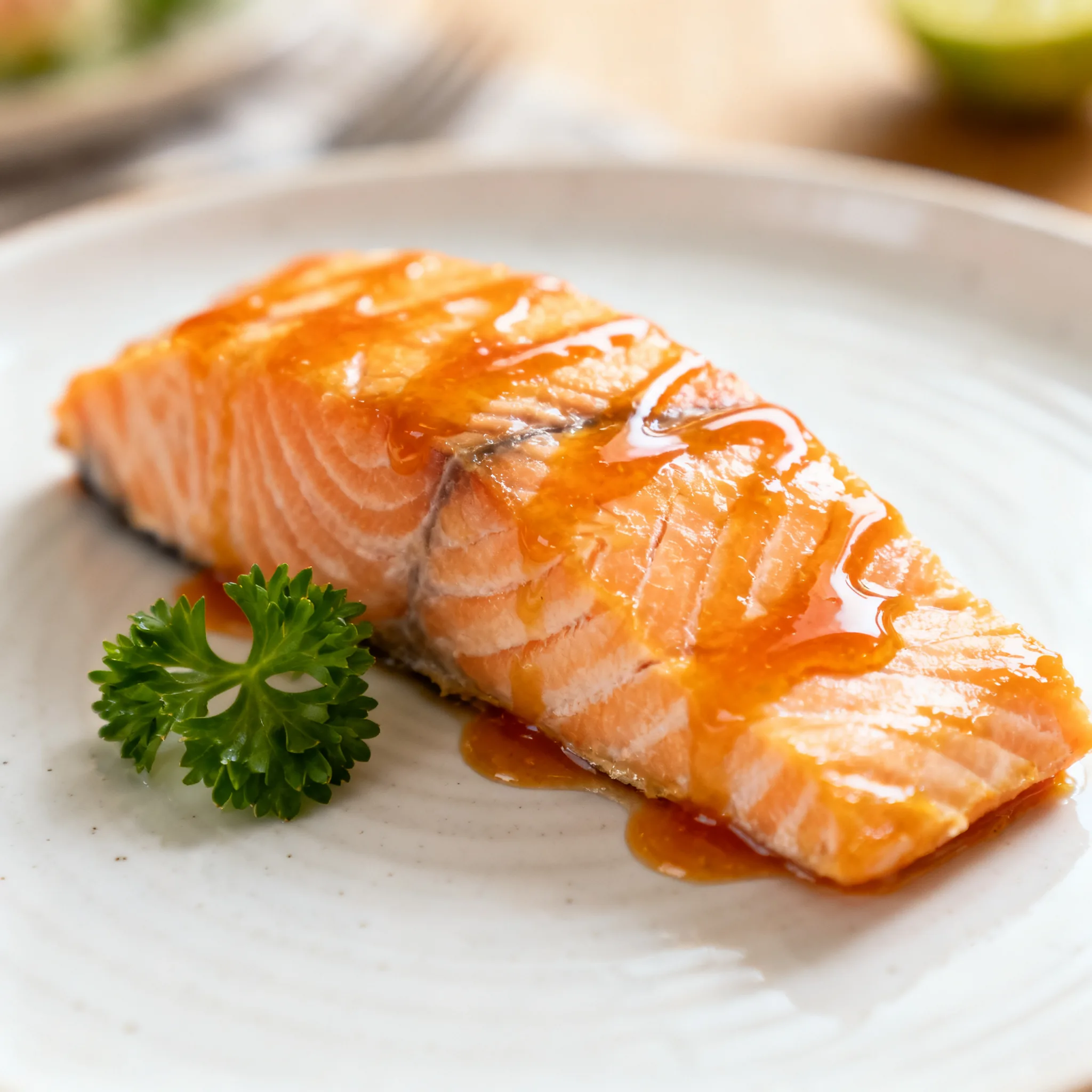
Calamansi Glazed Salmon Recipe
Calamansi glazed salmon turns dull and bitter at the edges when the sugar in the glaze sits in a hot pan too long, and that's exactly what happens in most versions that marinate the fish directly in the full sauce and sear everything together. This calamansi salmon recipe skips that step entirely by keeping the marinade short and reducing the glaze on its own before it ever meets the skillet.
If you’re rounding out the plate, I’d start with something crisp and cold, so take a look at my rundown of salads and vegetable sides for ideas that won’t fight with the citrus.
Calamansi juice is sharp and acidic, closer to lime than orange despite its sweeter smell, and it starts denaturing the proteins on the surface of raw salmon within a few minutes. Leave the fillets sitting in a full batch of glaze for 30 or 60 minutes, the way a lot of recipes call for, and the outside turns opaque and soft before it ever touches heat, the same effect you'd get curing fish for ceviche. Once that happens, no amount of searing gets the texture back; the fish just steams inside its own soft shell instead of developing a crust.
I cut the marinating time down to 15 minutes and split the glaze in half before it touches the fish, so one portion simmers down into a glossy reduction while the other just seasons the salmon. Brushed on in two light coats after the pan comes off the heat, that reduced glaze clings to the fillet instead of scorching, and the salmon underneath stays firm enough to flake in clean pieces.
PrintCalamansi Glazed Salmon Recipe
Pan-seared salmon with crispy skin, brushed with a tangy-sweet reduced calamansi glaze.
- Prep Time: 20 minutes
- Cook Time: 10 minutes
- Total Time: 30 minutes
- Yield: 4 1x
- Method: Pan-Seared
- Cuisine: Filipino-inspired
Ingredients
- 4 salmon fillets (6 oz each), skin on, patted dry
- 1/3 cup calamansi juice (or 3 tbsp lime juice plus 3 tbsp orange juice)
- 3 tbsp soy sauce
- 2 tbsp brown sugar
- 2 cloves garlic, minced
- 1 tsp fresh ginger, grated
- 1/4 tsp black pepper
- 1 tbsp neutral oil, for searing
- 1 tsp sesame oil
- Sliced scallions, for garnish
- Calamansi or lime wedges, for serving (optional)
Instructions
- In a bowl, whisk together the calamansi juice, soy sauce, brown sugar, garlic, ginger, and black pepper.
- Pour half of the mixture into a shallow dish with the salmon, turning to coat. Pour the other half into a small saucepan and set aside. Marinate the salmon at room temperature for exactly 15 minutes, no longer.
- While the salmon marinates, bring the reserved glaze to a simmer over medium heat. Cook for 5 to 6 minutes, stirring occasionally, until it thickens enough to coat the back of a spoon. Set aside off heat.
- Remove the salmon from the marinade and discard the marinade. Pat the fillets dry with a paper towel.
- Heat the neutral oil in a cast iron or stainless skillet over medium-high heat until it shimmers. Lay the salmon skin-side down and sear for 4 minutes without moving it, until the skin is crisp.
- Flip and cook for another 3 to 4 minutes, or until the internal temperature reaches 140°F. Remove the skillet from the heat; the salmon will climb to a safe 145°F as it rests.
- Brush half of the reduced glaze over the salmon and let it sit for 30 seconds. Brush on the second layer right before serving. Drizzle with sesame oil and top with scallions.
Notes
Pat the salmon very dry before it goes anywhere near the marinade; a wet fillet dilutes the acid and slows down the sear. Never boil down the portion of glaze that touched raw fish; keep the two halves separate from the start so the glaze you eat was never in contact with raw salmon. A thermometer is worth it here since the glaze makes the surface look done well before the center actually is.
Why Marinating Time, Not the Ingredient List, Makes or Breaks This Fish
The glaze itself is simple: calamansi juice, soy sauce, a little brown sugar, garlic, and ginger. What separates a lacquered fillet from a soggy one is timing, not ingredients. Fifteen minutes is enough for the acid and salt to season the outer layer of the salmon without pushing all the way through to mush. Any longer and the surface starts to look pale and flaky before it even hits the pan, which means you’re searing fish that’s already partly cooked by the citrus.
Splitting the glaze before it touches raw fish also matters for a reason beyond texture: the half that marinates the salmon has been in contact with raw protein, so it gets discarded, not boiled down and served. The half that becomes the glaze never touches raw fish at all, which means it reduces cleanly into something you’d actually want to brush on and eat, instead of thinning out with juices the salmon released.
The Right Pan and Heat for a Glassy, Not Burnt, Glaze
A cast iron or heavy stainless skillet holds steady heat better than a thin nonstick pan, and that matters here because you want the skin to crisp fully in the 4 minutes before you flip, not just warm through. Get the oil shimmering before the salmon goes in, then leave it alone; moving the fillet around breaks up the crust that’s forming. A thin fish spatula makes the flip easier without tearing that crust.
Pull the salmon once it hits 140°F in the thickest part and take the skillet off the heat completely before you add any glaze. The fish will climb the rest of the way to a safe 145°F as it rests, and brushing the glaze on off direct heat is what keeps the sugar from blackening into bitter flecks instead of setting into a shine.
Keeping Leftover Calamansi Salmon From Drying Out
Get leftovers into the fridge within 2 hours of cooking, and they’ll keep for 3 to 4 days in a sealed container. The glaze firms up slightly once cold, which is normal; a short reheat brings the shine right back. I don’t recommend freezing this once it’s glazed, since the sauce turns watery as it thaws and the texture suffers more than the flavor does.
Reheat gently rather than blasting it in the microwave, which tends to turn both the glaze and the fish rubbery. A low oven, around 275°F, tented loosely with foil, brings the salmon back to a safe 165°F without squeezing out more moisture than necessary. If you’re in a hurry, a covered skillet over low heat with a splash of water works almost as well.
Swaps When You Can't Find Calamansi
Calamansi isn’t always easy to find outside of Asian grocery stores, and bottled juice works fine if you can get it. Without either, mix equal parts fresh lime juice and orange juice; it won’t be identical, but it gets close to that same tart-sweet balance.
- Swap the soy sauce for tamari or coconut aminos to make the whole dish gluten-free; it’s the only ingredient here that isn’t.
- Add a sliced Thai chile or a pinch of red pepper flakes to the glaze while it reduces for extra heat.
- The same glaze works well on chicken thighs or shrimp; shrimp only needs a minute or two per side.
More Salmon Recipes to Try Next
If you want another fast weeknight option, my pan-seared lemon rosemary salmon with mashed potatoes leans savory instead of sweet and comes together just as quickly. For something built for a party platter, my smoked salmon deviled eggs are worth keeping in the rotation too.
Frequently Asked Questions
What does calamansi taste like?
Calamansi tastes like a cross between lime and mandarin orange, tart up front with a floral sweetness underneath. It's more rounded and less sharp than straight lime juice, which is why the glaze doesn't need much sugar to balance it.
Can I make this without calamansi?
Yes. Mix equal parts fresh lime juice and orange juice as a substitute; it gets you close to the same tart-sweet flavor even though it isn't an exact match.
How do I know when the salmon is done?
The flesh should look opaque and flake easily with a fork, and the thickest part should read 145°F on a meat thermometer. I pull mine at 140°F and let it rest off the heat, since it keeps climbing a few more degrees on its own.
Can I use frozen salmon for this recipe?
Thaw it completely in the fridge first, then pat it very dry before marinating. A wet fillet dilutes the glaze and keeps the skin from crisping properly in the pan.
What should I serve with calamansi glazed salmon?
Steamed rice soaks up the extra glaze well, and a crunchy cucumber or slaw salad balances the richness of the fish.
Get our 10 best recipes - free
Join the Receipster newsletter and we’ll send you Dorothy’s 10 most-loved recipes as a free PDF.
Free PDF + new recipes every week. Unsubscribe anytime.