Lemon Meringue Pie Bars (No-Weep Swiss Meringue)
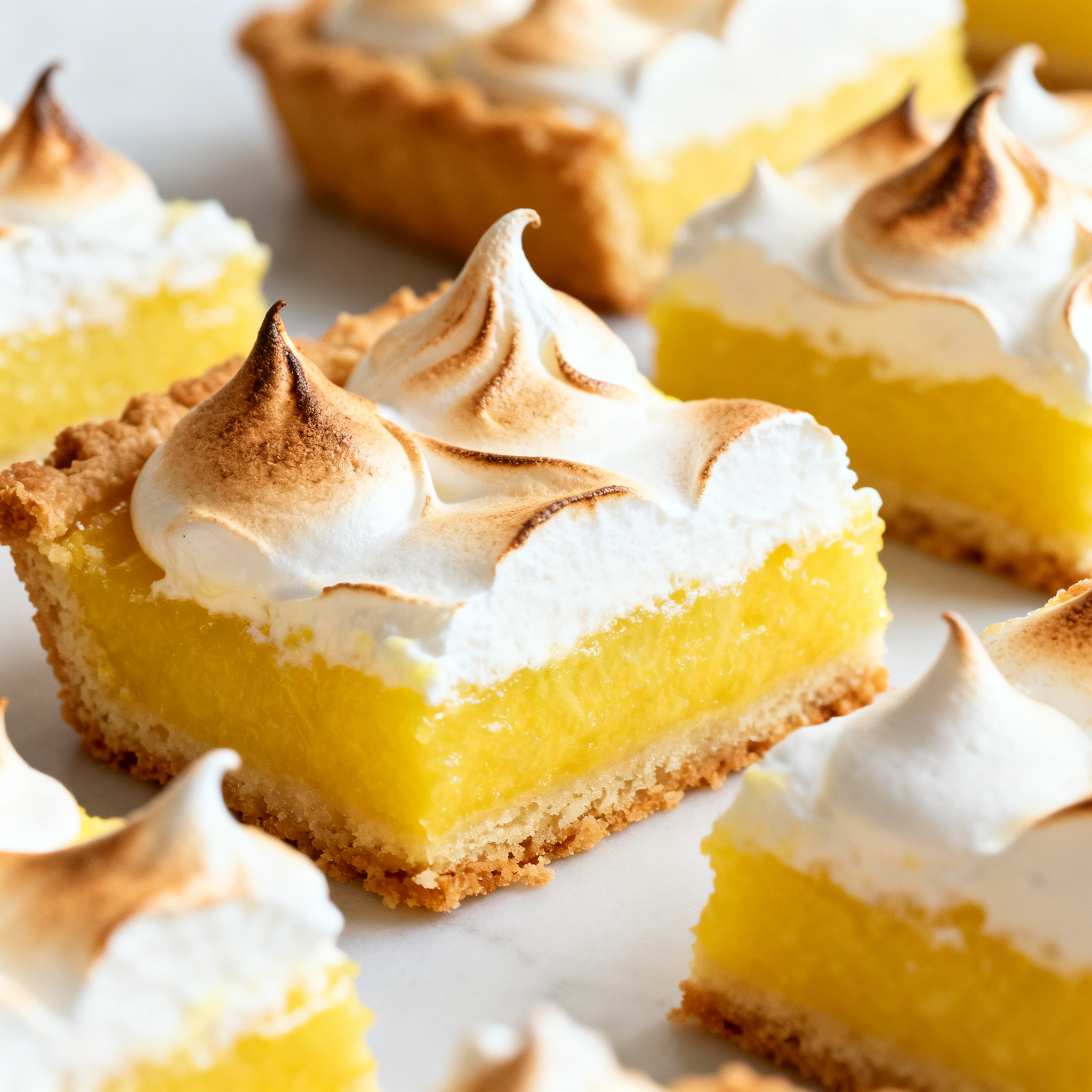
These lemon meringue pie bars fix the two things that ruin every classic lemon meringue pie: a soggy crust and a meringue that weeps into a puddle by hour two. A brown-butter shortbread base and a torched Swiss meringue mean you can stack these, box them, and still get sharp, glossy edges the next day.
Simple, everyday ingredients and clear, step-by-step instructions — every recipe made in Dorothy’s kitchen before it reaches yours. Jump to the full recipe card below.
PrintLemon Meringue Pie Bars (No-Weep Swiss Meringue)
Brown-butter shortbread bars topped with a firm cornstarch-set lemon curd and a torched, no-weep Swiss meringue.
- Prep Time: 35 minutes
- Cook Time: 35 minutes
- Total Time: 4 hours 30 minutes (includes chilling)
- Yield: 16 bars 1x
- Method: Baked
- Cuisine: American
Ingredients
- 3/4 cup (170g) unsalted butter, browned and cooled slightly
- 2 cups (250g) all-purpose flour
- 1/2 cup (60g) powdered sugar
- 1/4 teaspoon salt
- 1 egg yolk
- 1 1/2 cups (300g) granulated sugar, divided
- Zest of 3 lemons
- 6 large egg yolks
- 2 large whole eggs
- 2/3 cup (160ml) fresh lemon juice
- 3 tablespoons cornstarch
- 1/4 teaspoon salt
- 3 tablespoons unsalted butter, cubed
- 4 large egg whites, room temperature
- 1 cup (200g) granulated sugar, for meringue
- 1/4 teaspoon cream of tartar
- 1/4 teaspoon salt
Instructions
- Brown 3/4 cup butter in a light-colored saucepan until it smells nutty and the solids turn amber; pour into a bowl and chill until solid but pliable, about 45 minutes.
- Preheat oven to 350°F (175°C) and line a 9×13-inch pan with parchment, leaving an overhang on two sides.
- Beat the browned butter with powdered sugar and 1/4 teaspoon salt until smooth. Add the egg yolk, then the flour, mixing just until a dough forms.
- Press the dough evenly into the pan and prick with a fork. Bake 18-20 minutes until golden. Cool while you make the curd.
- Rub the lemon zest into 1 1/2 cups granulated sugar with your fingers until fragrant and damp.
- Whisk the zested sugar with the egg yolks, whole eggs, lemon juice, cornstarch, and 1/4 teaspoon salt in a saucepan.
- Cook over medium-low heat, whisking constantly, until thick enough to coat the back of a spoon, about 6-8 minutes. Remove from heat and whisk in the cubed butter until glossy.
- Pour the hot curd over the baked crust and spread evenly. Bake 12-15 minutes until the edges are set and the center jiggles only slightly. Cool to room temperature, then chill at least 3 hours.
- For the meringue, whisk egg whites, 1 cup sugar, cream of tartar, and salt in a heatproof bowl set over simmering water until the sugar dissolves and the mixture reaches 160°F, whisking constantly.
- Transfer to a stand mixer and whip on high until glossy, stiff peaks form and the bowl is cool to the touch, about 6-8 minutes.
- Dollop and swirl the meringue over the chilled curd, then torch until deeply caramelized in spots.
- Chill 20 minutes to set, then lift out using the parchment overhang. Slice with a hot, dry knife, wiping between cuts.
Notes
Keep any yolk out of your egg whites or the meringue won’t whip properly. No torch? Broil 60-90 seconds, watching constantly. Store bars covered in the fridge up to 3 days; the Swiss meringue holds its texture far longer than a French meringue would.
Most lemon meringue pie bar recipes just shrink a pie into a pan and call it a day, which means you inherit all of a pie’s problems: a bottom crust that turns gummy under the curd, and a French meringue (raw whipped whites, sugar folded in) that’s essentially a sponge for moisture. It looks stunning for the photo, then weeps a thin syrupy layer under the meringue by the next morning. Two changes fix this. First, brown the butter for the crust before you chill and cut it in — it adds a nutty, almost caramelized depth that plain shortbread doesn’t have, and because you’re browning off the water content, the dough bakes up drier and holds its structure under the wet curd. Second, swap French meringue for Swiss meringue: whisk egg whites and sugar together over a double boiler until the sugar fully dissolves and the mixture hits 160°F, then whip. Cooking the whites this way dissolves every sugar grain and partially cooks the proteins, so the foam is denser, glossier, and genuinely stable — it holds for days instead of hours, and it torches into deep caramelized peaks instead of just tanning at the tips.
The other move that matters more than people admit is thickening the curd with cornstarch alongside the egg yolks, not eggs alone. A cornstarch-backed curd sets firm enough to slice into clean squares with a hot, dry knife, whereas an all-egg curd (the pie-style method) stays soft enough to ooze at room temperature — fine in a pie dish, a mess in a bar you’re trying to stack. Steep the lemon zest directly in the sugar before you add the juice; rubbing zest into sugar with your fingers releases the citrus oils into every granule, so the lemon flavor is louder without adding more acid. The most common mistake here is rushing the curd off the heat too early — it needs to visibly thicken to a pudding-like coat-the-spoon consistency before it goes in, or it won’t fully set even after baking and chilling.
For the meringue, don’t skip cooling the bowl and whisk with ice water first, and make sure zero yolk sneaks into your whites — fat is the number one reason Swiss meringue refuses to whip past soft, wet peaks. If you don’t own a kitchen torch, you can run the bars under a broiler for 60–90 seconds, but watch them like a hawk since broilers go from golden to burnt in seconds. Swap regular lemons for Meyer lemons if you want a softer, more floral bar with less pucker, or add a tablespoon of lime juice to the mix for a sharper citrus edge that cuts through the meringue’s sweetness.
Frequently Asked Questions
Why is my lemon meringue pie bars meringue weeping?
Weeping usually comes from undissolved sugar in a French meringue or underwhipped whites. Using a Swiss meringue — where egg whites and sugar are heated together before whipping — dissolves the sugar fully and creates a much more stable foam that won't break down and release liquid.
Can I make lemon meringue pie bars ahead of time?
Yes. Bake the crust and curd up to 2 days ahead and keep covered in the fridge. Add the Swiss meringue and torch it the day you plan to serve, since it holds up far better than a French meringue but still looks best fresh.
Why did my curd layer not set firm enough to slice?
This usually means the curd wasn't cooked long enough on the stovetop before baking — it needs to visibly thicken to a pudding-like consistency first. Cornstarch alongside the egg yolks is what gives these bars a firm, sliceable set instead of a soft, pie-style curd.
Can I use bottled lemon juice for lemon meringue pie bars?
Fresh juice is worth it here — bottled juice tastes flatter and lacks the oils you get from zesting, which is where most of the bright lemon flavor actually comes from. Always zest your lemons before juicing them.
Get our 10 best recipes — free
Join the Receipster newsletter and we’ll send you Dorothy’s 10 most-loved recipes as a free PDF.
Free PDF + new recipes every week. Unsubscribe anytime.