Puff Pastry Veggie Tart – The Steak Dinner Side That Looks Fancy
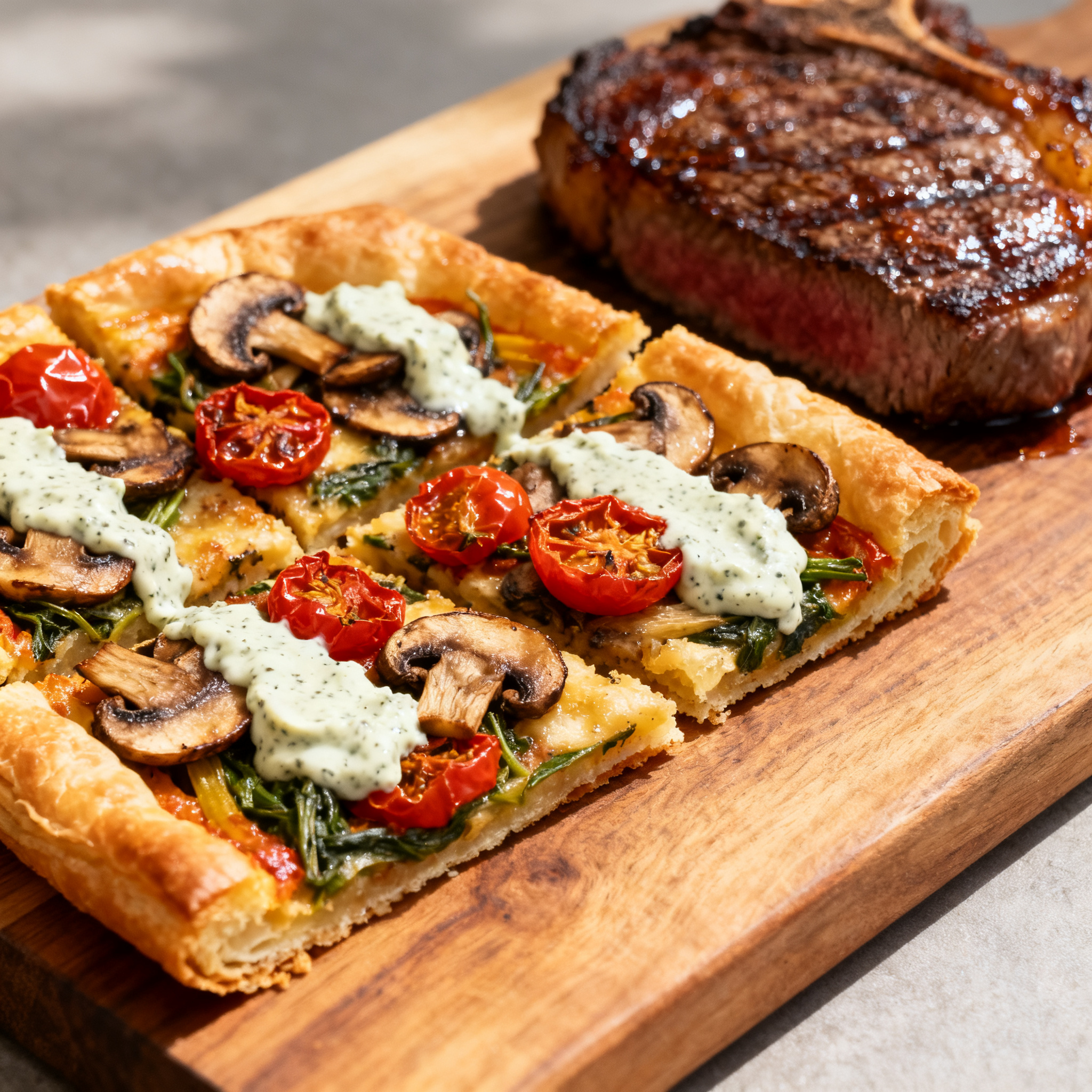
This puff pastry veggie tart skips the soggy-bottom trap that ruins most versions, thanks to a thin Dijon-and-Parmesan seal and a docked, blind-baked border that hold their crunch under juicy mushrooms and blistered tomatoes. It's the side dish that makes a simple pan-seared steak look like it came out of a bistro kitchen, and it takes about 35 minutes start to finish. A horseradish crème fraîche drizzle at the end ties the whole plate back to the steak, instead of tasting like a random vegetable tart that happens to be on the same table.
Simple, everyday ingredients and clear, step-by-step instructions — every recipe made in Dorothy’s kitchen before it reaches yours. Jump to the full recipe card below.
PrintPuff Pastry Veggie Tart – The Steak Dinner Side That Looks Fancy
A crisp puff pastry veggie tart with a mustard-Parmesan seal and a horseradish cream drizzle, built to serve alongside a good steak.
- Prep Time: 15 minutes
- Cook Time: 28 minutes
- Total Time: 43 minutes
- Yield: 4 1x
- Method: Baking
- Cuisine: French-American
Ingredients
- 1 sheet all-butter puff pastry, thawed but still cold (about 14 oz / 400g)
- 1 large egg, beaten, for egg wash
- 2 tablespoons Dijon mustard
- 1/3 cup finely grated Parmesan, divided
- 8 oz cremini mushrooms, sliced
- 1 large shallot, thinly sliced
- 1 tablespoon olive oil, plus more for drizzling
- 1 cup cherry tomatoes, halved
- 1 teaspoon fresh thyme leaves (or 1/2 teaspoon dried)
- Kosher salt and black pepper
- 1/4 cup crème fraîche (or sour cream)
- 1 tablespoon prepared horseradish
- 1 cup baby arugula
- 1 teaspoon lemon juice
- Flaky salt, for finishing
Instructions
- Preheat the oven to 400°F (200°C) and line a baking sheet with parchment.
- On a lightly floured surface, roll the puff pastry into a neat rectangle and transfer it to the sheet. With a sharp knife, score a border about 3/4 inch in from the edge, cutting only halfway through the dough. Prick the center all over with a fork.
- Brush the border with egg wash. Bake for 10 minutes, until the border is puffed and just turning gold and the center has set. If the center puffs up, press it down gently with a spatula.
- While the pastry bakes, heat the olive oil in a skillet over medium-high heat. Cook the mushrooms and shallot for 6-8 minutes, stirring occasionally, until all their liquid has evaporated and they’re browned. Season with salt, pepper, and thyme; let cool slightly.
- Spread the Dijon mustard over the center of the tart, inside the border, and sprinkle with half the Parmesan.
- Layer on the mushroom-shallot mixture and the tomatoes, cut side up, then scatter with the remaining Parmesan.
- Bake for 15-18 minutes more, until the pastry is deep golden and the tomatoes are blistered.
- Whisk the crème fraîche with the horseradish and a pinch of salt. Toss the arugula with the lemon juice, a drizzle of olive oil, and a pinch of salt.
- Top the warm tart with the arugula, drizzle with the horseradish cream, and finish with flaky salt. Slice and serve alongside steak.
Notes
The mustard-Parmesan seal and the docked, blind-baked border are what keep this from turning into a soggy pastry — don’t skip either step, especially with juicy vegetables like tomatoes. Keep pastry cold right up until it goes in the oven; if it’s warm and soft, chill the assembled tart for 10 minutes before baking. You can sauté the mushrooms and mix the horseradish cream up to a day ahead and refrigerate, but assemble and bake the tart itself just before serving — reheat leftovers in a 375°F oven for 8-10 minutes, never the microwave, or the pastry goes limp.
Most puff pastry veggie tarts fail in the same spot: the center goes gummy and translucent under the vegetables while the edges are gorgeous and flaky. The fix isn’t fancier vegetables, it’s a barrier. A thin layer of Dijon mustard brushed directly onto the dough, topped with a scatter of finely grated Parmesan, does two jobs at once — it seals the pastry against the moisture that mushrooms and tomatoes inevitably release, and it seasons the base so the tart doesn’t taste flat once you cut into it. This is the same trick French bistros use under tomato tarts, and it works just as well here.
The second piece of the technique matters just as much: score a border about three-quarters of an inch in from the edge without cutting all the way through, dock the center all over with a fork, and blind-bake it for about ten minutes before adding anything. This gives the rim room to puff into tall, shattery layers while the center stays flat and pre-set instead of steaming under wet toppings for twenty straight minutes. If the center still domes up during that first bake, just press it down gently with the back of a spatula — don’t skip this step and hope for the best, because an unset base is the single biggest reason these tarts turn soft in the middle.
Vegetable choice is the other lever. Mushrooms need to be sautéed hard and fast until their liquid is fully gone and they’re actually browned, not just wilted — a pale, wet mushroom is where sogginess starts. Cherry tomatoes go on cut-side up so their juice runs upward and evaporates instead of pooling against the pastry. If you want a heartier, more steakhouse-adjacent version, swap in caramelized shallots and roasted red peppers, or press thin rounds of goat cheese into the base before the vegetables for a creamier bite. Whatever you use, keep total vegetable volume modest — this is a thin, crisp tart, not a deep-dish pie, and piling it high just brings the moisture problem right back.
The horseradish crème fraîche is what makes this specifically a steak-dinner tart rather than a general-purpose one. It’s the same flavor logic as a horseradish cream sauce on prime rib, just repurposed as a finishing drizzle, and it cuts through the richness of the pastry and Parmesan in a way a plain green salad on the side never quite does.
Frequently Asked Questions
Why does my puff pastry veggie tart get soggy on the bottom?
It's almost always unmanaged moisture. Wet, pale mushrooms and tomatoes with their juice facing down are the usual culprits. Sauté vegetables until fully dry and browned, place tomatoes cut side up, and use the Dijon-Parmesan seal plus a docked, blind-baked border so the base is set before any toppings go on.
Can I make this puff pastry veggie tart ahead of time?
Prep the components ahead — sauté the mushrooms and shallots, mix the horseradish cream, and slice the tomatoes — and refrigerate separately. Assemble and bake the tart just before serving, since fully baked puff pastry softens if it sits too long.
What vegetables work best in a puff pastry veggie tart?
Lower-moisture, cooked-down vegetables work best: sautéed mushrooms, caramelized shallots or onions, roasted red peppers, or thin rounds of blanched asparagus. Cherry tomatoes are fine in moderation as long as they go on cut side up. Avoid raw zucchini or eggplant, which release too much water as they bake.
Can I use store-bought puff pastry?
Yes — an all-butter store-bought puff pastry works well and is what most home cooks reach for. Just keep it cold until baking, since a warm, soft sheet won't puff into distinct, flaky layers.
What should I serve with a puff pastry veggie tart besides steak?
It also works well next to roast chicken, grilled lamb chops, or simply on its own with a lightly dressed green salad as a light vegetarian main.
Get our 10 best recipes — free
Join the Receipster newsletter and we’ll send you Dorothy’s 10 most-loved recipes as a free PDF.
Free PDF + new recipes every week. Unsubscribe anytime.