Oktoberfest Bratwurst Skillet (Beer-Glazed, Not Boiled)
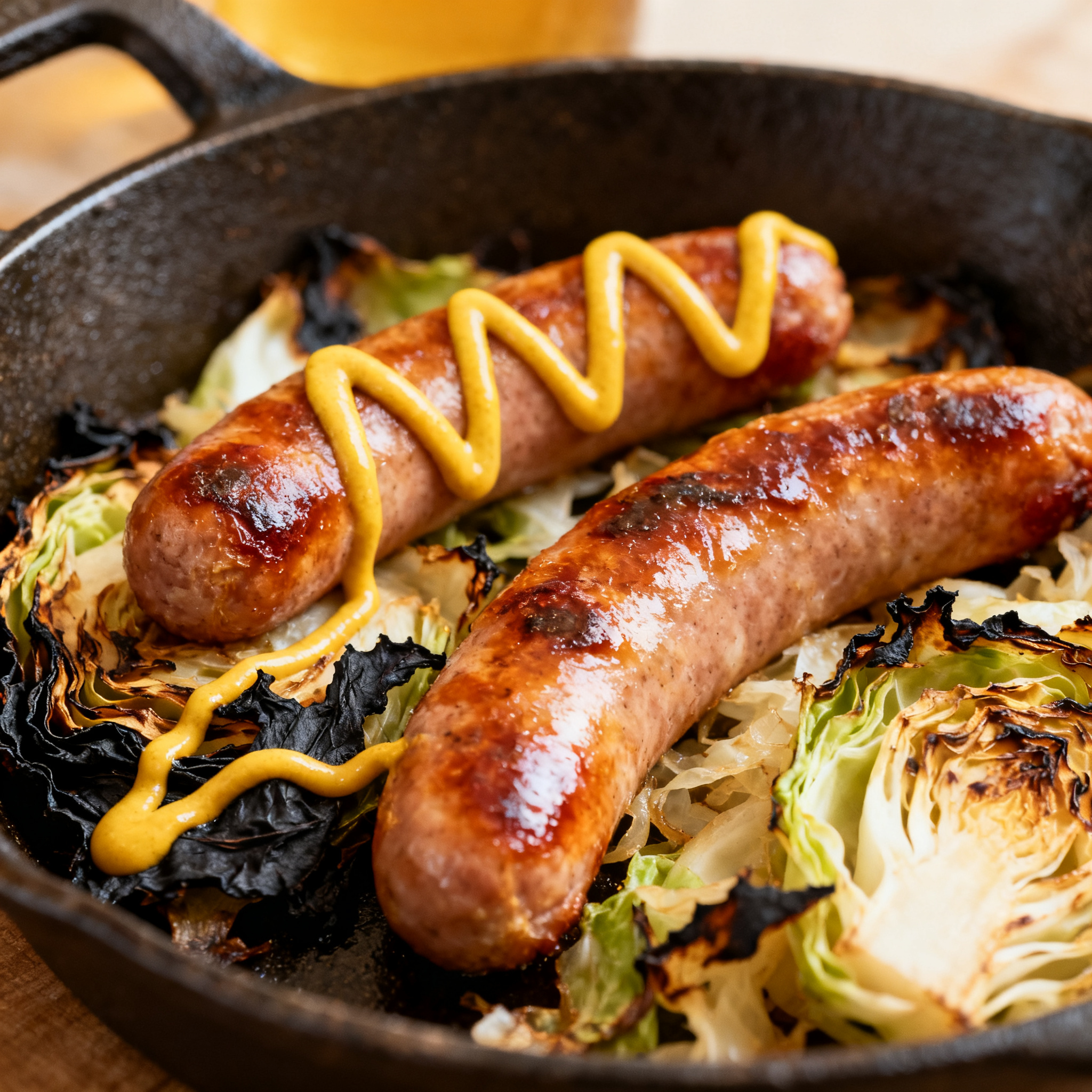
Forget the pot of simmering beer water — this Oktoberfest bratwurst skillet sears the sausages first, then lets them finish in a reduced dark beer and apple butter glaze until the casings turn sticky and lacquered. Charred cabbage stands in for soft sauerkraut, and a scatter of crushed rye crackers adds the crunch a soggy skillet usually lacks. It's the kind of one-pan dinner that explains why bratwurst content is already spiking weeks before the actual festival.
Simple, everyday ingredients and clear, step-by-step instructions — every recipe made in Dorothy’s kitchen before it reaches yours. Jump to the full recipe card below.
I cross-reference this one constantly from the soups, braises and steak dinners collection.
PrintOktoberfest Bratwurst Skillet (Beer-Glazed, Not Boiled)
Seared bratwurst glazed in dark beer and apple butter over charred cabbage, finished with a crunchy rye topping.
- Prep Time: 15 minutes
- Cook Time: 25 minutes
- Total Time: 40 minutes
- Yield: 4 1x
- Method: Skillet
- Cuisine: German-American
Ingredients
- 6 bratwursts
- 1 tbsp neutral oil
- 1/2 head green cabbage, thinly sliced
- 1 yellow onion, sliced
- 1 firm apple (like Honeycrisp), sliced
- 3/4 cup dark lager (Marzen or brown ale)
- 2 tbsp apple butter
- 1 tbsp whole grain mustard
- 1/2 tsp caraway seeds
- 2 tbsp butter
- Salt and black pepper, to taste
- 1/2 cup crushed rye crackers or pretzels
- Fresh parsley or chives, chopped, for serving
Instructions
- Heat oil in a large cast iron or heavy skillet over medium-high heat. Sear bratwursts on all sides until deeply browned, about 8 minutes total. Remove and set aside (they won’t be fully cooked yet).
- Add butter to the same pan. Add cabbage, onion, and apple in a single layer; let sit undisturbed 3-4 minutes to char before stirring. Cook 6-8 minutes total until cabbage is charred at the edges but still crisp-tender. Season with salt, pepper, and caraway seeds.
- Push vegetables to the side. Pour in the beer to deglaze, scraping up any browned bits. Stir in apple butter and mustard.
- Nestle the bratwursts back into the pan, partially submerged in the sauce. Simmer uncovered 8-10 minutes, turning occasionally, until the brats are cooked through (internal temp 160°F) and the sauce has reduced to a glossy glaze coating the sausages.
- Remove from heat. Scatter crushed rye crackers over the top and finish with fresh parsley or chives. Serve straight from the skillet.
Notes
Don’t cover the pan while the glaze reduces — steam stalls the process and you’ll end up with a thin, sour liquid instead of a sticky glaze. If your beer is very bitter, add extra apple butter rather than sugar to balance it. Leftovers keep 3 days refrigerated; reheat gently in a skillet so the glaze doesn’t break. For a nonalcoholic version, use apple cider with a splash of malt vinegar in place of the beer.
Most bratwurst skillets make the same mistake: they boil the brats in beer first, which is exactly backwards. Boiling leaches flavor out of the sausage and into water you’re about to dump down the drain, and it leaves the casing pale and rubbery instead of snappy. The fix is to treat beer as a glaze, not a poaching liquid. Sear the brats hard in a dry skillet until the casings are deeply browned and starting to split slightly, then pull them out and build a sauce in the fond — dark lager, a spoonful of apple butter for round sweetness, and whole grain mustard for sharpness. Nest the brats back into that sauce and let it reduce around them. By the time the liquid has gone from thin and foamy to thick and glossy, it’s clinging to the sausages instead of drowning them.
The second departure from tradition is the cabbage. Classic sauerkraut is great on a hot dog, but simmered into a skillet it turns soft and one-note. Here the cabbage gets a hard sear in the same pan before the brats go back in — high heat, minimal stirring, so the edges char while the core stays crisp. That contrast, charred and crunchy against the sticky glazed sausage, is what makes this feel like a dish with intention rather than a dump-and-simmer sheet of brown food. A handful of crushed rye crackers or pretzel pieces stirred in at the very end (off heat, so they don’t go soggy) gives you the textural crunch a typical braised bratwurst skillet never has.
The mistake to watch for is rushing the glaze. If you dump the beer in and pull the pan off heat after two minutes, you’ll get a thin, sour puddle instead of a glaze — the alcohol needs to cook off and the sugars from the apple butter need real reduction time, usually eight to ten minutes at a steady simmer. Don’t cover the pan; steam traps moisture and stalls the reduction. If your beer is very hoppy, cut the bitterness with an extra half-tablespoon of apple butter rather than more sugar, which can push the sauce cloying. No dark lager on hand: a Marzen or even a brown ale works, and for a nonalcoholic version, apple cider reduced with a splash of malt vinegar gets remarkably close.
Frequently Asked Questions
Why glaze the bratwurst instead of boiling it in beer?
Boiling leaches flavor out of the sausage into water you discard, and leaves the casing pale and rubbery. Searing first and reducing the beer into a glaze around the brats concentrates flavor and gives you a sticky, caramelized crust instead.
What's the best beer for an Oktoberfest bratwurst skillet?
A dark lager like Marzen or a brown ale works best — malty and slightly sweet, which balances the mustard and reduces into a rounder glaze. Very hoppy IPAs can turn the sauce bitter.
Can I make this bratwurst skillet without alcohol?
Yes. Substitute the beer with apple cider plus a splash of malt vinegar for tang, and reduce it the same way — you'll still get a sticky, sweet-savory glaze.
What can I use instead of rye crackers for crunch?
Crushed pretzels, pumpernickel croutons, or even toasted rye breadcrumbs all work. The goal is a crunchy, malty topping added off heat so it doesn't go soggy.
Get our 10 best recipes — free
Join the Receipster newsletter and we’ll send you Dorothy’s 10 most-loved recipes as a free PDF.
Free PDF + new recipes every week. Unsubscribe anytime.
![Sesame Ginger Noodle Salad [Vegan] Recipe](https://www.receipster.com/wp-content/uploads/2026/05/25-minute-sesame-noodle-salad-hero-fb-768x1024.webp)