Sizzling Steak Fajitas with Charred Peppers (The Char-First Method)
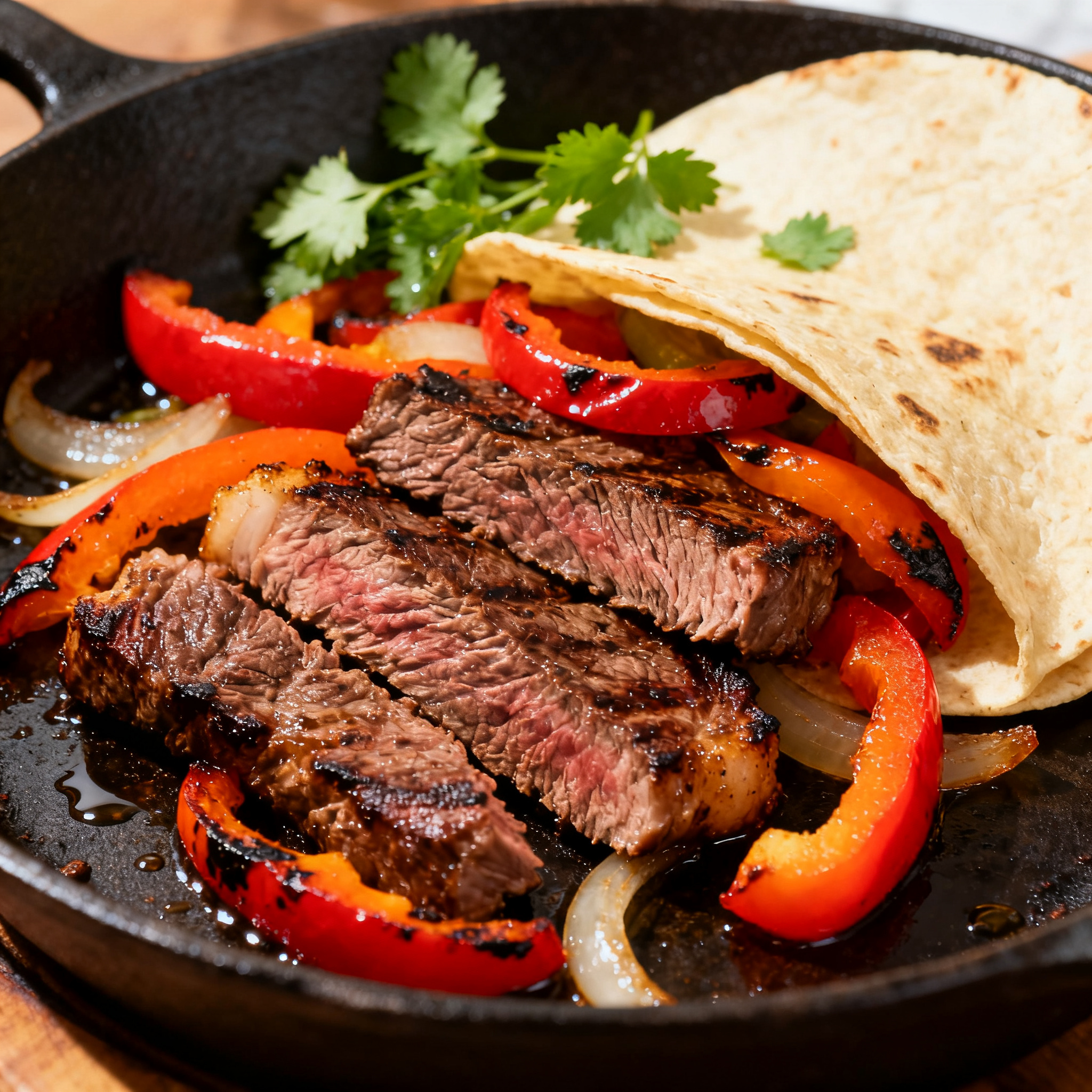
Most steak fajitas recipes give you sad, steamed peppers and flat-tasting beef because everything gets sliced before it hits the pan. Flip the order — char the peppers and onions whole until blistered, then slice everything after cooking — and you get real smoke instead of soggy strips. A spoonful of fish sauce in the marinade seals the deal, adding a savory backbone you'll taste but never place.
Simple, everyday ingredients and clear, step-by-step instructions — every recipe made in Dorothy’s kitchen before it reaches yours. Jump to the full recipe card below.
PrintSizzling Steak Fajitas with Charred Peppers (The Char-First Method)
Skirt steak marinated with a splash of fish sauce and citrus, seared hot, then finished with peppers and onions charred whole for real smoky flavor instead of steamed strips.
- Prep Time: 15 minutes
- Cook Time: 15 minutes
- Total Time: 30 minutes (plus 1-4 hours marinating)
- Yield: 4 1x
- Method: Searing and charring
- Cuisine: Tex-Mex
Ingredients
- 1.5 lbs skirt or flank steak
- 3 tablespoons lime juice
- 2 tablespoons orange juice
- 1 tablespoon fish sauce
- 3 tablespoons olive oil, divided
- 4 cloves garlic, minced
- 1.5 teaspoons ground cumin
- 1 teaspoon smoked paprika
- 1 teaspoon kosher salt, plus more to taste
- 1/2 teaspoon black pepper
- 2 large bell peppers (red and yellow), halved and seeded
- 1 large white onion, cut into thick planks
- 2 tablespoons butter
- 8 small flour or corn tortillas, warmed
- Lime wedges, cilantro, and sour cream to serve
Instructions
- In a bowl or zip-top bag, whisk together lime juice, orange juice, fish sauce, 2 tablespoons olive oil, garlic, cumin, smoked paprika, salt, and pepper. Add the steak, coat well, and marinate 1 to 4 hours in the fridge — no longer, or the citrus will start breaking down the texture.
- Remove the steak from the fridge 20 minutes before cooking and pat it completely dry with paper towels.
- Heat a large cast iron skillet over the highest heat your stove allows until it’s smoking hot. Add the remaining tablespoon of oil, then sear the steak 3 to 4 minutes per side for medium-rare. Transfer to a plate, tent loosely with foil, and let rest 10 minutes.
- In the same hot skillet, lay the pepper halves skin-side down and the onion planks flat. Don’t move them for 2 to 3 minutes so they actually blacken and blister rather than just heating through. Flip and char the other side another 2 to 3 minutes.
- Transfer the charred vegetables to a cutting board and slice into strips once cool enough to handle.
- Slice the rested steak thinly against the grain, on a sharp bias.
- Return the skillet to high heat, add the butter, then toss the sliced steak and charred vegetables back in together for 30 seconds to reheat and pick up the pan juices. Serve immediately, straight from the skillet, with warm tortillas, lime wedges, cilantro, and sour cream.
Notes
Char the peppers and onions in large pieces, never pre-sliced strips — that’s what actually produces the smoky flavor everyone associates with good fajitas. Skirt steak needs a shorter marinade than flank because its open grain absorbs acid faster. Always rest the steak before slicing, and always slice against the grain. If your stove can’t get a pan screaming hot, char the vegetables under the broiler instead, 4-5 minutes per side.
Here’s the mistake almost every steak fajitas recipe makes: it tells you to slice the bell peppers and onions into strips first, then sauté them in a crowded pan. Thin strips in a crowded pan don’t char, they steam — you end up with limp, watery vegetables that taste like nothing. The fix is to treat the peppers and onion like you would for a charred salsa: cook them in large pieces (peppers halved and seeded, onion in thick planks) over the highest heat you have until the skins are genuinely blackened in spots, then slice them after they come off the heat. The residual heat finishes the interior to tender-crisp while the outside stays blistered and smoky. It’s a five-minute change in order of operations that fixes the single biggest flaw in this dish.
For the beef, skirt or flank steak both work, but skirt has more fat marbling and takes a marinade faster because of its open grain — I default to it when I can find it. The marinade itself has one unusual ingredient: fish sauce. It sounds off-brand for Tex-Mex, but fish sauce is just concentrated glutamates and salt, the same reason a good fajita marinade traditionally leans on Worcestershire. A tablespoon alongside lime juice, orange juice, garlic, and cumin builds a savory depth that tastes unmistakably like a good steakhouse crust — nobody will identify it, they’ll just ask why these taste better than usual.
Testing notes: don’t marinate longer than 4 hours if you’re using citrus-forward marinades like this one — the acid starts breaking down the surface texture of the meat into mush past that point, especially with thin cuts like skirt steak. Pat the steak fully dry before it hits the pan; wet meat steams instead of searing, and you lose the crust that gives fajitas their character. Cook the steak first, rest it tented under foil while the vegetables char in the same hot pan (all that beef fond flavors the peppers), then slice the steak against the grain on a sharp bias — this matters more with skirt steak than almost any other cut, since its long fibers turn chewy if you cut with them instead of across them. For the actual sizzle, get a cast iron skillet ripping hot on the stove, toss the sliced steak and vegetables back in with a pat of butter for 30 seconds right before serving, and bring the pan straight to the table.
No skirt or flank on hand? Hanger steak or even a well-marbled sirloin will work in a pinch, though sirloin needs a shorter marinade time since it doesn’t have the same open grain structure. Vegetarian swap: portobello caps and charred poblano strips take the same char-first treatment beautifully. If you don’t have fish sauce, a teaspoon of soy sauce plus a pinch of MSG gets you close enough.
Frequently Asked Questions
What is the best cut of steak for a steak fajitas recipe?
Skirt steak is the classic choice for its open grain and beefy flavor, though flank steak works well too. Both need to be sliced thinly against the grain after resting to stay tender.
Why char the peppers and onions whole instead of in strips?
Pre-sliced strips crowd the pan and steam instead of char, leaving them soggy. Cooking peppers and onions in large pieces over high heat lets the outside blacken and blister while the inside stays tender-crisp, then you slice after cooking.
Can I make steak fajitas without fish sauce?
Yes — substitute a teaspoon of soy sauce plus a small pinch of MSG, or a splash of Worcestershire sauce, for a similar savory depth.
How long should I marinate the steak?
One to four hours is the sweet spot. Because this marinade is citrus-forward, marinating longer than 4 hours can start to break down the meat's texture, especially with thinner cuts like skirt steak.
Get our 10 best recipes — free
Join the Receipster newsletter and we’ll send you Dorothy’s 10 most-loved recipes as a free PDF.
Free PDF + new recipes every week. Unsubscribe anytime.