Kimchi Fried Rice Skillet (With a Crispy Bottom Crust)
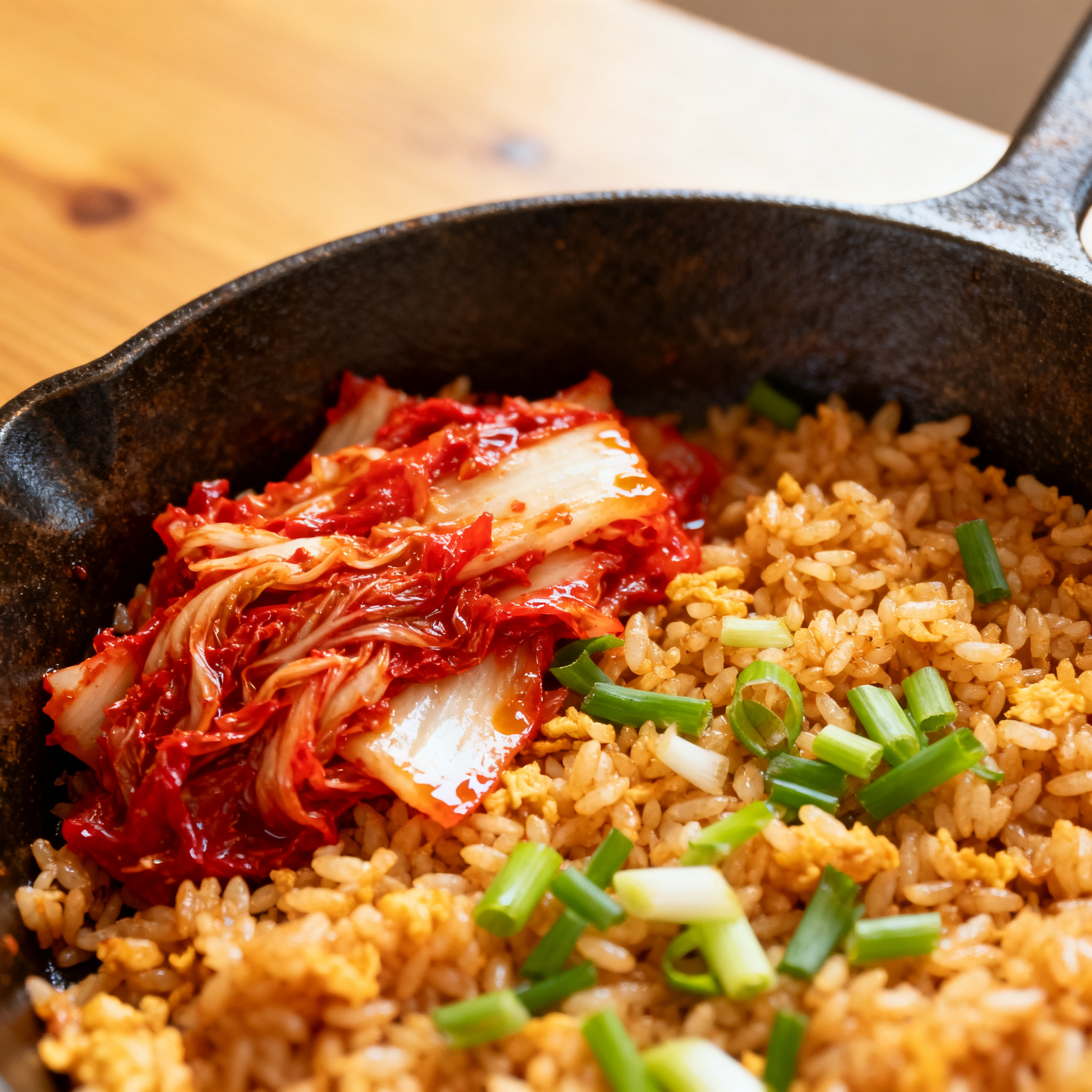
Most kimchi fried rice recipes dump everything in the pan at once and end up soggy, muddy, and one-note. This version sears the kimchi alone first until its edges char and the juices reduce to a syrupy glaze, then presses the rice into that glaze and leaves it alone to form a crackling, nurungji-style crust on the bottom.
Simple, everyday ingredients and clear, step-by-step instructions — every recipe made in Dorothy’s kitchen before it reaches yours. Jump to the full recipe card below.
Looking for a different angle on the same idea? Try my guide to easy side dishes.
PrintKimchi Fried Rice Skillet (With a Crispy Bottom Crust)
A crispy-bottomed kimchi fried rice built by searing the kimchi first, so every bite is caramelized, funky, and toasted instead of soggy.
- Prep Time: 10 minutes
- Cook Time: 20 minutes
- Total Time: 30 minutes
- Yield: 4 1x
- Method: Stir-fry
- Cuisine: Korean
Ingredients
- 2 cups well-fermented kimchi, chopped, plus 3 tablespoons of its brine
- 2 tablespoons neutral oil (or reserved bacon fat)
- 3 slices bacon or 4 oz diced Spam, cubed (optional but recommended)
- 3 cups cold, day-old cooked short-grain rice, broken up by hand
- 1 tablespoon gochujang
- 1 tablespoon soy sauce
- 1 teaspoon toasted sesame oil
- 2 green onions, sliced, whites and greens separated
- 2 cloves garlic, minced
- 1 tablespoon unsalted butter
- 2 fried eggs, for serving
- Toasted sesame seeds and extra sliced green onion, for topping
Instructions
- If using bacon or Spam, cook it in a large skillet or wok over medium-high heat until crisp and rendered, about 4 minutes. Remove and set aside, leaving the fat in the pan.
- Add the oil, garlic, and the whites of the green onions to the same skillet. Sauté 30 seconds until fragrant.
- Add the chopped kimchi in a single layer. Let it cook undisturbed for 3-4 minutes, then stir occasionally, until the liquid has evaporated and the edges are starting to char and caramelize, another 4-5 minutes total.
- Stir the gochujang into the caramelized kimchi until fully coated and glossy.
- Add the cold rice, breaking up any clumps with the spatula, and toss until every grain is coated in the kimchi glaze and evenly reddish in color.
- Press the rice flat and firm against the pan with the back of the spatula. Let it sit undisturbed over medium-high heat for 2 minutes without stirring.
- Drizzle the soy sauce and kimchi brine around the edges of the pan (not directly on top), then fold the crust back through the rice — you want streaks of crispy bits throughout, not a fully broken-up crust.
- Fold in the cooked bacon or Spam, sesame oil, and green onion greens. Remove from heat and stir in the butter until melted.
- Divide among bowls, top each with a fried egg, and finish with sesame seeds and extra green onion.
Notes
Use kimchi that’s been in the fridge at least 2-3 weeks — the sourer and funkier it is, the better it caramelizes; fresh, mild kimchi will taste flat here. Rice must be cold and day-old (or spread on a tray and chilled for 20 minutes) — warm rice turns gummy the second it hits the pan. Don’t skip the undisturbed press-and-sear step; that’s what builds the crust, not extra cooking time. Vegetarian swap: skip the bacon/Spam, use extra oil, and add a splash of extra soy sauce for savoriness. Leftovers reheat best in a hot skillet, never the microwave, or you lose the crust entirely.
The mistake almost everyone makes with kimchi fried rice is treating it like a stir-fry: kimchi, rice, sauce, all tossed together over high heat until it’s technically cooked. The result is always the same — a soft, wet, faintly sour rice that tastes more like “leftovers” than something you’d order twice. The fix isn’t a fancier sauce. It’s sequencing. Kimchi releases a lot of liquid as it cooks, and if that liquid hits the rice too early, the rice steams instead of frying. So the kimchi goes in first, alone, and stays in the pan until the liquid is gone and the edges start to char and caramelize. That’s the flavor base — not the raw kimchi itself, but kimchi reduced down into something deeper and almost jammy.
From there, the rice goes in cold, day-old, and broken up by hand, not a spoon, so the grains stay separate instead of clumping into a paste. Once it’s stirred through the caramelized kimchi, stop stirring. Press the rice flat with the back of the spatula and let it sit untouched over medium-high heat for a solid two minutes before checking. That undisturbed contact time is what builds the crust — the same principle behind Korean nurungji or a good paella socarrat. Skip this step and you just have warm kimchi rice; do it right and you get a crackling, toasted layer that shatters when you scoop it.
The other move that separates this from a diner-counter version: a splash of the kimchi’s own brine stirred in at the end instead of relying purely on soy sauce. That funky, fizzy liquid most people pour down the drain is actually the best seasoning in the jar — sharper and more alive than soy sauce alone, and it needs almost no doctoring. A pat of butter melted over the top right before serving rounds out the sourness without masking it, which is the same trick that makes Korean-American diner fried rice taste richer than the homemade version. If your kimchi is very young and mild, add an extra spoon of gochujang; if it’s aggressively sour and funky, that’s actually ideal here — the caramelization step mellows it out.
Frequently Asked Questions
Why is my kimchi fried rice always soggy?
It's almost always because the kimchi's liquid hits the rice too early, which steams it instead of frying it. Cook the kimchi alone first until its juices fully evaporate and the edges caramelize, then add rice — and use cold, day-old rice, not warm.
Can I use fresh kimchi instead of aged, sour kimchi?
You can, but the flavor will be flatter. Well-fermented kimchi that's at least 2-3 weeks old has more acidity and funk, which mellows and deepens once caramelized. If your kimchi is young, add extra gochujang and a splash more brine to compensate.
What's the best rice for kimchi fried rice?
Short-grain white rice, cooked and refrigerated overnight, works best. The cold grains are firmer and separate more easily, which is essential for getting a crisp texture instead of a mushy one.
Is kimchi fried rice supposed to be spicy?
It should be savory and tangy first, spicy second. The gochujang adds warmth and color, but the dominant flavor should be the caramelized, fermented funk of the kimchi itself.
Get our 10 best recipes — free
Join the Receipster newsletter and we’ll send you Dorothy’s 10 most-loved recipes as a free PDF.
Free PDF + new recipes every week. Unsubscribe anytime.