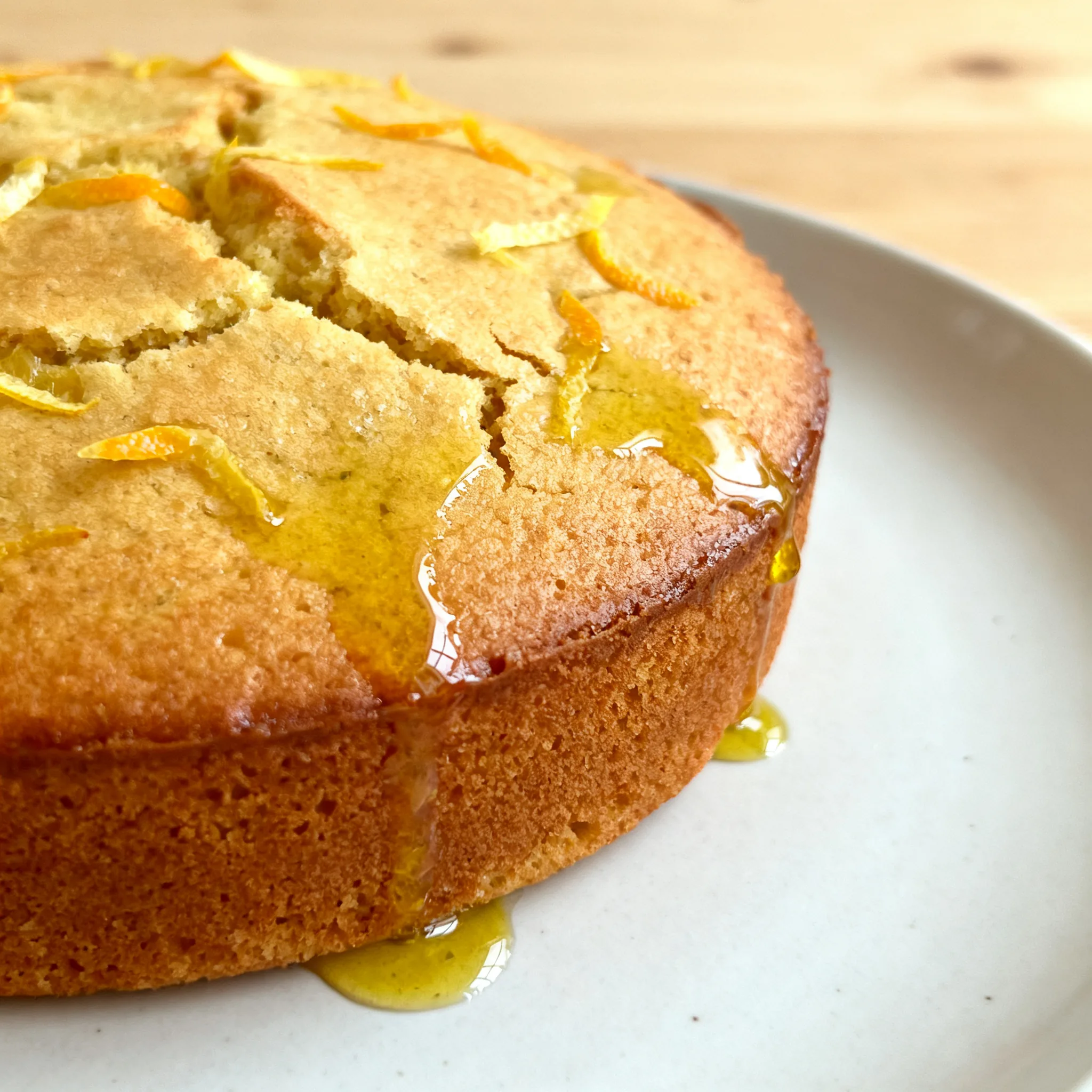
Citrus Olive Oil Cake Recipe
Citrus olive oil cake lives or dies on one step most bakers skip: actually whipping the eggs and sugar into a thick, pale ribbon before the oil goes anywhere near the bowl. This citrus olive oil cake recipe treats that whipping stage as the real recipe, not a formality, because it's the only thing holding the oil, eggs, and citrus juice together instead of letting them separate into a dense, greasy layer at the bottom of the pan.
If you want more desserts that don’t ask much of you on a weeknight, I keep a running list of simple bakes worth keeping in regular rotation.
I've pulled too many olive oil cakes out of the oven with a shiny, almost wet strip along the bottom third, while the top looks perfectly done. That's not an underbaking problem, it's a broken emulsion: the oil was added too fast, or the eggs never built enough air and structure to hold it in suspension, so it sank while the batter set around it.
Get the emulsion right and this cake turns out the way an olive oil cake should: tight, moist crumb, a clean citrus hit from zest rubbed straight into the sugar, and a texture closer to a pound cake than a muffin. Here's how I build the batter, bake it, and keep it good for days after.
PrintCitrus Olive Oil Cake Recipe
A moist, tight-crumbed olive oil cake built on a real emulsion, finished with a bright citrus glaze.
- Prep Time: 15 minutes
- Cook Time: 40-45 minutes
- Total Time: 1 hour 10 minutes
- Yield: 10 1x
- Method: Baking
- Cuisine: American
Ingredients
- 1 3/4 cups (220g) all-purpose flour
- 1 1/2 tsp baking powder
- 1/2 tsp baking soda
- 1/2 tsp fine salt
- 1 cup (200g) granulated sugar
- Zest of 2 large lemons (or 1 orange plus 1 lemon)
- 3 large eggs, room temperature
- 3/4 cup extra virgin olive oil
- 3/4 cup whole milk, room temperature
- 1/4 cup fresh lemon or orange juice
- 1 tsp vanilla extract
- 1 cup powdered sugar, for the glaze
- 2 - 3 tbsp fresh citrus juice, for the glaze
Instructions
- Preheat oven to 350°F. Grease a 9-inch round, light-colored metal cake pan and line the bottom with parchment.
- Whisk the flour, baking powder, baking soda, and salt together in a bowl; set aside.
- In a large bowl, rub the citrus zest into the sugar with your fingers until the sugar looks damp and smells fragrant.
- Add the eggs to the sugar mixture. Whisk with a hand mixer or stand mixer on medium-high for 3-4 minutes, until pale, thick, and holding a ribbon when you lift the whisk.
- With the mixer running on low, stream in the olive oil slowly, a few tablespoons at a time, until fully incorporated and the batter looks glossy and thick, like mayonnaise.
- Whisk in the vanilla. Combine the milk and citrus juice. Add the flour mixture and the milk mixture to the batter in three alternating additions, starting and ending with flour, mixing each addition just until combined.
- Pour the batter into the prepared pan. Bake 40-45 minutes at 350°F, until a toothpick inserted in the center comes out clean and the cake has pulled slightly from the edges of the pan.
- Cool in the pan for 15 minutes, then turn out onto a wire rack to cool completely.
- Whisk the powdered sugar and citrus juice until smooth, then pour or brush over the fully cooled cake.
Notes
Rub the zest into the sugar before anything else touches the bowl; it releases far more citrus oil than sprinkling zest in loose at the end. If you only have a dark nonstick pan, drop the oven to 325°F and start checking at the 32-minute mark. Room temperature eggs and milk whip into a steadier emulsion than cold ones, so pull them out ahead of time.
Why Whipping the Eggs First Keeps This Cake From Going Dense
The whole texture of a citrus olive oil cake depends on an emulsion, and that starts before the oil ever touches the bowl. Rub the citrus zest straight into the sugar with your fingers first; it releases far more fragrant oil than just stirring zest in loose, and that oil becomes part of the batter’s structure, not just its flavor.
Once the zest and sugar are damp and fragrant, whisk in the eggs and beat on medium-high for a full 3 to 4 minutes. I stop when the batter holds a ribbon for a couple of seconds after I lift the whisk, pale and thick, almost like a loose custard. That’s the base that’s strong enough to hold fat in suspension.
Only then does the olive oil go in, slowly, a few tablespoons at a time, with the mixer still running. You’re building the same kind of emulsion as a mayonnaise or a vinaigrette that won’t split. Add the flour and milk in three alternating additions and stop mixing the second the flour streaks disappear; the eggs already did the work, so more beating here only toughens the crumb.
The Pan, the Mixer, and the Oven Temp That Actually Matter
A light-colored, 9-inch round metal cake pan is the right call here. Dark or nonstick pans absorb more heat and will brown the edges before the center sets, so if that’s all you have, drop the oven to 325°F and start checking at the 32-minute mark instead of 40.
- Hand mixer or stand mixer with the whisk attachment, for real air in the eggs and sugar
- A microplane for the zest, so you get the oil-rich zest without the bitter white pith
- Parchment cut to fit the bottom of the pan, since olive oil batter sticks more than a butter cake
Bake in the middle of the oven at 350°F for 40 to 45 minutes. The cake is done when a toothpick comes out clean and the edges have pulled slightly away from the pan, not when the top just looks golden; olive oil cakes brown fast on top while the center is still wet.
Keeping a Citrus Olive Oil Cake Moist After It's Baked
Let the cake cool completely on a rack before you glaze it. A warm cake pulls the glaze right into the crumb instead of letting it set as a thin, bright layer on top, and you lose the contrast that makes this cake look finished.
Once it’s glazed, cover it and keep it at room temperature if you’re serving it within a day. For anything longer, I’d rather move it to the fridge, where it keeps well for 3 to 4 days, and refrigerate it within 2 hours if it’s not getting eaten right away. Oil-based cakes stay moister in the fridge than butter cakes do, so you’re not sacrificing much texture for the extra days.
This isn’t a cake that needs reheating the way a casserole does. If you want a slice slightly warm, a few seconds in the microwave is plenty, just enough to take the chill off before it hits the table.
Swapping the Citrus, the Mix-Ins, and the Glaze
Lemon and orange both work well, and a blood orange or Meyer lemon will push the color and the floral notes even further. I like mixing one of each, half lemon zest and half orange zest, so the cake isn’t one-note sweet or one-note sharp.
For mix-ins, poppy seeds or a few fresh thyme leaves folded into the batter add texture without fighting the citrus. Swap the simple citrus glaze for a honey drizzle, or whip sweetened mascarpone for a richer topping if you’re not keeping this dairy-free.
- Gluten-free: swap the all-purpose flour for a cup-for-cup gluten-free blend; everything else in the batter is already gluten-free
- Dairy-free: swap the whole milk for unsweetened almond or oat milk; the olive oil base and the citrus glaze are dairy-free as written
Whatever citrus you use, keep the ratio of zest to sugar the same so the emulsion has the same amount of oil to hold onto.
What to Bake Next If You Loved This Cake
If the citrus and olive oil combo won you over, vanilla custard cupcakes with whipped custard frosting are a good next bake, same soft, moist crumb logic in cupcake form. For a weekend brunch spread built around this cake, pull together a loaded breakfast board built around temperature zones and slice the cake alongside it.
Frequently Asked Questions
Why did my olive oil cake sink or turn gummy in the middle?
That usually means the emulsion broke, either the eggs and sugar weren't whipped long enough before the oil went in, or the oil was added too fast. It can also mean the cake came out of the oven before the center actually set, since olive oil cakes brown on top well before the middle finishes baking.
Can I use a loaf pan instead of a round cake pan?
Yes, a 9×5 loaf pan works, though the center will take longer to bake since it's deeper. Start checking at the 45-minute mark and expect it to run closer to 55-60 minutes total.
What kind of olive oil should I use?
A good, fruity extra virgin olive oil makes the cake taste like something; use a bland or overly bitter one and the cake will taste flat. You don't need your most expensive bottle, just one you'd be happy to taste on its own.
Can I freeze citrus olive oil cake?
Yes. Wrap the unglazed cake tightly and freeze it for up to 3 months, then thaw at room temperature and glaze it once it's fully thawed, not before, so the glaze doesn't turn cloudy or slide off.
Do I need fresh citrus juice, or will bottled work?
Fresh is worth it here, since bottled juice tends to taste flat and sometimes slightly metallic once it's baked into a glaze. If you're only using zest and skipping juice in a pinch, add an extra tablespoon of milk to keep the batter's liquid ratio right.
Get our 10 best recipes - free
Join the Receipster newsletter and we’ll send you Dorothy’s 10 most-loved recipes as a free PDF.
Free PDF + new recipes every week. Unsubscribe anytime.