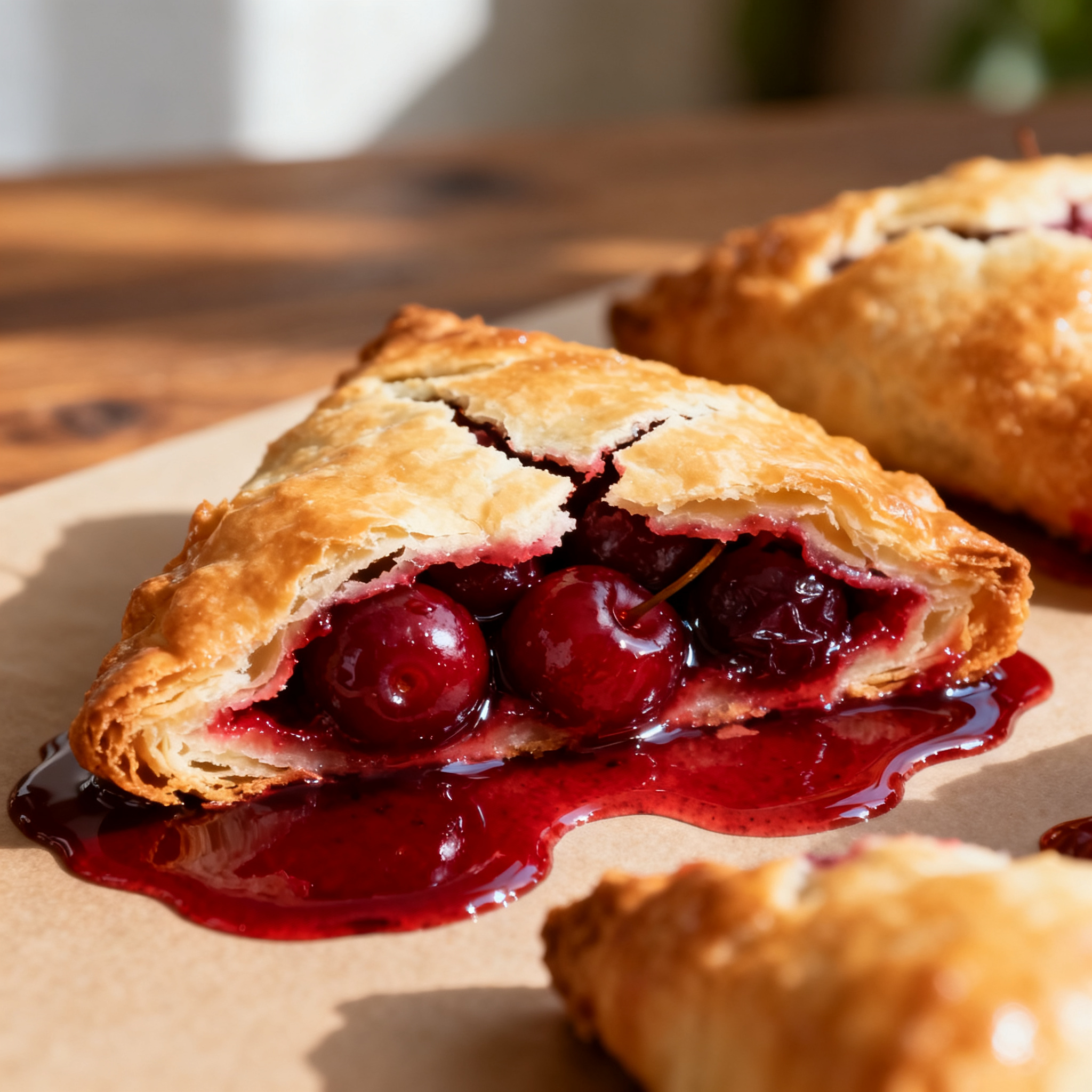
Cherry Turnovers with Red Wine Glaze
These cherry turnovers skip the raw-fruit-in-pastry gamble that leaves most versions soggy and pale. The filling gets cooked down on the stove first, then finished under a red wine glaze that turns a lunchbox pastry into something you'd order with coffee at a wine bar.
Simple, everyday ingredients and clear, step-by-step instructions — every recipe made in Dorothy’s kitchen before it reaches yours. Jump to the full recipe card below.
Browse my dessert index, pies first if you would rather compare before committing.
PrintCherry Turnovers with Red Wine Glaze
Flaky puff pastry turnovers filled with a jammy stovetop cherry filling and brushed with a reduced red wine glaze.
- Prep Time: 20 minutes
- Cook Time: 25 minutes
- Total Time: 45 minutes
- Yield: 4 1x
- Method: Baking
- Cuisine: American
Ingredients
- 1 sheet frozen puff pastry, thawed
- 2 cups pitted fresh or frozen cherries, roughly chopped
- 1/3 cup granulated sugar
- 1 tablespoon cornstarch
- 1 teaspoon fresh lemon juice
- 1/4 teaspoon almond extract (optional)
- 1 large egg, beaten, for egg wash
- 1 tablespoon coarse sugar, for topping
- 1/2 cup dry red wine
- 2 tablespoons granulated sugar, for glaze
- 1 strip orange zest
- Pinch of salt
Instructions
- In a saucepan, combine cherries, sugar, cornstarch, and lemon juice. Cook over medium heat, stirring often, until thickened and glossy, about 6-8 minutes. Stir in almond extract if using. Cool completely, at least 30 minutes (filling can be made a day ahead).
- Roll the puff pastry sheet lightly and cut into 4 squares. Spoon cooled filling onto one half of each square, leaving a 1/2-inch border.
- Brush the border with egg wash, fold pastry over into a triangle, and press edges with a fork to seal.
- Place turnovers on a parchment-lined baking sheet and freeze for 15 minutes while the oven preheats to 400°F (200°C).
- Brush tops with egg wash, sprinkle with coarse sugar, and cut two small slits in the top of each for steam vents.
- Bake 20-24 minutes, until deeply golden and puffed. Meanwhile, simmer red wine, sugar, orange zest, and salt in a small saucepan until reduced by half and syrupy, about 6-8 minutes. Discard the zest.
- Brush the warm wine glaze over the turnovers as soon as they come out of the oven. Let cool 10 minutes before serving.
Notes
Cooking the cherry filling on the stove first is what prevents a soggy bottom crust — do not skip this step or add filling while it’s still warm. Freezing the shaped turnovers before baking keeps the butter in the pastry cold, which is what creates flaky layers. If cherries aren’t in season, frozen work fine; just thaw and drain any excess liquid before cooking down. A ruby port can replace the red wine for a sweeter, less tannic glaze — reduce the added sugar by half.
Most cherry turnover recipes toss raw or barely-thawed cherries straight into the pastry and hope for the best. That’s why so many come out of the oven with a wet, gummy bottom seam while the top is golden and dry. The fix is embarrassingly simple: cook the filling first. Simmer the cherries with sugar and cornstarch until the juices go glossy and jammy, then let it cool completely before it ever touches dough. You’re not baking raw fruit anymore, you’re sealing an already-set filling, which means the pastry stays crisp instead of steaming itself soft from the inside.
The red wine glaze is the part that makes this feel like a different pastry entirely, not just a fruit hand pie with a fancy name. A dry red wine reduced with sugar and a strip of orange zest turns syrupy and slightly tannic, which cuts through the sweetness of the cherries instead of piling more sugar on top. Brush it on right after the turnovers come out of the oven while they’re still hot enough to absorb it into the top layers of pastry instead of just sitting on the surface like a glaze on a doughnut.
Two things separate a good batch from a great one. First, freeze the assembled turnovers for 15 minutes before they go in the oven — cold butter in the dough is what gives you those visible flaky layers, and a warm turnover just melts flat. Second, cut two small steam vents in the top of each one. Skip this and the filling can blow out the seams instead of releasing steam cleanly. If you don’t have red wine open, a ruby port reduced with less sugar works, or swap in fresh apricots for a lighter, less jammy filling.
Frequently Asked Questions
Why are my cherry turnovers soggy on the bottom?
This almost always happens when raw or under-cooked cherry filling goes straight into the pastry. Cook the filling on the stovetop until thick and jammy, then cool it fully before assembling — this keeps excess liquid out of the dough.
Can I use frozen cherries for cherry turnovers?
Yes. Thaw them first and drain off the extra juice, then proceed with the stovetop cooking step as usual. The cooking time may run a minute or two longer since frozen cherries release more liquid.
What can I use instead of red wine in the glaze?
A ruby port works well with less added sugar, or you can use unsweetened cranberry juice reduced the same way for a non-alcoholic version with similar tartness.
Can I make cherry turnovers ahead of time?
Assemble and freeze the unbaked turnovers on a tray, then transfer to a freezer bag. Bake straight from frozen, adding about 5 extra minutes, and glaze after baking as usual.
Get our 10 best recipes — free
Join the Receipster newsletter and we’ll send you Dorothy’s 10 most-loved recipes as a free PDF.
Free PDF + new recipes every week. Unsubscribe anytime.