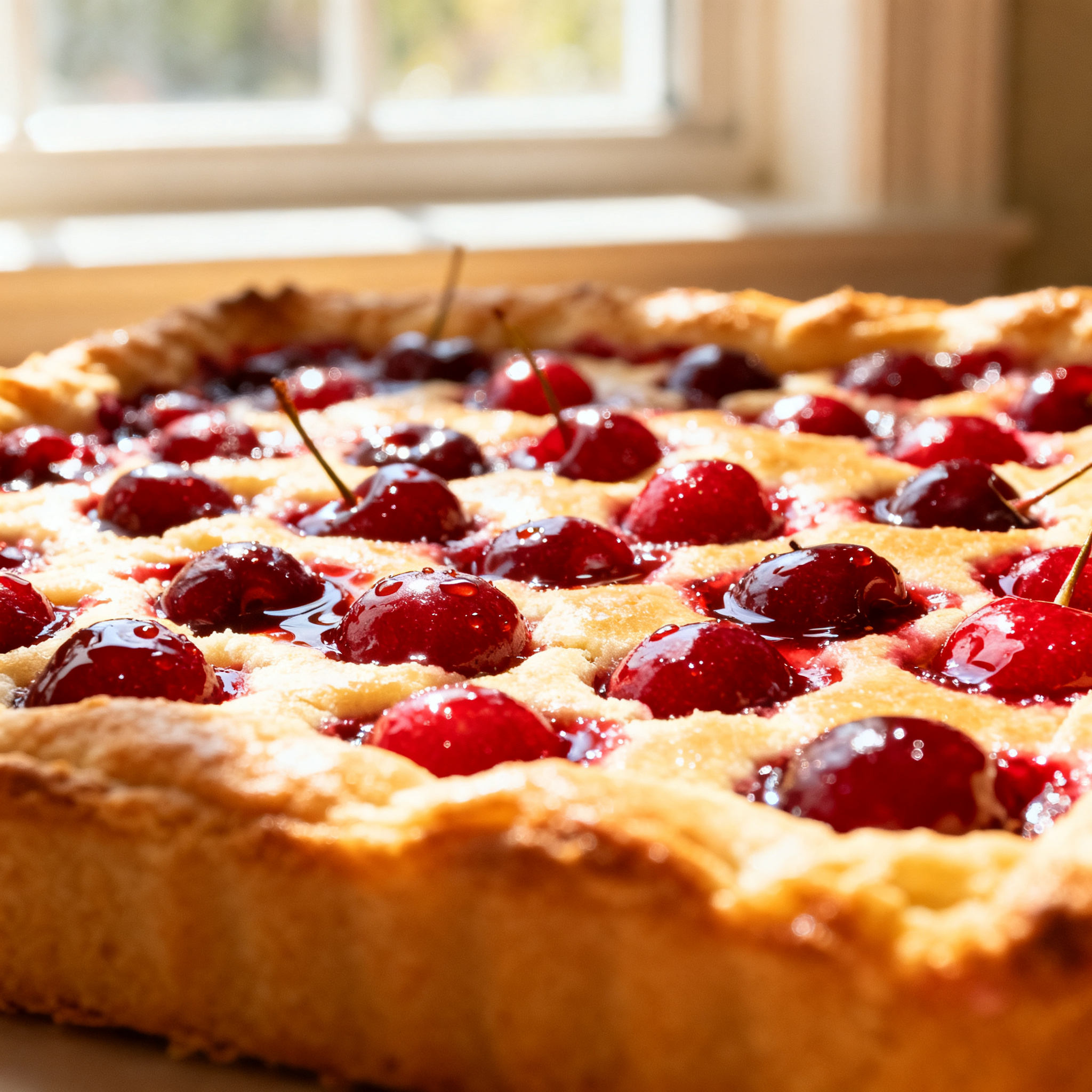
Sour Cherry Slab Pie (The Juice-Reduction Method for a Filling That Actually Slices)
Most sour cherry pie recipes dump fruit, sugar, and thickener straight into the crust and hope for the best — which is how you end up with a bright red puddle on your plate. This sour cherry slab pie fixes that by draining and reducing the cherry juice into a concentrated syrup before it ever meets the crust, then bakes the whole thing in a sheet pan so you get more lattice, more edge, and more crust-to-filling ratio in every square.
Simple, everyday ingredients and clear, step-by-step instructions — every recipe made in Dorothy’s kitchen before it reaches yours. Jump to the full recipe card below.
I put the pies, bars and cheesecakes round-up together precisely so you would not have to scroll for this.
PrintSour Cherry Slab Pie (The Juice-Reduction Method for a Filling That Actually Slices)
A sheet-pan sour cherry pie with a juice-reduction filling that slices clean instead of running all over the plate.
- Prep Time: 45 minutes
- Cook Time: 55 minutes
- Total Time: 6 hours (includes maceration and cooling)
- Yield: 20 1x
- Method: Baking
- Cuisine: American
Ingredients
- 3 3/4 cups (470g) all-purpose flour
- 1 tbsp granulated sugar
- 1 1/2 tsp fine sea salt
- 1 1/2 cups (3 sticks) unsalted butter, very cold, cubed
- 3/4 to 1 cup ice water
- 6 cups pitted sour cherries (fresh, frozen and thawed, or jarred and drained)
- 1 1/4 cups granulated sugar (reduce to 3/4 cup if using sweetened jarred cherries)
- 1/3 cup instant tapioca, ground fine in a spice grinder
- 1/4 tsp almond extract
- 1 tbsp fresh lemon juice
- 1/4 tsp fine sea salt
- Pinch of black pepper
- 2 tbsp cold unsalted butter, cubed
- 2 tbsp heavy cream, for brushing
- Coarse sanding sugar, for topping
Instructions
- Toss cherries with 1 1/4 cups sugar in a bowl. Let sit at room temperature 45–60 minutes, stirring once, until a pool of juice collects at the bottom.
- Drain the juice into a small saucepan (keep the cherries separate). Simmer the juice over medium heat until reduced to about 1/3 cup and syrupy, 8–10 minutes. Cool slightly.
- Meanwhile, pulse flour, 1 tbsp sugar, and 1 1/2 tsp salt in a food processor. Add cold butter and pulse until pea-sized crumbs form. Drizzle in ice water, pulsing, until the dough just holds together. Divide into two pieces, one slightly larger, flatten into rectangles, and chill 1 hour.
- Roll the larger dough piece into a rectangle and fit it into a 13×18-inch sheet pan, letting excess hang over the edges.
- Combine the drained cherries, reduced syrup, tapioca, almond extract, lemon juice, 1/4 tsp salt, and black pepper. Let sit 10 minutes so the tapioca starts to soften, then spread evenly over the bottom crust. Dot with the 2 tbsp cold butter.
- Roll the second dough piece and cut into strips for a lattice, or lay it whole and cut vents. Weave or lay over the filling, trim and crimp the edges to seal.
- Chill the assembled pie 20–30 minutes. Brush the top crust with heavy cream and scatter with sanding sugar.
- Bake at 425°F (220°C) for 20 minutes, then reduce to 375°F (190°C) and bake 30–35 minutes more, until the crust is deep golden and the filling bubbles thickly at the vents.
- Cool completely on a rack, at least 4 hours, before slicing into squares.
Notes
Grind instant tapioca in a spice grinder or blender before using — whole pearls stay chewy and won’t dissolve fully in the bake time. If your cherries are very juicy jarred ones, skip maceration and just reduce a cup of the jarring liquid down to syrup instead. The unbaked, assembled pie freezes well wrapped tightly in the pan; bake straight from frozen, adding 10–15 minutes to the covered baking time.
The trick here is simple but almost nobody does it: macerate the pitted cherries in sugar until they release their juice, then pour that juice off and reduce it separately on the stove until it’s thick and jammy before folding it back in with the fruit. This does two things a straight cornstarch slurry can’t. First, it concentrates the cherry flavor instead of diluting it with water that bakes off anyway. Second, it means the thickener only has to manage a syrup, not a puddle, so you can use less of it and still get clean, sliceable wedges — or in this case, clean sliceable squares, since a slab pie spreads the same filling thinner across a sheet pan and gives every piece a fair share of lattice.
The common mistake with sour cherries specifically is treating them like sweet cherries: less sugar than you think you need, and a heavy hand with cornstarch to compensate for how juicy they are. Cornstarch thickens beautifully hot but can weep and go gluey as it cools, especially with high-acid fruit like Montmorency cherries. Finely ground instant tapioca holds its set better over time and stays glossy rather than pasty — if you only have cornstarch, cut the amount by about a third and expect a slightly softer set. A splash of almond extract isn’t optional flavoring here; it’s doing real work, since sour cherries and almond share the same aromatic compound and the extract amplifies a fruitiness that sugar alone can’t reach. A pinch of black pepper in the filling sounds strange until you taste it — it just barely cuts the sweetness so the tartness of the cherries doesn’t get buried.
Fresh sour cherries have a maddeningly short season, so frozen Montmorency cherries (thawed and well-drained) or jarred sour cherries in light syrup work fine — just adjust the sugar in the syrup version since it’s already sweetened, and skip a separate maceration step for jarred fruit since the juice is already released. For a hands-off top, skip the lattice and go with a full top crust slashed with vents; for a nuttier crust, swap up to a quarter of the flour for finely ground almond flour to echo the almond extract in the filling. However you finish it, let the pie cool completely — a full four hours, longer than feels reasonable — before cutting, because the filling keeps setting as it cools and cutting it warm is the fastest way to undo all the reducing you just did.
Frequently Asked Questions
Why is my sour cherry pie filling always runny?
Most recipes add raw cherry juice directly to the filling, and that extra liquid overwhelms the thickener. Draining the juice and reducing it to a syrup first, as in this sour cherry slab pie, removes the excess water before it goes near the crust, so the filling sets properly.
Can I use frozen sour cherries for this slab pie?
Yes. Thaw them fully and drain off any accumulated liquid before macerating, since frozen cherries release even more juice than fresh ones — that extra liquid is exactly what the reduction step is built to handle.
Cornstarch or tapioca for sour cherry pie filling?
Finely ground instant tapioca holds its thickening power better as the pie cools and stays glossy rather than gluey, which matters with acidic sour cherries. Cornstarch works in a pinch but use about a third less than you would for tapioca.
Can I make this pie ahead of time?
Assemble the whole pie unbaked, wrap tightly, and freeze it for up to 2 months — bake straight from frozen with 10–15 extra minutes. Baked pie also keeps well at room temperature, covered, for up to 2 days.
Why does the filling have black pepper in it?
A small pinch cuts through the sweetness without reading as spicy, letting the natural tartness of the sour cherries stand out instead of getting flattened by sugar.
Get our 10 best recipes — free
Join the Receipster newsletter and we’ll send you Dorothy’s 10 most-loved recipes as a free PDF.
Free PDF + new recipes every week. Unsubscribe anytime.