Eggnog French Toast Casserole
An eggnog french toast casserole has one job, a custardy center, and it fails when cold custard goes over fresh, pillowy bread and straight into the oven: the middle stays a wet puddle while the edges dry out and curl.
If you like keeping a few of these soak-overnight mornings on standby, my scones, quick breads and breakfast bakes are there for whenever a crowd shows up early.
Fresh bread is already full of moisture, and eggnog is thicker and sweeter than the milk you'd use for a plain custard, so together they soak the outside of each cube fast without ever working their way through. Cubing the bread ahead and letting it go a little stale, or drying it in a low oven for about 10 minutes, gives it somewhere to pull that custard into, and a few hours (or overnight) in the fridge lets every piece soak at the same rate instead of just the bottom layer.
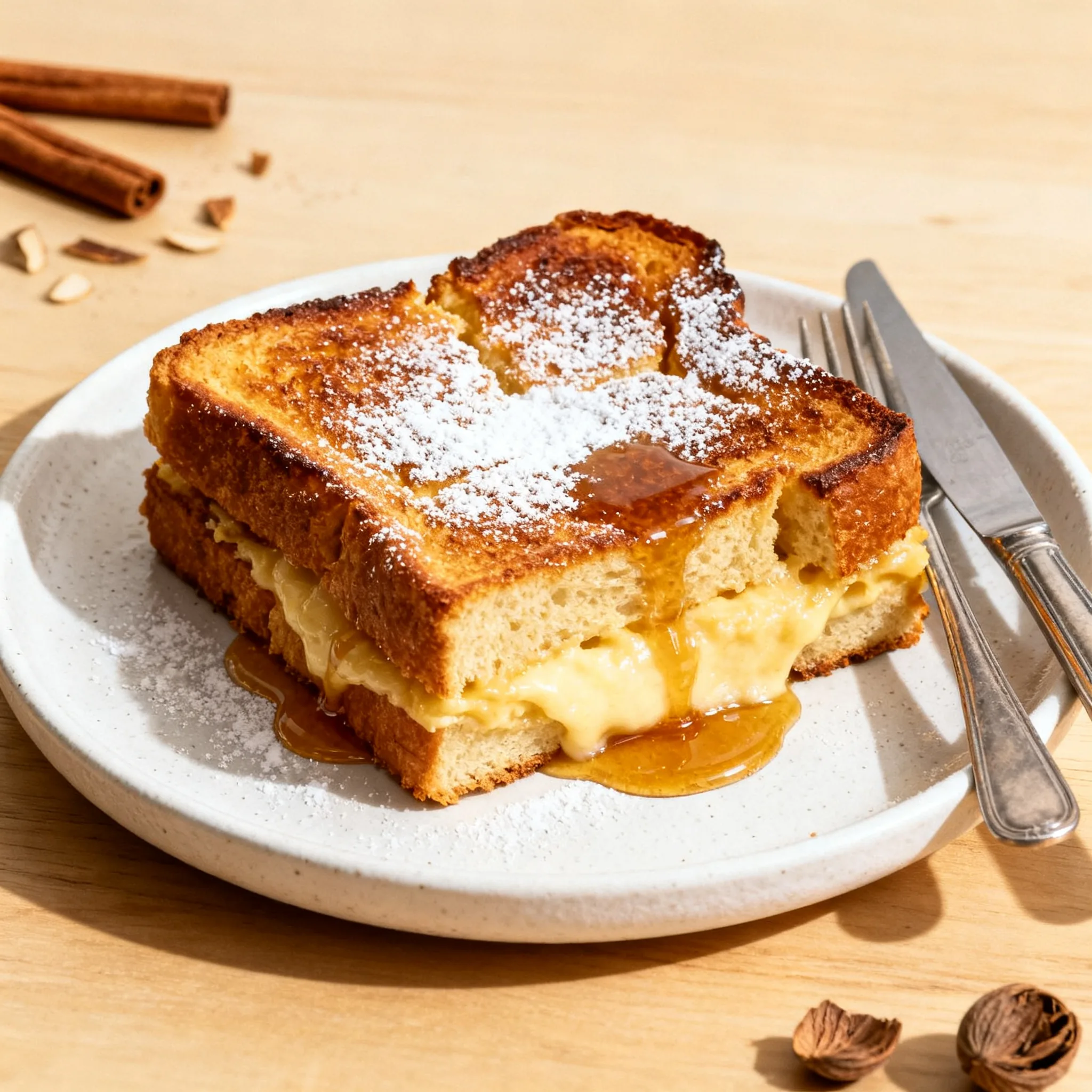
Bake it the right way and you get a casserole that's custardy in the center, a little crisp on top, and tastes like eggnog without turning into sweet scrambled eggs, the kind of make-ahead breakfast you assemble the night before and slide into the oven while the coffee's still brewing.
PrintEggnog French Toast Casserole
A custardy, spiced eggnog french toast casserole you soak overnight and bake until set, perfect for a make-ahead holiday breakfast.
- Prep Time: 20 minutes (plus 2 hours to overnight chilling)
- Cook Time: 40 to 50 minutes
- Total Time: 1 hour 10 minutes (plus chilling time)
- Yield: 8 1x
- Method: Baked
- Cuisine: American
Ingredients
- 1 pound challah or brioche bread, cut into 1-inch cubes, slightly stale
- 2 cups eggnog
- 1/2 cup whole milk
- 5 large eggs
- 1/3 cup brown sugar
- 1 teaspoon vanilla extract
- 1/2 teaspoon ground cinnamon
- 1/4 teaspoon ground nutmeg
- 1/4 teaspoon salt
- 3 tablespoons unsalted butter, melted, plus more for greasing
- 1/3 cup all-purpose flour (for streusel, optional)
- 1/3 cup brown sugar (for streusel, optional)
- 1/2 teaspoon ground cinnamon (for streusel, optional)
- 1/4 cup cold unsalted butter, cubed (for streusel, optional)
- 1/2 cup chopped pecans, optional
Instructions
- Butter a 9×13 inch baking dish generously. Spread the bread cubes evenly across the bottom.
- In a large bowl, whisk together the eggnog, milk, eggs, brown sugar, vanilla, cinnamon, nutmeg, and salt until smooth.
- Pour the custard evenly over the bread cubes, pressing down gently so every piece soaks on both sides. Drizzle with the melted butter.
- Cover tightly with foil and refrigerate at least 2 hours, preferably overnight, pressing the bread down once more partway through the soak.
- When ready to bake, preheat the oven to 350°F. For the streusel, rub the flour, brown sugar, cinnamon, and cold butter together with your fingers until crumbly, then stir in the pecans.
- Keep the casserole covered with foil and bake for 20 to 25 minutes.
- Uncover, scatter the streusel over the top if using, and bake 20 to 25 minutes more, until puffed, set in the center, and the custard reaches 160°F.
- Let the casserole rest 5 to 10 minutes before serving so it slices cleanly.
Notes
Press the bread down into the custard twice, once right after pouring and again halfway through the soak, so you don’t end up with a dry top layer. Full-fat eggnog bakes up thicker than light or low-fat versions, which can leave the custard runny. Let the casserole rest before cutting, it firms up a lot in the first 10 minutes out of the oven.
Why Drying the Bread First Is What Makes the Custard Set
Soft sandwich bread straight off the shelf has too much of its own moisture already locked in, so when custard hits it, the outside goes slick and heavy before any liquid makes it to the center. That’s the soggy-middle problem in one sentence. Stale bread, or bread you’ve dried out on purpose, works like a sponge instead of a wet rag: spread the cubes on a sheet pan and let them sit out overnight, or bake them at 300°F for 10 to 12 minutes until the edges feel dry and firm, not toasted all the way through.
The second piece is ratio. Eggnog already carries eggs, sugar, and dairy, so piling in a dozen more eggs on top of it just turns the custard rubbery once it bakes. Five eggs to two cups of eggnog, loosened with a half cup of milk, is enough to bind the bread without tasting like an omelet. Pour it over the cubes, press down with your hands so every piece gets wet on both sides, and let the dish sit covered in the fridge for at least 2 hours, pressing once more halfway through. Overnight is better: by morning there shouldn’t be any custard pooling in the corners when you tilt the dish.
Glass Dish, Foil On, Then Foil Off
Use a glass or ceramic 9×13 dish rather than a dark metal pan. Metal conducts heat faster at the edges, so by the time the center sets, the corners have already gone dry and tough. Butter the dish generously before the bread goes in, not just for flavor, the sugar in the custard caramelizes against that butter and keeps the bottom layer from gluing itself to the pan.
Bake covered tightly with foil at 350°F for the first 20 to 25 minutes so the center steams and sets gently instead of browning before it’s cooked through. Then pull the foil off and bake another 20 to 25 minutes, until the top puffs, the edges pull slightly from the sides of the dish, and the center reaches 160°F if you check it with a thermometer, which is the safe mark for a baked egg dish. A knife inserted in the middle should come out custardy, not wet with raw egg.
Keeping Leftover Eggnog French Toast Bake From Turning Rubbery
Let the casserole cool for no more than 2 hours before you cover and refrigerate it; trapped steam is what makes the top go soggy again in storage. Covered tightly, it holds in the fridge for up to 4 days. Cut it into portions before you store it so you’re not reheating the whole dish just for one plate.
Reheat portions in a 325°F oven, covered loosely with foil, for 10 to 15 minutes, until hot in the center (165°F), or in a toaster oven or air fryer if you want the top to crisp back up. Skip the microwave if you can, it heats the custard unevenly and tends to make it weep liquid and turn rubbery at the edges. For longer storage, wrap cooled portions tightly and freeze for up to a month, then thaw overnight in the fridge before reheating rather than going straight from frozen to the oven.
Swaps That Still Hold Together in This Casserole
Brioche, challah, and French bread all have enough structure to soak without falling apart, which is why they work better here than soft sandwich bread. If the flavor of straight eggnog is too much for you, cut it half and half with whole milk and add your own cinnamon, nutmeg, and vanilla, you’ll get a lighter custard that still tastes like the holidays. One thing worth saying plainly: regular eggnog is not dairy-free, it’s built on milk and cream, so if you need a dairy-free version, you have to buy a product labeled that way rather than assume.
- Challah or brioche, cubed and dried overnight
- French bread or a dense sandwich loaf, dried the same way
- Hawaiian rolls, torn instead of cubed, for a sweeter bite
For mix-ins, fold dried cranberries into the bread before the custard goes on, or scatter the pecan streusel over the top before the uncovered bake so it crisps instead of soaking in. A splash of bourbon or dark rum in the custard is a good move for an adults-only version, added with the vanilla so it has time to cook off some of its sharp edge.
Another French Toast Bake for a Crowd
If this casserole earns a spot in your holiday breakfast rotation, you’ll probably love my blueberry croissant french toast bake just as much; it takes the same custardy idea in a brighter, fruitier direction.
Frequently Asked Questions
Can I make eggnog french toast casserole the night before?
Yes, and it actually works better that way. Assemble it, cover it, and refrigerate overnight so the bread has time to soak evenly, then bake it straight from the fridge in the morning; the bake times in the recipe already assume a cold dish.
Why is my eggnog french toast casserole soggy in the middle?
Usually the bread was too fresh and soft, or it didn't get enough soak time before baking. Use bread that's gone a little stale, press it down into the custard, and uncover the dish for the back half of baking so the extra moisture has a chance to cook off.
Do I need extra eggs since eggnog already has egg in it?
A little, not a lot. Eggnog supplies most of the richness already, so five eggs for two cups of eggnog is plenty to bind the bread. Adding much more turns the texture rubbery instead of custardy.
Can I freeze eggnog french toast casserole?
Yes, baked and fully cooled portions freeze well wrapped tightly for up to a month. Thaw them in the fridge overnight before reheating instead of microwaving straight from frozen, which makes the custard weep liquid.
What's the best bread for this casserole?
Something sturdy and a day or two old: challah, brioche, or French bread. They hold their shape and soak evenly, while soft sandwich bread tends to turn to mush before it ever sets.
Get our 10 best recipes - free
Join the Receipster newsletter and we’ll send you Dorothy’s 10 most-loved recipes as a free PDF.
Free PDF + new recipes every week. Unsubscribe anytime.