Crispy Potato Latkes Recipe (No Soggy Centers)
This potato latkes recipe fixes the one mistake that turns crispy latkes into soggy, falling-apart pancakes: too much starchy water left in the shredded potatoes. Grate a pile of russets and liquid starts pooling in the bowl almost immediately, and if that liquid goes into the hot oil along with everything else, the oil spends its energy steaming instead of browning.
Latkes are one of my favorite things to set out with the rest of my party appetizers and dips because they disappear fast and nobody minds eating them standing up.
The fix is squeezing the shreds dry in a towel until barely anything drips out, then stirring the starch that settles out of that liquid back into the potatoes with the egg, so the latkes hold together without turning gluey. Grated onion adds flavor but also more liquid, so it gets the same treatment as the potatoes: salted, rested, squeezed.
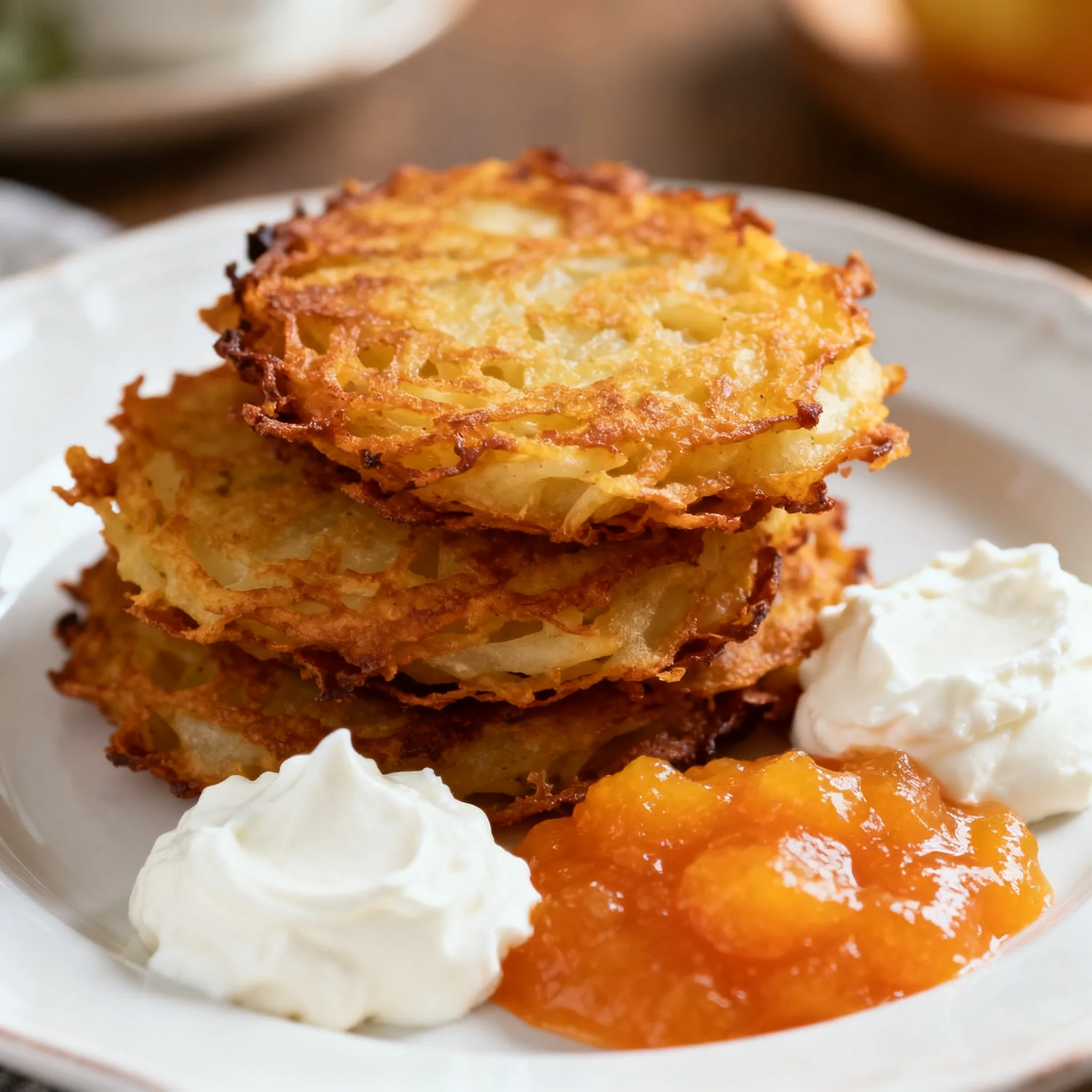
Fried in properly hot oil, these come out lacy and deep gold at the edges with a center that's tender instead of raw-tasting, and they stay crisp on a wire rack long enough to get them to the table.
PrintCrispy Potato Latkes Recipe (No Soggy Centers)
Shredded potatoes squeezed bone dry and fried until the edges turn lacy and deep gold.
- Prep Time: 35 minutes
- Cook Time: 30 minutes
- Total Time: 1 hour 5 minutes
- Yield: 6 1x
- Method: Fried
- Cuisine: Jewish American
Ingredients
- 2 pounds russet potatoes, peeled
- 1 medium yellow onion
- 2 large eggs, beaten
- 1/3 cup matzo meal (or all-purpose flour)
- 1 1/2 teaspoons kosher salt, plus more for draining
- 1/4 teaspoon black pepper
- 1/2 teaspoon baking powder
- Neutral oil, for frying (about 2 cups, enough for 1/4 inch in a 12-inch skillet plus topping up between batches)
- Sour cream and applesauce, for serving
Instructions
- Grate the potatoes and onion on the large holes of a box grater or food processor. Transfer to a bowl, toss with 1 teaspoon salt, and let sit for 10 minutes.
- Working in batches, wrap the potato and onion mixture in a clean kitchen towel and wring firmly over a large bowl until no more liquid drips out. Let the liquid sit for 2-3 minutes, then carefully pour off the water on top and keep the pale starch that settles at the bottom.
- Stir that reserved starch back into the squeezed potatoes along with the eggs, matzo meal, remaining 1/2 teaspoon salt, pepper, and baking powder until evenly combined.
- Heat about 1/4 inch of oil in a heavy skillet over medium-high heat until it reaches 350-375°F and shimmers.
- Scoop about 1/4 cup of the mixture per latke, flatten slightly in the pan, and fry 3-4 minutes per side, until deep golden and crisp at the edges.
- Transfer to a wire rack set over a baking sheet to drain. Repeat with the remaining mixture, letting the oil come back up to temperature between batches.
- Serve warm with sour cream and applesauce.
Notes
Squeeze the potato and onion shreds in two smaller batches rather than one big handful, you’ll get noticeably more liquid out. Let the first side fully set and turn deep gold before flipping; moving them too early is how the edges tear instead of crisping.
Why These Latkes Crisp Up Instead of Turning Soggy
The whole method here is built around starch and water, in that order. Potatoes are mostly water and release it fast once they’re grated, which is why a bowl of shredded potatoes left to sit for even five minutes looks like it’s sweating. If that water rides along into the pan, the oil temperature drops the second the latkes hit it, and a pancake that should sizzle instead sits there steaming in its own juice.
Squeezing the shreds in a clean kitchen towel over a bowl solves the water problem, but don’t pour that liquid down the drain yet. Let it sit for a couple of minutes and a layer of pale potato starch settles at the bottom. Pour off the water, keep the starch, and stir it back in with the egg: it’s what holds the latke together without a mountain of flour. Skip the squeeze and you get wet, limp latkes. In my kitchen the rule is simple: lose the water, keep the starch.
Getting the Oil Right Before the First Latke Goes In
A box grater works, but the large holes on a food processor’s shredding attachment get you there faster and with less arm fatigue, which matters when you’re grating several pounds of potatoes. Either way, shred into long strands rather than a fine mush: those longer pieces are what give latkes their lacy, uneven edges instead of a flat hash brown look.
Use a heavy skillet, cast iron if you have it, and enough neutral oil to come up about 1/4 inch in the pan. Heat it to 350-375°F before the first latke goes in; test it with a small pinch of the mixture, and it should bubble and sizzle right away. Crowd the pan and the oil temperature crashes, so fry in batches with space around each latke, and let the oil come back up to temperature between rounds.
Keeping Latkes Crisp: Storage and Reheating That Actually Work
Latkes lose their crisp fast once they’re stacked, so let them drain on a wire rack set over a baking sheet instead of paper towels, which trap steam against the bottom. If you’re frying several batches, slide the rack into a 200°F oven to keep the first ones warm, and serve within about 30 minutes.
Cooled latkes keep in the refrigerator for up to 3 days in an airtight container with parchment between layers. Skip the microwave, which turns them rubbery; reheat them on a baking sheet in a 400°F oven for about 8-10 minutes, flipping halfway, until the edges crisp back up. They also freeze well: cool completely, freeze flat on a sheet pan until solid, then transfer to a bag and reheat straight from frozen at 400°F for about 12-15 minutes.
Latke Variations and Swaps Worth Trying
Sweet potatoes or a mix of half russet, half sweet potato fry up just as crisp and bring a different sweetness; keep the same squeeze-dry method since sweet potatoes release just as much liquid. Parsnip swapped in for some of the potato adds a gentle sweetness, and celery root brings an earthy, herbal note that pairs well with sour cream.
- Add a handful of grated zucchini (salted and squeezed the same way) for a vegetable-forward version
- Stir in chopped fresh dill or chives for a brighter, herbier latke
- Swap matzo meal for panko or regular flour if that’s what’s in the pantry
- Top with smoked salmon and crème fraiche instead of the usual applesauce for a brunch spin
Whatever you swap in, keep the ratio of dry binder to wet vegetable roughly the same, or you’ll be back to fighting the same soggy-pan problem the whole method is built to avoid.
More Potato Dishes to Try Next
If you’re on a potato kick, loaded sweet chili smashed potato skins make a great partner on the same appetizer table, and a crock pot loaded potato soup is an easy way to use up the rest of the bag.
Frequently Asked Questions
Can I make potato latkes ahead of time?
Yes. Fry them earlier in the day, cool them on a wire rack, refrigerate, and reheat in a single layer in a 400°F oven for about 8-10 minutes right before serving. Holding them warm for hours dries them out, and skipping the reheat is what makes them go soft.
Why are my latkes falling apart in the pan?
That usually means either too much liquid left in the shredded potatoes or not enough binder. Squeeze the shreds drier than feels necessary, and make sure the egg and matzo meal are fully worked through the mixture before frying.
What's the best potato for latkes?
Russets work best because they're starchy and hold together well once squeezed dry. Waxy red potatoes, and to a lesser degree all-purpose Yukon golds, have less starch and tend to make a looser, wetter batter.
Do I need to peel the potatoes?
Peeling gives you the classic pale latke, but a scrub and a quick grate with the skin on works fine too and adds a little texture. Either way, the squeeze-dry step matters more than the peel.
What oil is best for frying latkes?
A neutral, high-smoke-point oil like vegetable, canola or avocado oil holds up best at 350-375°F without burning or adding its own flavor. I skip extra virgin olive oil here: its flavor gets harsh at frying temperature.
Get our 10 best recipes - free
Join the Receipster newsletter and we’ll send you Dorothy’s 10 most-loved recipes as a free PDF.
Free PDF + new recipes every week. Unsubscribe anytime.