Chocolate Chess Pie Recipe (Fudgy, Not Cakey)
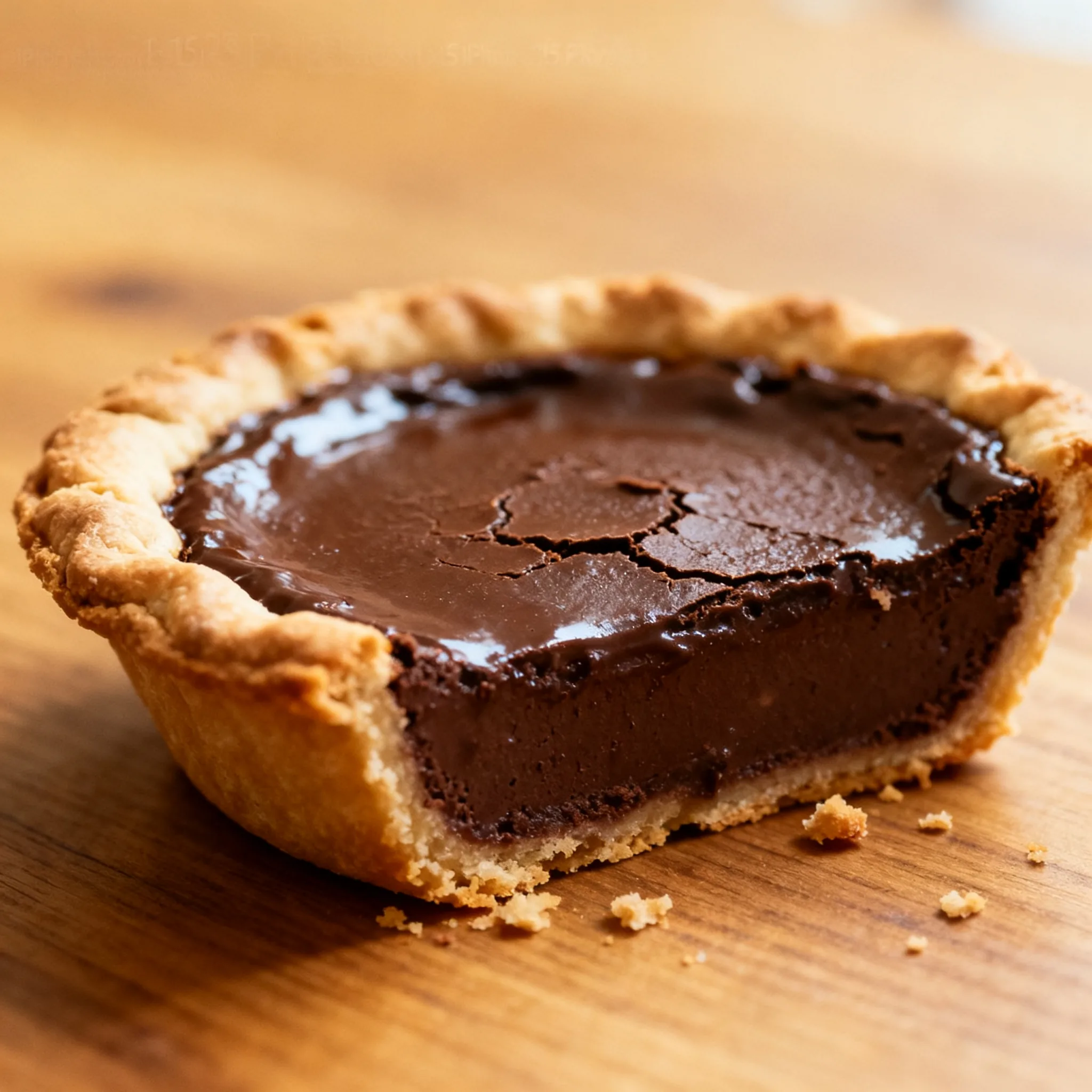
A chocolate chess pie recipe should bake into two layers: a thin, crackly top and a dense, fudgy custard underneath that eats more like warm pudding than cake. The mistake that ruins most versions is baking it until the top looks fully matte and still, the way you'd judge a brownie done, which turns that fudge layer dry and crumbly instead of glossy.
If you’re rounding out a dessert table for the week, this pie fits right in with the other pie and bar recipes I turn to when I want something rich that doesn’t ask for much hands-on time.
The filling is mostly butter, sugar and eggs, held together by just a spoonful each of cornmeal and flour, so there's very little starch standing between you and overcooked eggs. Push past the point where they're barely set and the butterfat weeps out, leaving a grainy slice instead of a smooth one.
The center you want still gives one slow, deliberate jiggle, not a wave, not stiff, when you nudge the dish at the end of baking, and it keeps firming up as it cools. Get that right and the pie slices clean but still tastes molten at the edges.
PrintChocolate Chess Pie Recipe (Fudgy, Not Cakey)
A dense, fudgy Southern pie with a thin crackly top and a custardy chocolate center.
- Prep Time: 15 minutes
- Cook Time: 45 minutes
- Total Time: 1 hour
- Yield: 8 1x
- Method: Baked
- Cuisine: American
Ingredients
- 1 unbaked 9-inch pie crust, fitted into a pie dish and chilled
- 1/2 cup unsalted butter, melted
- 1 cup granulated sugar
- 1/2 cup packed light brown sugar
- 1/3 cup unsweetened natural cocoa powder
- 1 tablespoon fine yellow cornmeal
- 1 tablespoon all-purpose flour
- 1/4 teaspoon salt
- 3 large eggs
- 1/3 cup evaporated milk
- 1 teaspoon vanilla extract
- 1 teaspoon distilled white vinegar
Instructions
- Preheat the oven to 350°F. Fit the pie crust into a 9-inch pie dish, crimp the edges, and chill it for 15 minutes while you make the filling.
- In a large bowl, whisk the melted butter with the granulated sugar and brown sugar until no dry lumps remain.
- Whisk in the cocoa powder, cornmeal, flour and salt until smooth.
- Add the eggs one at a time, whisking just until each one is incorporated; don’t overbeat.
- Whisk in the evaporated milk, vanilla and vinegar until the filling is glossy and uniform.
- Pour the filling into the chilled crust. Bake for 40-50 minutes, until the outer two inches are set and slightly puffed and the center still moves as one slow wave when you nudge the dish.
- Cool the pie on a wire rack at room temperature for at least 3 hours before slicing; it will continue to firm up as it cools.
- Slice and serve at room temperature or chilled.
Notes
Use natural, non-Dutch cocoa powder for the right balance of sweet and tangy. If the edges brown faster than the center sets, tent them loosely with foil around the 30 minute mark. Refrigerate leftovers within 2 hours and use within 3-4 days; reheat slices gently to 165°F if you want them warm.
Why Cornmeal (Not More Flour) Keeps This Pie From Turning Cakey
Most chocolate chess pie recipes lean on flour alone for structure, but a tablespoon of fine cornmeal does something flour can’t: it swells less, so the filling sets dense and fudgy instead of puffing into cake crumb. Melting the butter first matters too, since it blends into a smooth paste with the sugar so every egg you whisk in afterward incorporates evenly instead of curdling around cold fat.
The other detail I don’t skip is the splash of vinegar. A cup and a half of sugar needs something to cut it, and a teaspoon of distilled vinegar does that without reading as sour. Natural cocoa powder, rather than Dutch process, keeps a little extra acidity in the mix too, which is part of why chess pies made with it taste rounder instead of flat sweet.
The Pie Dish, Rack Position and Jiggle Test That Actually Work
A glass or light ceramic pie dish works best here since you can watch the bottom crust color through the sides, and it won’t accelerate edge browning the way dark metal does. Bake on the middle rack at 350°F: any higher and the top sets and cracks before the center catches up; any lower and the bottom stays pale and soft.
Skip the toothpick test, it comes out looking wet from this pie even when it’s done, since the filling is a loose custard, not a batter. Instead nudge the dish at the 40 minute mark: the outer two inches should look set and slightly puffed, and the center should move as one slow wave. I pull mine around 45 minutes, tenting the edges with foil earlier if they’re browning faster than the center is setting.
Keeping the Fudge Layer Intact After It Cools
Let the pie cool on the counter at least 3 hours before slicing. It’s still a loose custard coming out of the oven and needs that time to firm up enough to hold a clean wedge instead of a puddle.
Because the filling is egg and dairy based, refrigerate it within 2 hours if you’re not serving it right away, covered, and it holds for 3-4 days. I like it best cold or brought back to room temperature for 20 minutes, since the fudge layer is densest when cool. For a warm slice, reheat gently just until the center reaches 165°F; longer than that and the custard keeps cooking and loses the texture you worked for.
Variations and Swaps That Still Hold the Fudgy Texture
A tablespoon of bourbon or a teaspoon of espresso powder whisked in with the vanilla deepens the chocolate without changing the texture, and a half cup of toasted pecans scattered over the filling before it bakes adds crunch against the fudgy center.
- Dairy-free: swap the butter for a dairy-free butter substitute, the evaporated milk for full-fat canned coconut milk, and use a dairy-free pie crust.
- Gluten-free: replace the tablespoon of flour with cornstarch and use a gluten-free pie crust; the cornmeal itself is already gluten-free.
Whatever you change, keep the egg count and the cornmeal as written since those two are doing the structural work, and everything else is just flavor on top.
More Rich Chocolate Desserts to Make Next
If this pie’s fudgy center is your kind of dessert, the pecan chocolate turtle bars hit a similar note with a caramel layer, and the stovetop chocolate espresso pots de crème scratch the same custardy itch in individual cups.
Frequently Asked Questions
How do I know when chocolate chess pie is done baking?
Nudge the pie dish instead of using a toothpick. The outer two inches should look set and slightly puffed, and the center should move as one slow wave rather than ripple like liquid. A little jiggle at the 40 to 45 minute mark is normal since it keeps firming up as it cools.
Why is my chocolate chess pie gooey in the middle?
It likely came out before the eggs fully set, or got sliced before it cooled. Give it the full 3 hours on the counter before cutting; if it's still loose after that, it probably needed another 5 to 10 minutes in the oven.
What is the difference between chess pie and fudge pie?
Chess pie gets its structure from a small amount of cornmeal along with flour, which makes it a little denser than a fudge pie that relies only on butter, sugar and chocolate. Chess pies also traditionally include a splash of vinegar to cut the sweetness.
Can I make this pie ahead of time?
Yes, it actually slices more cleanly the next day once it's fully chilled. Bake it, cool it on the counter, then refrigerate it covered and bring slices back to room temperature or serve them cold.
Do I need to blind bake the crust first?
No, this filling bakes long enough at 350°F for the crust to cook through on its own. Chilling the shaped crust for 15 minutes before filling it helps prevent shrinking and keeps the bottom from turning soggy.
Get our 10 best recipes - free
Join the Receipster newsletter and we’ll send you Dorothy’s 10 most-loved recipes as a free PDF.
Free PDF + new recipes every week. Unsubscribe anytime.