Gingerbread Loaf Cake Recipe with Cream Cheese Glaze
Most gingerbread loaf cake recipe attempts go wrong at the end of the bake, not the start: molasses makes the top look dark and done long before the center is, and a loaf pulled on color alone leaves a dense, gummy stripe through the middle of every slice.
If quick breads have become a regular weekend project for you, this loaf slots in nicely with the rest of my go-to breakfast bakes and loaf cakes collection.
The problem is doneness and mixing. A deep 9×5 loaf takes a long time to cook through in the center, and you can't judge it by color. Cold, thick molasses also resists blending, so either it stays in sticky streaks or you overmix the batter chasing them.
The fix is warming the butter, molasses, and brown sugar together first so the molasses blends in a few strokes, then pulling the loaf at 200 to 205°F in the center instead of guessing by color. I trust the thermometer over the color of the crust every time, and the cream cheese glaze goes on at exactly the right moment so it sets into a thin, tangy layer instead of sliding off or crusting over.
PrintGingerbread Loaf Cake Recipe with Cream Cheese Glaze
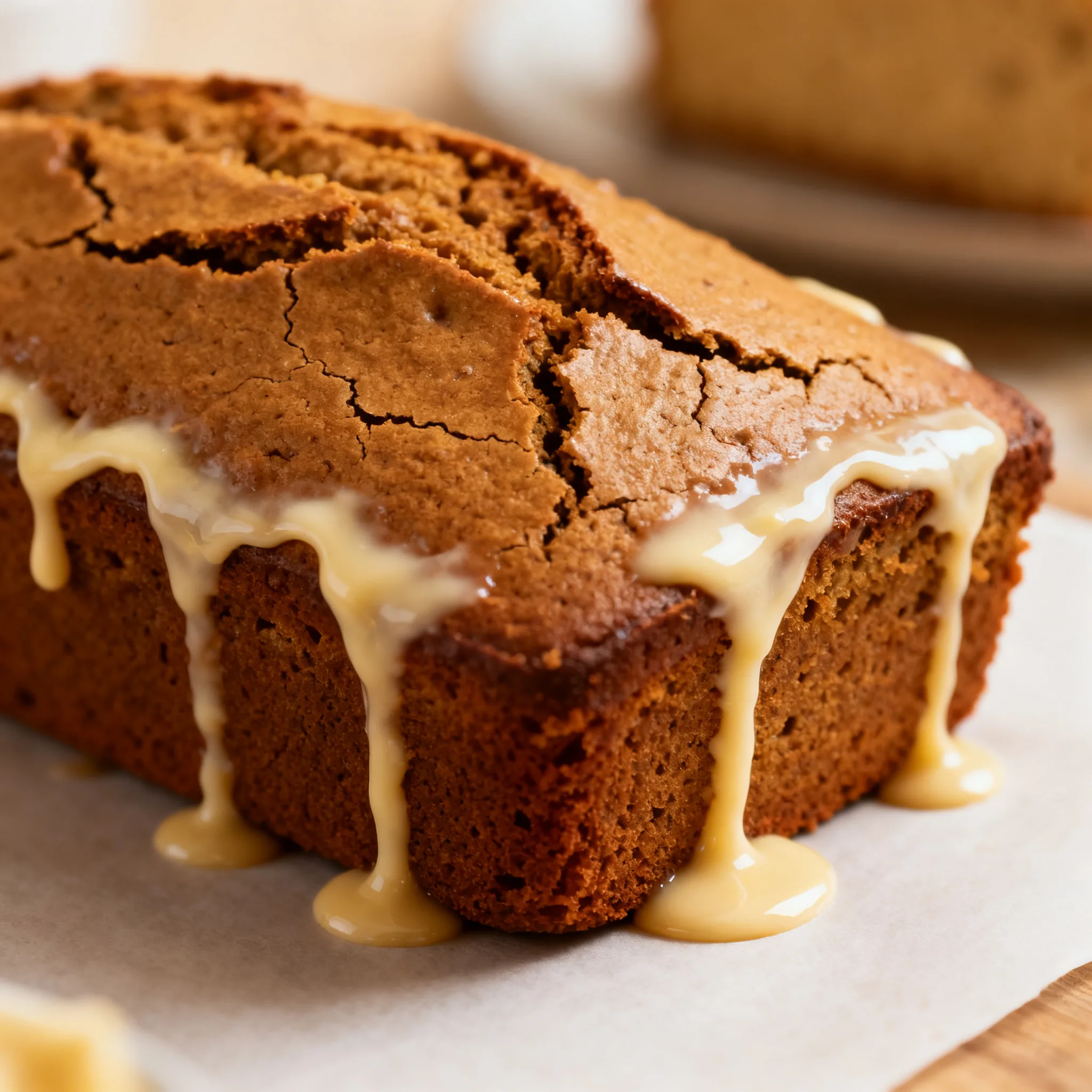
A moist, deeply spiced gingerbread loaf topped with a tangy cream cheese glaze that sets into a thin, glossy layer.
- Prep Time: 15 minutes
- Cook Time: 60 minutes
- Total Time: 2 hours
- Yield: 8 slices 1x
- Method: Baked
- Cuisine: American
Ingredients
- 1 3/4 cups all-purpose flour
- 1 teaspoon baking soda
- 1/2 teaspoon salt
- 2 teaspoons ground ginger
- 1 teaspoon ground cinnamon
- 1/4 teaspoon ground cloves
- 1/4 teaspoon ground nutmeg
- 1/2 cup unsalted butter
- 1/2 cup dark molasses
- 1/2 cup packed brown sugar
- 1 large egg
- 1/2 cup buttermilk, room temperature
- 1 teaspoon vanilla extract
- 4 ounces cream cheese, softened
- 1 cup powdered sugar
- 2 to 3 tablespoons milk
- 1/2 teaspoon vanilla extract (for the glaze)
Instructions
- Preheat the oven to 350°F and grease a 9×5 inch metal loaf pan, lining the bottom with parchment for easy release.
- Whisk the flour, baking soda, salt, ginger, cinnamon, cloves, and nutmeg together in a bowl and set aside.
- In a saucepan or microwave-safe bowl, warm the butter, molasses, and brown sugar together just until the butter melts and the mixture turns loose and glossy. Let it cool slightly so it’s warm, not hot.
- In a separate bowl, whisk the egg, buttermilk, and vanilla, then slowly whisk in the warm molasses mixture.
- Pour the wet ingredients into the dry ingredients and stir with a spatula just until no dry streaks remain; a few small lumps are fine.
- Pour the batter into the prepared pan and bake on the middle rack for 55 to 60 minutes, tenting loosely with foil around the 35 minute mark if the top is browning too fast.
- Check for doneness with a skewer inserted in the center (it should come out with a few moist crumbs) or an instant-read thermometer reading 200 to 205°F.
- Cool the loaf in the pan for 15 minutes, then turn it out onto a rack and let it cool until just barely warm.
- Whisk the cream cheese, powdered sugar, milk, and vanilla together until smooth, then pour over the just-warm loaf so the glaze sets into a thin layer.
- Slice and serve once the glaze has set, about 20 minutes.
Notes
Measure the baking soda carefully: too much reacts with the molasses and leaves a bitter, soapy edge. Glaze the loaf while it’s just barely warm, not hot and not fully cooled, or the glaze either melts off or sits too thick. Leftover glazed loaf keeps covered in the fridge due to the cream cheese; let it come back toward room temperature before serving for the best texture.
Warm Wet Ingredients, Level Baking Soda, and a Light Hand
Two things save this loaf before it reaches the oven: warming the wet ingredients, and restraint with the baking soda and the spoon. Melt the butter, molasses, and brown sugar together over low heat or in the microwave in short bursts, just until the butter is liquid and the mixture looks loose and glossy, warm against your wrist, not hot. Pour that into the whisked egg and buttermilk off the heat so the egg doesn’t scramble on contact.
Baking soda needs the acid in the molasses to do its job and lift the crumb, so measure it level instead of rounding up. Extra baking soda doesn’t mean extra rise, it means a bitter, almost soapy aftertaste that no amount of spice can cover. Once the flour mixture goes in, stir with a spatula just until the dry streaks disappear. This batter already has plenty of moisture from the molasses and brown sugar, and extra stirring builds gluten fast, which is the other common reason gingerbread loaves turn tough instead of tender.
The Pan, Rack, and Bake Time That Keep the Middle From Underbaking
Bake this in a light-colored 9×5 inch metal loaf pan. Metal heats quickly and evenly, which gives the center a fair chance to catch up with the edges. Glass and ceramic heat slowly and then hold that heat, which tends to overbrown the sides and bottom of a dense loaf before the middle is done; if glass is all you have, drop the oven to 325°F and start checking early.
Set the rack in the middle of the oven and bake at 350°F for 55 to 60 minutes. If the top is browning faster than the inside is cooking, around the 35 minute mark, lay a sheet of foil loosely over the pan and keep baking. Skip the guesswork at the end: a skewer inserted in the center should come out with a few moist crumbs clinging to it, not wet batter, or check with an instant read thermometer, which should read 200 to 205°F in the middle of the loaf.
How to Store This Loaf So the Glaze Doesn't Weep or Crack
Glaze the loaf while it’s just barely warm (it should feel only slightly warm when you rest your palm on the side), not hot and not fully cooled. Glazing a hot loaf melts the glaze right off the sides, and glazing a cold one leaves it sitting on top like frosting instead of soaking slightly into the crumb.
Because the glaze is made with cream cheese, store the glazed loaf covered in the fridge, not on the counter; wrapped so the cut side doesn’t dry out, it keeps about 5 days. Let a cold slice sit at room temperature or give it 10 to 15 seconds in the microwave before serving so the crumb softens back up.
- Fridge, glazed and wrapped: up to 5 days
- Room temperature, unglazed and wrapped: up to 2 days
- Freezer, unglazed and double wrapped: up to 3 months
For the freezer, wrap the loaf unglazed in plastic and then foil. Thaw it overnight in the fridge and mix the glaze fresh, since a frozen and thawed glaze tends to separate instead of setting smooth.
Swaps and Variations for Gingerbread Loaf Cake
If dark molasses tastes too sharp for you, swap a few tablespoons of it for maple syrup or dark corn syrup for a milder, less bitter edge. Fold in a third cup of finely chopped crystallized ginger or a tablespoon of orange zest for extra bite and brightness in the crumb.
- No buttermilk: plain yogurt thinned with a splash of milk, cup for cup
- Grab-and-go version: bake as 12 muffins instead, about 18 to 20 minutes
- Dairy-free: swap the butter for a neutral oil, replace the buttermilk with 1/2 cup unsweetened plant milk mixed with 1 1/2 teaspoons lemon juice, and use a dairy-free cream cheese and milk in the glaze
Swapping only one of the dairy ingredients won’t get you a true dairy-free loaf, since the butter and buttermilk in the cake and the cream cheese and milk in the glaze all need to change together.
What to Bake Next if You Loved This Gingerbread Loaf
If this one disappeared fast, try my spiced apple butter loaf for another fall-spiced slice, or keep the grab-and-go streak going with these banana bread muffins.
Frequently Asked Questions
Why did my gingerbread loaf cake sink or turn gummy in the middle?
Usually the center was underbaked: molasses makes the top look done long before the middle is. Pull the loaf only once the center reads 200 to 205°F, and warm the molasses with the butter first so the batter blends evenly without overmixing.
Can I make this gingerbread loaf ahead of time?
Yes. Bake the loaf a day ahead and keep it unglazed and wrapped at room temperature. Right before serving, warm it in a 300°F oven for about 10 minutes until just barely warm, then pour on freshly mixed glaze so it sets into a thin layer.
What's the difference between gingerbread loaf cake and gingerbread bread?
They start from nearly the same batter. Cake versions usually carry a bit more sugar and butter for a softer, sweeter crumb, while bread versions lean less sweet and denser. This recipe sits on the cake side of that line, which is part of why the cream cheese glaze works so well here.
Can I use fresh ginger instead of ground ginger?
You can add a tablespoon of grated fresh ginger alongside the ground ginger for a sharper bite, but don't substitute it completely. Fresh ginger brings extra moisture that the dry spice doesn't, and too much of it can throw off the texture of the loaf.
Why does my gingerbread cake taste bitter or soapy?
That's almost always too much baking soda, which needs the acid in the molasses to balance it out. Measure it level instead of rounding up, since even a little extra turns the crumb bitter no matter how much spice you add on top.
Get our 10 best recipes - free
Join the Receipster newsletter and we’ll send you Dorothy’s 10 most-loved recipes as a free PDF.
Free PDF + new recipes every week. Unsubscribe anytime.