Black Currant & Thyme Galette (No Soggy Bottom)
This black currant recipe splits the fruit into two batches — half cooked down into a jammy, thyme-scented compote, half left raw for bursts of tartness — so the filling stays thick instead of flooding the crust. A cornmeal-and-rye pastry adds the crunch and nutty backbone that a plain butter crust can't hold onto once the juice hits it.
Simple, everyday ingredients and clear, step-by-step instructions — every recipe made in Dorothy’s kitchen before it reaches yours. Jump to the full recipe card below.
This belongs on the shelf with the others, in the pies, bars and cheesecakes round-up.
PrintBlack Currant & Thyme Galette (No Soggy Bottom)
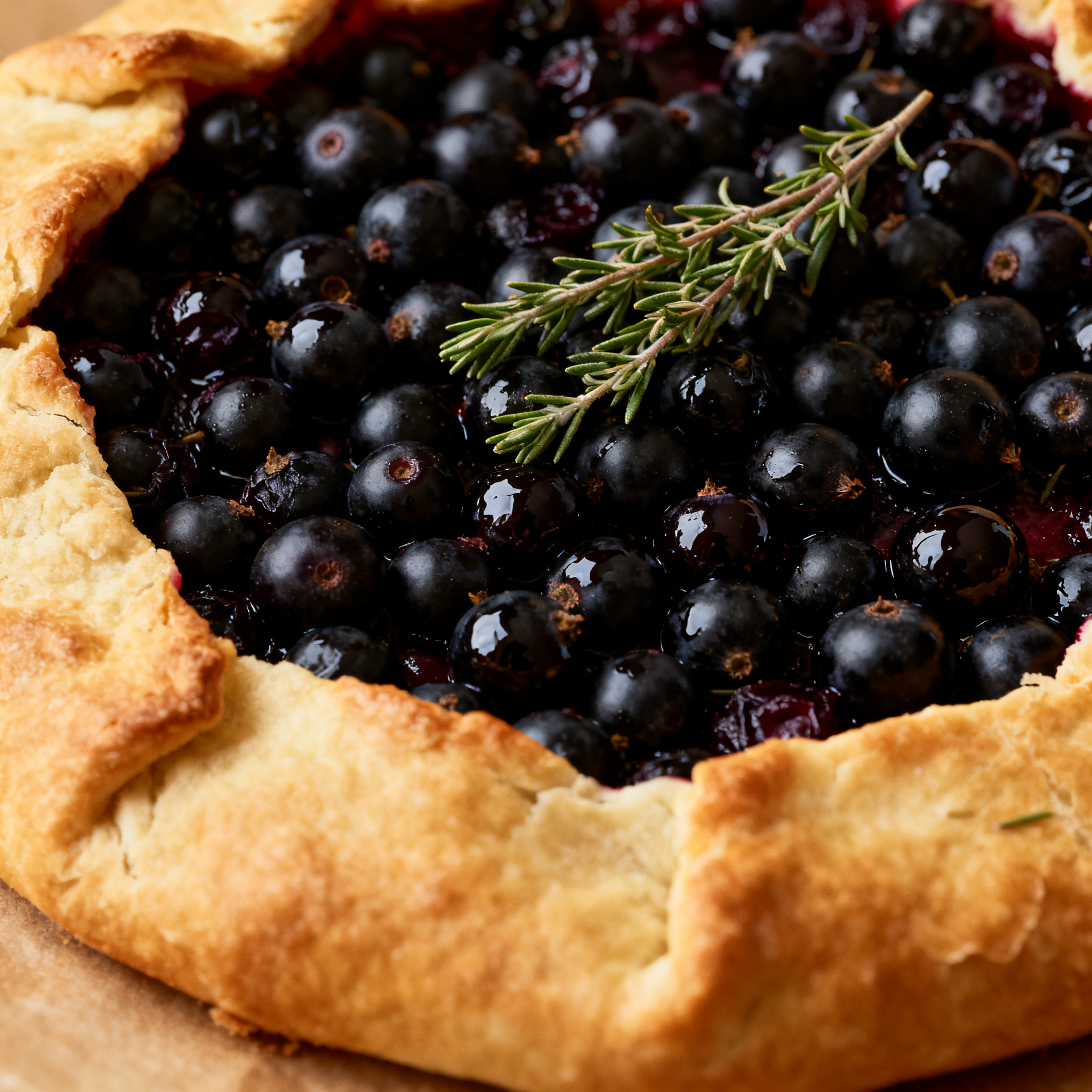
A rustic black currant galette with a rye crust, thyme-infused sugar, and a split cook-fresh filling technique that keeps the bottom crisp.
- Prep Time: 30 minutes
- Cook Time: 45 minutes
- Total Time: 2 hours 15 minutes (includes chilling)
- Yield: 8 1x
- Method: Baking
- Cuisine: French-inspired
Ingredients
- 1 1/4 cups all-purpose flour
- 1/4 cup fine cornmeal or rye flour
- 1 tbsp granulated sugar
- 1/2 tsp salt
- 10 tbsp cold unsalted butter, cubed
- 1 tsp apple cider vinegar
- 1/4 to 1/3 cup ice water
- 3 cups black currants, fresh or frozen and thawed, divided
- 2/3 cup granulated sugar, divided
- 1 tbsp fresh thyme leaves, plus sprigs for garnish
- 2 tbsp cornstarch
- 1 tbsp lemon juice
- Pinch of salt
- 1 egg, beaten
- 1 tbsp turbinado sugar
- Flaky salt
- 2 tbsp black currant or red currant jam, for glaze
Instructions
- Whisk flour, cornmeal, 1 tbsp sugar, and salt. Cut in cold butter until pea-sized crumbs remain. Mix vinegar into ice water, drizzle in, and mix just until the dough holds together. Form a disc, wrap, and chill 1 hour.
- Rub the thyme leaves into 1/3 cup sugar with your fingers until fragrant; set aside.
- In a saucepan, cook 2 cups of the currants with the thyme sugar and lemon juice over medium heat, stirring, until juicy and jammy, about 8 minutes. Whisk cornstarch with 1 tbsp water, stir in, and cook 1 more minute until thick and glossy. Cool completely.
- Fold the remaining 1 cup raw currants and remaining 1/3 cup sugar into the cooled compote.
- Roll the chilled dough into a 12-inch round on parchment. Spoon the filling into the center, leaving a 2-inch border.
- Fold the edges over the filling, pleating as you go. Chill the assembled galette 15 minutes; preheat oven to 400°F.
- Brush the crust with egg wash, sprinkle with turbinado sugar and flaky salt.
- Bake 40 to 45 minutes, until the crust is deep golden and the filling is bubbling.
- Warm the jam and brush over the hot filling for shine. Cool 20 minutes, scatter with thyme sprigs, and slice.
Notes
Frozen black currants work as well as fresh — thaw and drain them well before using, or the compote will be too loose. The dough disc freezes well for up to 2 months; thaw overnight in the fridge before rolling. No black currants on hand? Blackberries work with a splash of crème de cassis added to the compote, though the flavor will be milder and less tart.
Most black currant desserts fail for the same reason: currants are tiny, thin-skinned, and absolutely loaded with juice. Pile three cups of raw ones into a galette and by minute twenty you’ve got a purple lake pooling under the crust, which never fully crisps again no matter how long you bake it. The fix isn’t a thicker crust or a hotter oven — it’s controlling the fruit before it ever goes in. Cook half the currants down into a short, jammy compote with thyme and lemon first, so the excess water cooks off and the pectin thickens naturally, then fold in the other half raw. You get concentrated, jammy depth in every bite alongside whole berries that still pop with acidity, and a crust that stays shatter-crisp because the filling isn’t actively working against it.
The rye or cornmeal in the dough isn’t decorative — it’s structural. Straight all-purpose flour makes a crust that’s tender but a little bland against fruit this intense, and it also softens faster once any juice does escape. A quarter cup of fine cornmeal (or rye flour, if you want something earthier) gives the pastry grit and a slightly nutty edge that holds its own against the currants’ sharpness, and it stays crisper longer at the table. Warming the sugar with fresh thyme leaves before it hits the fruit — basically rubbing the leaves into the sugar with your fingers — does more for flavor than tossing thyme in loose ever will; it releases the herb’s oils into every grain, so the thyme flavor is distributed evenly through the filling instead of clustered in random bites.
The common mistake beyond the soggy bottom is undercooking the compote stage. If you rush it, the cornstarch never fully activates and the filling stays runny under the fresh berries, so let it come to a real, glossy bubble for a full minute after the cornstarch goes in, not just a simmer. If you’re using frozen currants — genuinely the more common option in the US, since fresh ones are hit-or-miss outside farmers markets and were historically restricted in several states over blister rust concerns — thaw and drain them hard first, or your liquid ratio will be off from the start. Blackcurrants are noticeably more tart than blackberries or blueberries, so don’t cut the sugar thinking you’re being virtuous; underseasoned currants read as sour, not fresh.
A jam glaze at the end — just warmed black currant or red currant jam brushed over the hot filling — does two things a plain egg wash on the fruit can’t: it seals in shine and pushes the currant flavor even further forward, so the galette looks and tastes more intentional than a home bake usually does. Serve slightly warm with something cold and unsweetened, like crème fraîche or plain Greek yogurt, to cut the tartness rather than compete with it.
Frequently Asked Questions
Can I use frozen black currants for this recipe?
Yes — frozen black currants are actually the more common option in the US. Thaw them fully and drain off the excess liquid before dividing them for the cooked compote and the fresh fold-in, or the filling will end up too watery.
Why is my black currant galette soggy on the bottom?
Almost always because the fruit went in raw and uncooked. Black currants release a huge amount of juice as they bake, which soaks the crust before it can fully set. Cooking half the currants into a thickened compote first, as this recipe does, solves it.
Where can I find fresh black currants in the US?
Fresh black currants are still uncommon at regular grocery stores since the crop was historically restricted in several states over concerns about spreading white pine blister rust. Check specialty farms, farmers markets, or foragers in the Northeast and Pacific Northwest, or use frozen currants from an international or specialty grocer.
What can I substitute for black currants?
Blackberries with a splash of crème de cassis get you close in color and body, though the flavor will be sweeter and less sharply tart. A mix of blackberries and blueberries also works if you add extra lemon juice to compensate.
Can I make the galette ahead of time?
The dough can be made and frozen up to 2 months ahead. The assembled and baked galette is best eaten the day it's made, but leftovers keep well at room temperature, loosely covered, for up to 2 days.
Get our 10 best recipes — free
Join the Receipster newsletter and we’ll send you Dorothy’s 10 most-loved recipes as a free PDF.
Free PDF + new recipes every week. Unsubscribe anytime.