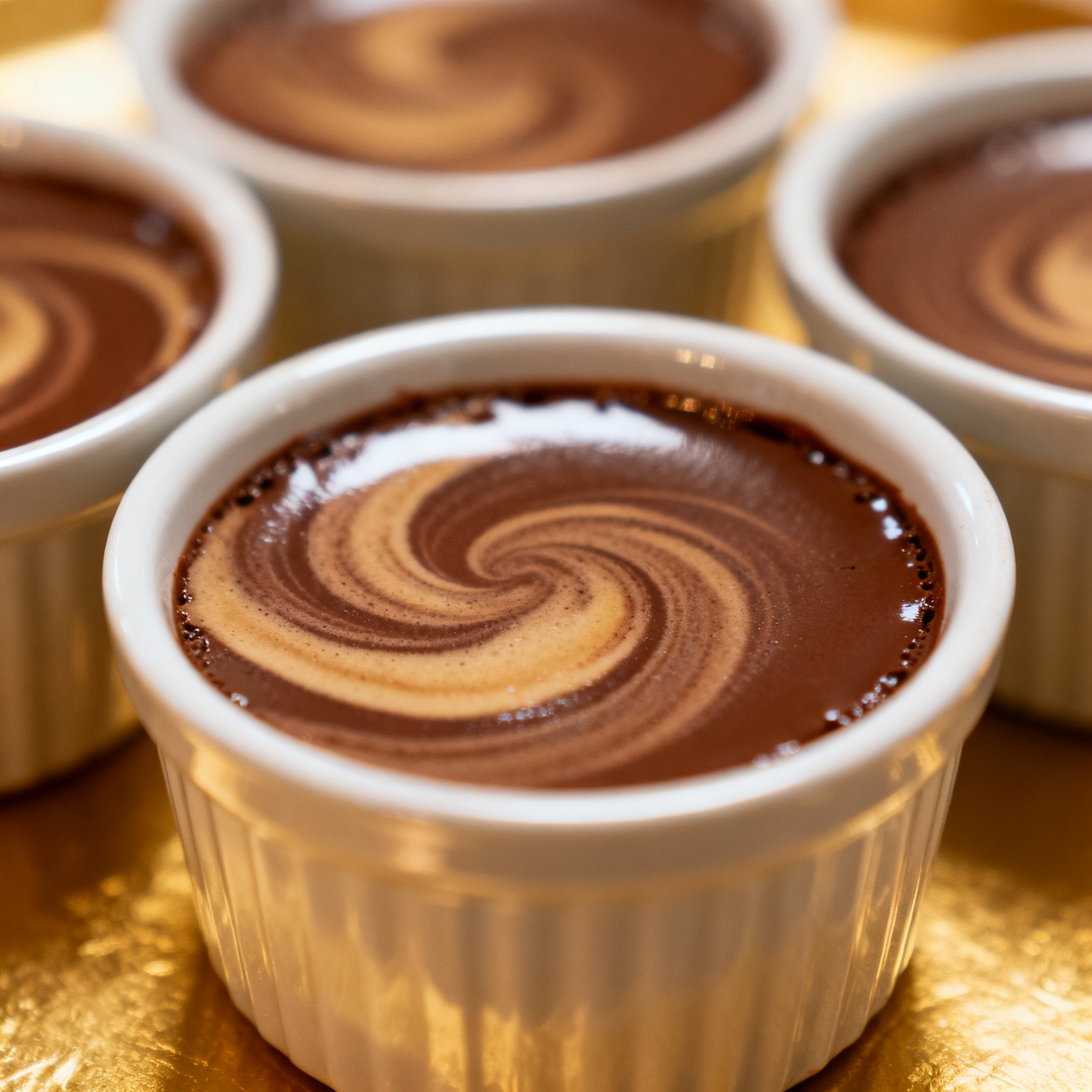
Stovetop Chocolate Espresso Pots de Crème (No Water Bath Required)
Forget the water bath. This pots de creme recipe ditches the oven altogether and cooks the custard on the stovetop instead, which means no curdled edges, no cracked tops, and no anxious oven-peeking. A double hit of espresso — one cooked in, one stirred in raw at the end — keeps the coffee flavor loud and fresh instead of muddy.
Simple, everyday ingredients and clear, step-by-step instructions — every recipe made in Dorothy’s kitchen before it reaches yours. Jump to the full recipe card below.
The index I keep this one in is my guide to simple desserts.
PrintStovetop Chocolate Espresso Pots de Crème (No Water Bath Required)
A silky stovetop pots de creme recipe with double espresso flavor and zero risk of a cracked, curdled custard.
- Prep Time: 15 minutes
- Cook Time: 10 minutes
- Total Time: 4 hours 25 minutes (includes chilling)
- Yield: 4 1x
- Method: Stovetop, no oven or water bath
- Cuisine: French
Ingredients
- 1 1/2 cups heavy cream
- 1/2 cup whole milk
- 5 large egg yolks
- 1/3 cup granulated sugar
- 2 teaspoons instant espresso powder
- 1/4 teaspoon fine salt
- 6 oz bittersweet chocolate (70%), finely chopped
- 1 shot (about 1 oz) freshly brewed espresso, slightly cooled
- 1/2 teaspoon vanilla extract
- Flaky salt and lightly sweetened whipped cream, to serve
Instructions
- In a saucepan, warm the cream, milk, espresso powder, and salt over medium heat until steaming, whisking to dissolve the espresso powder. Do not boil.
- In a bowl, whisk the egg yolks and sugar together until pale. Slowly whisk in about a third of the hot cream mixture to temper the yolks, then whisk the tempered yolks back into the saucepan.
- Cook over medium-low heat, stirring constantly and scraping the bottom of the pan, until the custard reaches 170–175°F and thickly coats the back of a spoon, 4-6 minutes. Remove from heat immediately.
- Add the chopped chocolate and let sit 1 minute to soften, then whisk until fully smooth. Whisk in the brewed espresso shot and vanilla — adding the espresso off the heat keeps its aroma bright.
- Strain the custard through a fine-mesh sieve into a pitcher or measuring cup, then divide evenly among 4-6 small cups or ramekins.
- Cover and refrigerate at least 4 hours, or until fully set. Top with flaky salt and whipped cream just before serving.
Notes
A thermometer is the single most useful tool here — pull the custard at 170–175°F, no higher. If it scrambles slightly, strain harder and don’t panic; a fine sieve rescues most minor overcooking. No espresso machine? Use strong instant espresso for the shot, or skip it and double the espresso powder for a gentler coffee flavor. Custards keep well covered in the fridge for up to 4 days, which makes this an easy make-ahead dessert.
Almost every pots de creme recipe you’ll find sends you toward a low oven and a roasting pan half-filled with hot water, and almost every one of those recipes ends with someone Googling ‘why did my custard crack’ at 9pm. The oven method works, but it’s fussy and unforgiving — a few degrees too hot and you get a grainy, weeping custard instead of something silky. My workaround: cook the custard entirely on the stovetop, like a thick crème anglaise, then just pour it into cups and chill. You get far more control, because you can watch and stir the whole time instead of guessing what’s happening inside a covered pan of water.
The other thing most versions get wrong is the coffee. Espresso powder bloomed into hot cream tastes deep and roasty, but if that’s your only coffee source, long cooking cooks off a lot of what makes espresso smell so good in the first place. So this recipe does two additions: espresso powder goes in with the cream at the start for backbone, and a fresh shot of actual brewed espresso gets whisked in off the heat, right at the very end, once the custard is already thickened. That second hit stays aromatic instead of getting dulled by heat, and the difference is noticeable the second you lift the spoon to your face.
The one number that matters here is temperature, not time: pull the custard the moment it hits 170–175°F and coats the back of a spoon in a solid film. Under that and it stays thin and never sets; over 180°F and the egg yolks start to scramble no matter how gently you’re stirring, which is the single most common failure with any pots de crème, stovetop or baked. A cheap instant-read thermometer removes all the guesswork. Straining the custard twice — once after cooking, once more into the cups — catches any stray cooked egg bits and is the difference between a merely good pots de crème and a genuinely silky one.
Use the best bittersweet chocolate you’d eat on its own; at 70% cacao it balances the bitterness of the espresso instead of competing with it. No espresso machine at home is fine — a double shot from a strong instant espresso or moka pot works, or lean harder on the espresso powder and skip the shot for a still-excellent, slightly gentler cup. For a dairy-free version, full-fat coconut milk in place of the cream and milk gets you most of the way there, though the flavor turns a touch more tropical than classically French.
Frequently Asked Questions
Can I still bake this pots de creme recipe in the oven instead?
Yes — pour the strained custard into ramekins, set them in a water bath, cover with foil, and bake at 325°F for 30-35 minutes until just set with a slight jiggle in the center. The stovetop method is simply faster and more forgiving.
How do I know the custard is done without a thermometer?
Dip a spoon in and run your finger across the back — if the line holds cleanly without the custard running back into it, and steam is rising steadily (170–175°F range), it's ready. Pull it the moment this happens; a few extra minutes over heat can scramble the eggs.
Can I make this pots de creme recipe without an espresso machine?
Absolutely. Use strong instant espresso or moka pot coffee in place of the shot, or leave it out entirely and increase the espresso powder in the cream to 1 tablespoon for a rounder, less sharp coffee flavor.
Can I make it dairy-free?
Swap the cream and milk for full-fat coconut milk in equal amounts. The texture stays silky, though the flavor leans slightly more tropical than the classic French version.
How far ahead can I make pots de creme?
They're an ideal make-ahead dessert — cover and refrigerate up to 4 days. Add the flaky salt and whipped cream topping just before serving so it doesn't sink into the custard.
Get our 10 best recipes — free
Join the Receipster newsletter and we’ll send you Dorothy’s 10 most-loved recipes as a free PDF.
Free PDF + new recipes every week. Unsubscribe anytime.