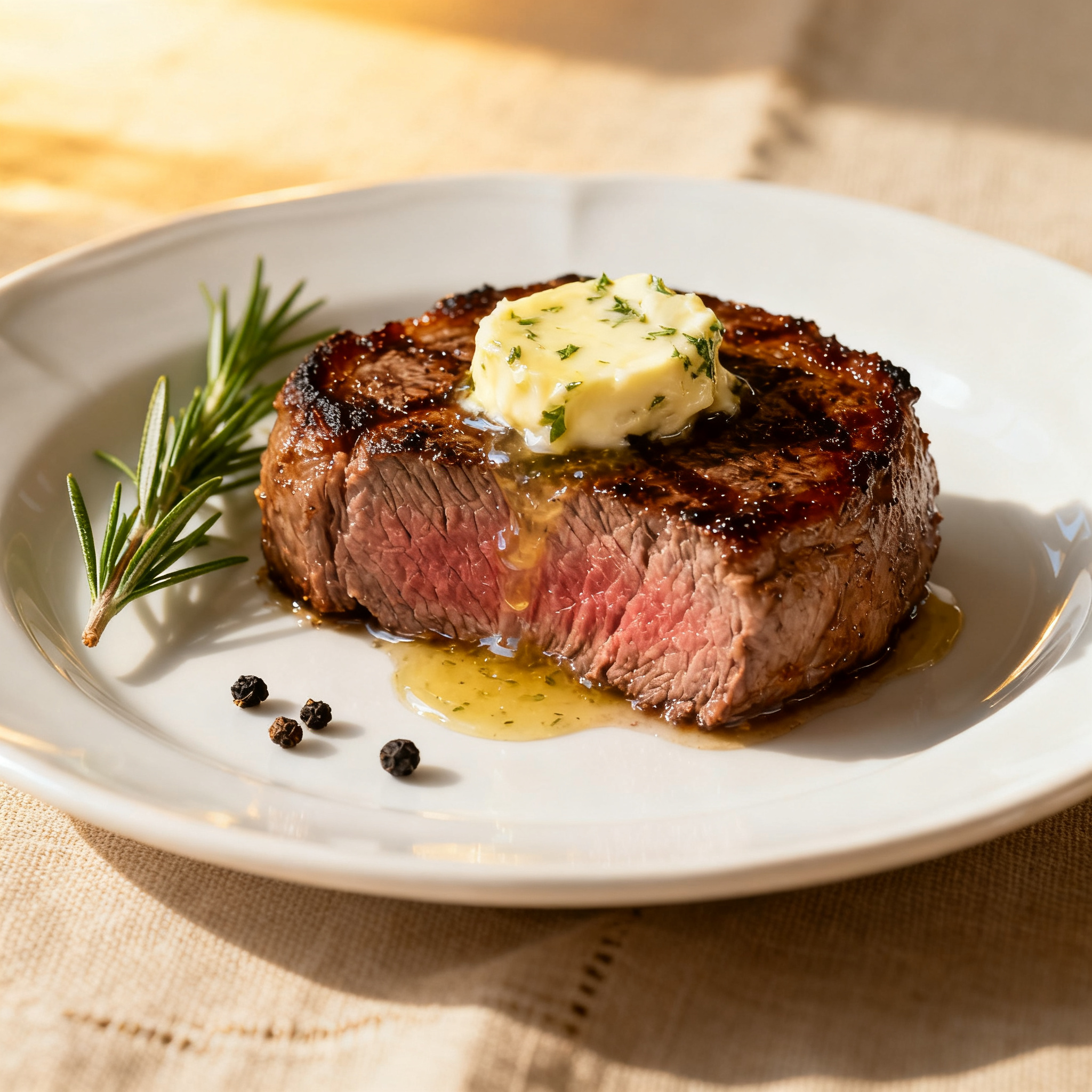
Pan-Seared Filet Mignon with Garlic Herb Butter (The Fond Trick Nobody Tells You)
Filet mignon is the most tender cut on the cow and, left to its own devices, one of the blandest — which is exactly why most filet mignon recipes lean so hard on the butter. This one goes further: a dry brine tightens the crust before it hits the pan, and the garlic herb butter gets built right in the skillet from the actual pan drippings instead of being melted on cold and separate. The result is a steak that tastes like it earned its butter instead of hiding under it.
Simple, everyday ingredients and clear, step-by-step instructions — every recipe made in Dorothy’s kitchen before it reaches yours. Jump to the full recipe card below.
PrintPan-Seared Filet Mignon with Garlic Herb Butter (The Fond Trick Nobody Tells You)
A dry-brined, pan-seared filet mignon finished with a garlic herb butter built from the pan drippings for real steakhouse flavor.
- Prep Time: 15 minutes
- Cook Time: 10 minutes
- Total Time: 1 hour (includes dry brine)
- Yield: 2 1x
- Method: Pan-Searing
- Cuisine: American
Ingredients
- 2 filet mignon steaks, 1.5-2 inches thick (6–8 oz each)
- 1 1/2 teaspoons kosher salt, divided
- 1 teaspoon coarsely ground black pepper
- 2 tablespoons neutral oil (avocado or grapeseed)
- 3 tablespoons unsalted butter
- 4 garlic cloves, lightly smashed, skin left on
- 3 sprigs fresh thyme
- 2 sprigs fresh rosemary
- Flaky sea salt, for finishing
Instructions
- At least 45 minutes before cooking (or up to 24 hours ahead, uncovered in the fridge), pat the steaks dry and season all over with 1 teaspoon of the kosher salt. Let sit uncovered at room temperature for the last 30-45 minutes.
- Just before cooking, pat the steaks dry again and season with the remaining salt and the pepper.
- Heat a heavy cast iron or stainless skillet over high heat until just smoking. Add the oil.
- Sear the steaks 2-3 minutes per side, undisturbed, until a deep brown crust forms. Sear the edges by holding the steaks on their sides with tongs, about 30 seconds per edge.
- Reduce the heat to medium-low. Add the butter, garlic, thyme, and rosemary to the pan.
- Tilt the skillet slightly and continuously spoon the foaming butter over the steaks for 60-90 seconds, until an instant-read thermometer reads 125°F for rare, 130°F for medium-rare, or 140°F for medium.
- Transfer the steaks to a cutting board or plate, spoon over the garlic and herbs from the pan, and tent loosely with foil. Rest 8-10 minutes.
- Scrape any remaining browned bits and butter from the pan over the steaks before serving. Finish with a pinch of flaky sea salt.
Notes
Use a thermometer, not a timer — thickness varies too much between steaks to trust minutes alone. Pull the steaks 5°F below your target since they’ll keep climbing as they rest. If your steaks are under 1.5 inches thick, cut the basting time down or the outside will overcook before the center catches up. Leftover garlic herb butter freezes well in a small log for topping vegetables or another steak later.
The dirty secret of filet mignon is that it’s prized for texture, not flavor — it’s the least marbled cut you can put a premium price tag on. Most recipes compensate by dumping cold herb butter on top at the end, which looks pretty but mostly just melts and runs off the plate. The fix is to build the compound butter in the same pan you seared the steak in, off the heat, using the fond — those browned bits stuck to the skillet are concentrated beef flavor, and washing them away with a fresh pat of butter is the single biggest waste of flavor in a home steak dinner.
Salt the steaks at least 45 minutes before cooking, uncovered, on a rack if you have one. This is a dry brine: the salt draws moisture out, dissolves into it, and gets reabsorbed, which seasons the meat all the way through and leaves a drier surface that sears instead of steams. Skip this step and you’ll get a decent gray-brown crust; do it and you get an actual mahogany crust with a discernible salt line just under the surface, the kind you’d get at a steakhouse.
The common mistake with butter-basted steaks is torching the butter — people crank the heat to get a fast sear, then spoon in cold butter, which scorches instantly and turns bitter. Sear hot and dry first with a neutral oil until the crust is set, then pull the heat down before the butter, garlic, and herbs go in. Tilt the pan and baste for 60-90 seconds, watching the butter — it should be foaming and nutty-smelling, never dark brown or acrid. Pull the steak at 5°F below your target temperature; carryover heat will finish the climb while it rests, and a thermometer is non-negotiable here since filet mignon is thick enough that color alone will lie to you.
No cast iron? A heavy stainless skillet works fine, just give it an extra minute to preheat since it won’t hold heat as evenly. For a smokier variation, swap half the butter for beef tallow. If you want a bigger garlic hit, smash a couple of extra cloves skin-on into the basting butter — they mellow and turn almost jammy, and they’re excellent smeared straight onto the steak.
Frequently Asked Questions
What's the best filet mignon recipe technique for a home stove?
Dry brine the steaks at least 45 minutes ahead, sear hard in a hot dry pan for the crust, then drop the heat and butter-baste with garlic and herbs to finish. A thermometer is essential since filet mignon is too thick to judge by color or touch alone.
Why is my filet mignon flavorless even with butter on top?
Filet mignon has almost no marbling, so the flavor has to come from the sear, the salt, and the butter — melting cold butter on top at the very end adds little. Building the compound butter in the pan with the fond gives far more flavor than garnishing with a butter pat.
What temperature should filet mignon be pulled off the heat?
Pull about 5°F below your target, since carryover heat during the rest will raise the temperature further. Aim for 120-125°F for rare, 125-130°F for medium-rare, or 135-140°F for medium.
Can I make this filet mignon recipe without a cast iron pan?
Yes, a heavy stainless steel skillet works well. Preheat it about a minute longer than you would cast iron since it doesn't retain heat as evenly, and make sure it's fully hot before adding the steaks.
Get our 10 best recipes — free
Join the Receipster newsletter and we’ll send you Dorothy’s 10 most-loved recipes as a free PDF.
Free PDF + new recipes every week. Unsubscribe anytime.