Guava BBQ Glazed Chicken Thighs (The Lacquer Trick Most Recipes Skip)
Most guava BBQ chicken recipes reach for guava juice or jelly, which slides right off the skin and burns before it ever thickens. This version swaps in guava paste, the dense, pectin-rich block used in Latin desserts, so the glaze melts into something closer to lacquer than syrup and actually stays put through three coats of brushing.
Simple, everyday ingredients and clear, step-by-step instructions — every recipe made in Dorothy’s kitchen before it reaches yours. Jump to the full recipe card below.
If you came here from a search and want the broader list, that is my guide to chicken dinners.
PrintGuava BBQ Glazed Chicken Thighs (The Lacquer Trick Most Recipes Skip)
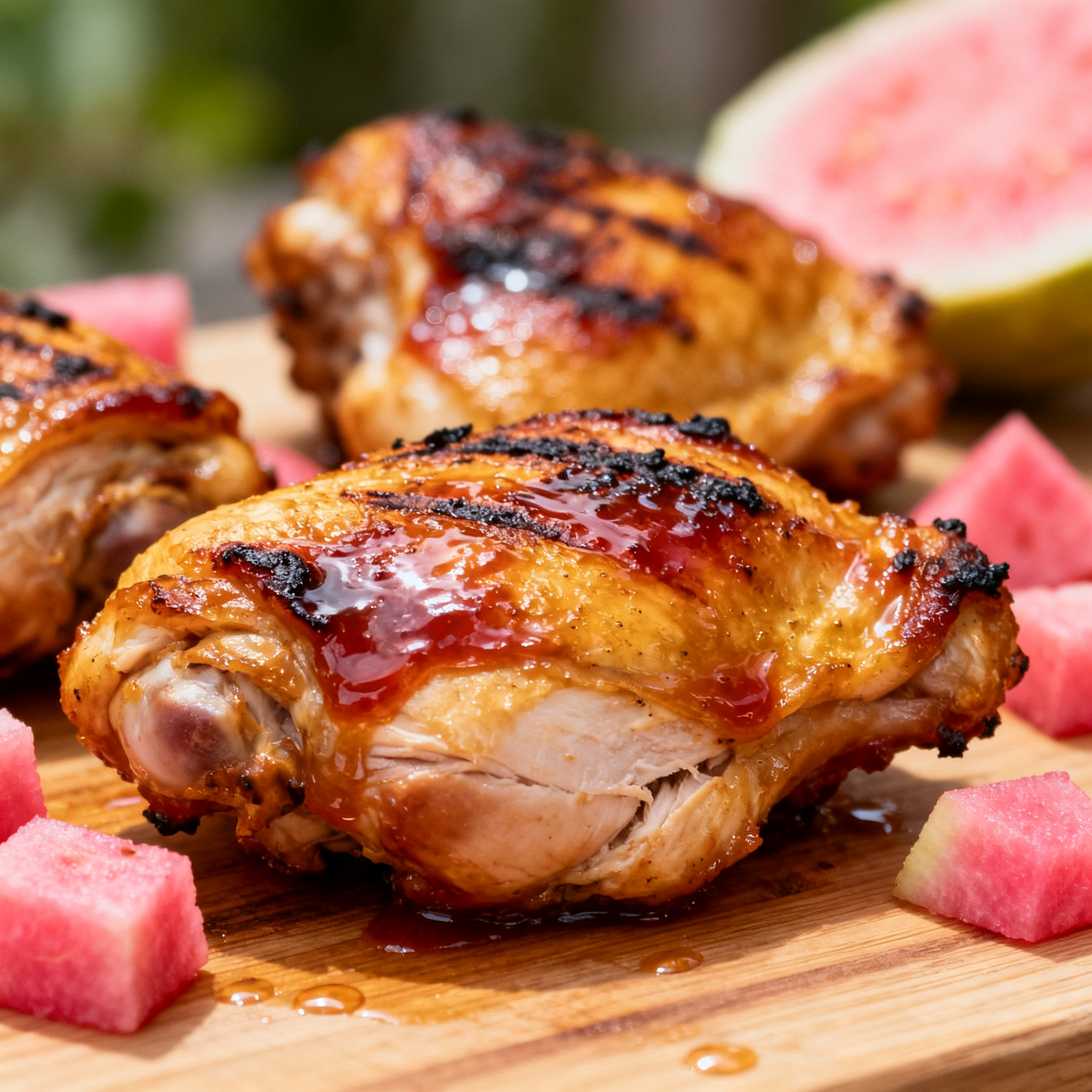
Bone-in chicken thighs seared crisp, then lacquered in a thick guava paste BBQ glaze cut with vinegar and chipotle.
- Prep Time: 15 minutes
- Cook Time: 30 minutes
- Total Time: 45 minutes
- Yield: 4 1x
- Method: Sear and oven-glaze
- Cuisine: Latin-inspired American BBQ
Ingredients
- 8 bone-in, skin-on chicken thighs
- 1 tsp salt
- 1/2 tsp black pepper
- 1 tsp smoked paprika
- 1 tbsp neutral oil
- 8 oz guava paste, cubed
- 1/4 cup cider vinegar
- 2 tbsp chipotle peppers in adobo, minced
- 3 garlic cloves, minced
- 1 tbsp soy sauce
- 2 tbsp water, as needed to thin
Instructions
- Pat chicken thighs dry and season all over with salt, pepper, and smoked paprika.
- Heat oil in a large oven-safe skillet over medium-high. Sear thighs skin-side down for 6-7 minutes until deeply golden and crisp. Flip and sear 2 minutes more, then remove from the pan.
- Preheat oven to 400°F (200°C).
- In a small saucepan, combine guava paste, cider vinegar, chipotle, garlic, and soy sauce. Melt over medium-low heat, stirring, until smooth and thick enough to coat a spoon, about 5 minutes. Thin with water a tablespoon at a time if it’s too stiff to brush.
- Return thighs skin-side up to the skillet. Brush with a thin layer of glaze and transfer to the oven for 8 minutes.
- Remove, brush with a second thin coat, and bake 8 minutes more.
- Brush with a final coat and bake 4-6 minutes, until the glaze is glossy, tacky, and lightly charred in spots and chicken reaches 175°F (79°C) internally.
- Rest 5 minutes, brush with any remaining glaze, and serve.
Notes
Guava paste is sold in blocks in the international aisle or Latin markets — do not substitute guava juice or nectar, which are too thin to lacquer properly. If your only option is guava jelly, simmer it hard until it thickens noticeably before using. Always apply the glaze in thin layers rather than one heavy coat; a single thick coat burns on the outside before the sugars have a chance to caramelize evenly. Leftover glaze keeps refrigerated for a week and works well brushed onto grilled pork chops or salmon.
Here’s the problem with almost every guava BBQ chicken recipe online: they use guava juice, nectar, or thin jelly as the glaze base. Those have almost no pectin and a lot of water, so when you brush them onto chicken thighs, you get a wet, sugary coating that either slides off the skin or scorches into a bitter crust the second it hits high heat. Guava paste (goiabada or pasta de guayaba, sold in blocks near the Latin foods) is a completely different animal. It’s already been cooked down with sugar and pectin until it’s dense enough to slice, which means when you melt it with vinegar, a little chile, and aromatics, it turns into a glaze with actual body, something that clings, layers, and caramelizes in patches instead of turning into a puddle on the sheet pan.
The technique that makes this work is searing the thighs skin-side down in a hot skillet first, rendering the fat and getting real color, before finishing them in the oven with the glaze applied in three thin coats rather than one thick one. One heavy coat just burns on the outside while the inside stays raw and sugary; three light coats, each given a few minutes to set before the next, build up that sticky, faceted lacquer you want from real BBQ. The common mistake is glazing too early or too heavy — if you see the glaze blackening in under five minutes, your oven is too hot or you skipped the thin-coat approach. Pull the pan and drop the temperature before it goes acrid.
Guava’s natural sweetness needs a real acid counterweight or the whole dish reads as candy instead of BBQ. Cider vinegar and a spoon of chipotle in adobo do that work here, cutting through the fruit and giving the glaze a smoky, slightly savory backbone instead of letting it taste like jam on chicken. If you can’t find guava paste, guava jelly reduced hard on the stove until it coats a spoon is the closest substitute, though it will never get quite as thick. Bone-in, skin-on thighs are non-negotiable — the fat renders into the glaze and keeps the meat from drying out while all that sugar is caramelizing, something boneless breasts simply can’t do without turning stringy.
Frequently Asked Questions
What makes this guava BBQ chicken different from other versions?
It uses guava paste instead of guava juice or jelly. The paste is already thick and pectin-rich, so it melts into a glaze that clings to the chicken and caramelizes into a real lacquer instead of running off as a thin, sugary liquid.
Can I make guava BBQ chicken on the grill instead of the oven?
Yes. Sear over direct heat until the skin is crisp, then move the thighs to indirect heat and brush with the glaze in the same three thin coats, closing the lid between each addition so the sugars set without scorching.
Where do I find guava paste for this chicken recipe?
Look for guava paste, sold as goiabada or pasta de guayaba, in the international or Latin foods aisle of most grocery stores, usually near the jams and jellies or in a solid block form.
Why did my guava glaze burn instead of caramelize?
This almost always means the glaze went on too thick or the oven was too hot. Apply it in thin coats with time to set between each, and drop the oven temperature slightly if you notice dark spots forming in under five minutes.
Get our 10 best recipes — free
Join the Receipster newsletter and we’ll send you Dorothy’s 10 most-loved recipes as a free PDF.
Free PDF + new recipes every week. Unsubscribe anytime.