Ube Crinkle Cookies Recipe
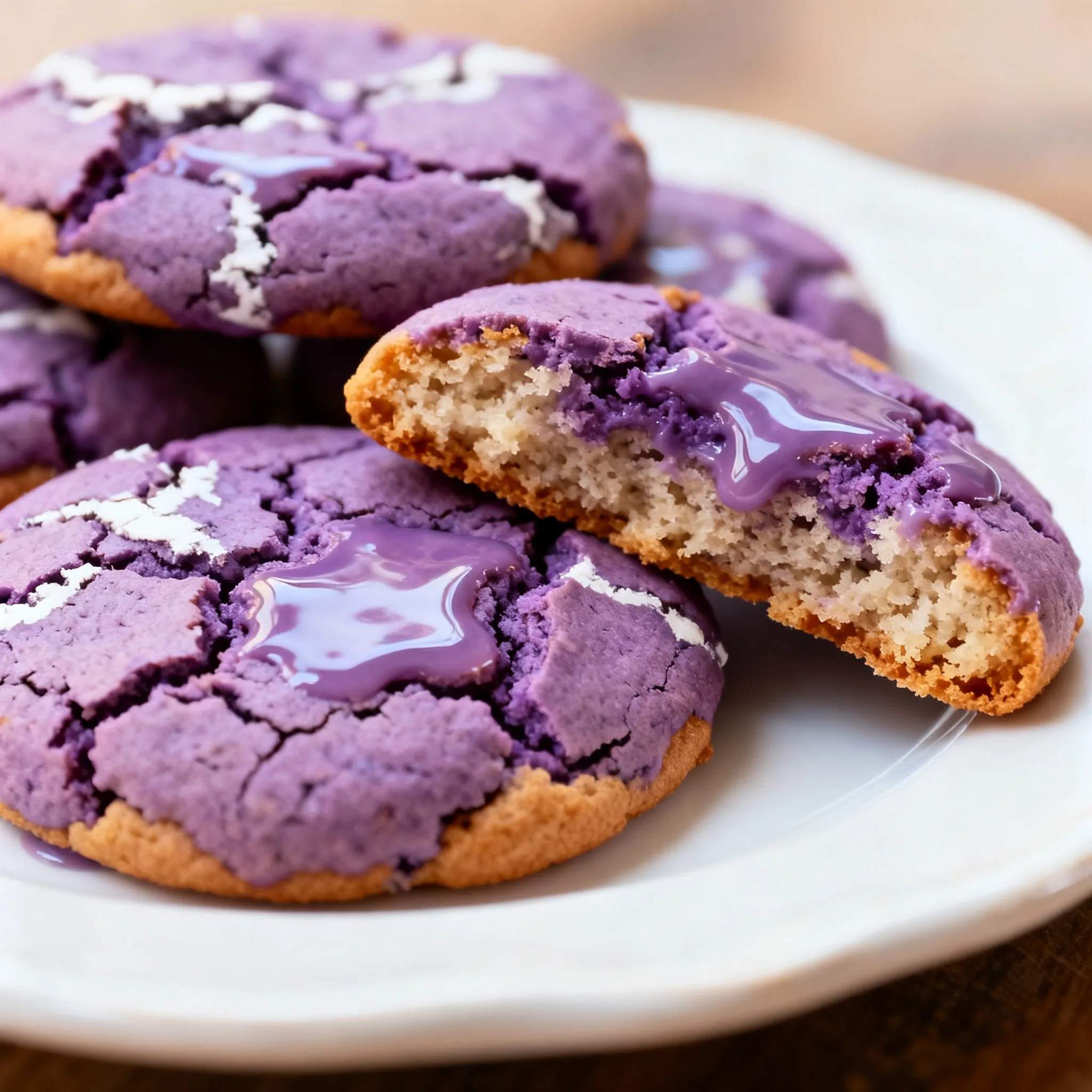
Ube crinkle cookies are supposed to crack into that deep purple and white marble you see at Filipino bakeries, but most versions bake up pale, dull, and barely cracked because the dough goes into the oven too soft.
If you like keeping a stash of freezer-friendly treats on hand, this one fits right alongside my go-to cookie and bar recipes.
The color comes from ube halaya and ube extract working together, one for flavor and body, one for that saturated violet you actually want in photos. But the crinkle itself, the thing that makes this cookie look special, depends on how firm that dough is before it ever sees sugar, let alone the oven.
Get the chill time and the oven temperature right and you'll end up with cookies that are crisp at the crackled edges and soft, almost fudgy, in the center. That contrast is the whole point, and it's easier to hit than most recipes make it sound.
PrintUbe Crinkle Cookies Recipe
Soft, chewy ube crinkle cookies with a cracked purple and white sugar coating.
- Prep Time: 20 minutes
- Cook Time: 12 minutes
- Total Time: 1 hour 32 minutes
- Yield: 24 cookies 1x
- Method: Baked
- Cuisine: Filipino-American
Ingredients
- 1/2 cup (1 stick) unsalted butter, softened
- 3/4 cup granulated sugar
- 1/2 cup ube halaya (ube jam), at room temperature
- 2 large eggs
- 1 tsp ube extract
- 1 tsp vanilla extract
- 2 cups all-purpose flour
- 1/4 cup cornstarch
- 2 tsp baking powder
- 1/4 tsp salt
- 1/2 cup granulated sugar, for rolling
- 1 cup powdered sugar, for rolling
Instructions
- In a large bowl, cream the butter and granulated sugar together until light and fluffy, about 2 to 3 minutes.
- Beat in the ube halaya, eggs, ube extract, and vanilla extract until smooth and evenly colored.
- In a separate bowl, whisk together the flour, cornstarch, baking powder, and salt. Fold into the wet mixture just until combined; do not overmix.
- Cover the dough and chill for at least 1 hour, or up to overnight.
- Scoop the dough into 1 1/2 tablespoon balls. Roll each ball in granulated sugar, then roll generously in powdered sugar until fully coated.
- Place the balls 2 inches apart on a parchment-lined baking sheet. Bake at 350°F for 10 to 12 minutes, until the edges are set and the tops have cracked.
- Cool on the baking sheet for 5 minutes before moving to a wire rack to cool completely.
Notes
Chill the dough the full hour; shortcutting it is the single biggest reason the tops stay smooth instead of cracking. If your ube halaya is on the wet side, add the extra tablespoon of flour mentioned in the variations so the dough isn’t sticky once it comes out of the fridge.
What Makes Ube Crinkle Cookies Crack Properly
The crack on top of an ube crinkle cookie isn’t decorative, it’s physics. Chilled dough firms up on the outside faster than it can warm through in the oven, so the surface sets while the inside is still trying to spread and puff. That tension is what splits the sugar coating into those sharp white lines against the purple. Skip the chill and the dough spreads evenly with no resistance, leaving a flat, smooth top instead.
The sugar matters just as much as the chill. I roll each ball first in granulated sugar, then in a thick, generous layer of powdered sugar. The granulated layer gives the powdered sugar something coarse to grip onto instead of sinking straight into the soft butter underneath. Without that first pass, the powdered sugar melts into the dough in the oven’s first few minutes and you lose most of the contrast you’re after.
I pull mine when the edges look set but the centers still look slightly underbaked and shiny. They firm up fully as they cool on the pan, which is what keeps the middle soft instead of cakey.
The Pan, Scoop, and Oven Setting That Keep the Purple From Muddying
Use a light-colored, heavy-gauge baking sheet lined with parchment, not a dark nonstick pan. Dark metal absorbs more heat and browns the bottoms and edges faster than the center bakes, and that extra browning dulls the ube color from violet toward brown. Parchment also keeps the sugar coating from sticking and tearing when you lift the cookies off.
A level 1 1/2 tablespoon scoop keeps every cookie the same size, which matters more here than in most cookie recipes: smaller balls bake through before they crack, bigger ones crack but stay doughy in the middle. Bake at 350 degrees F on the middle rack, one sheet at a time if your oven runs uneven, for 10 to 12 minutes.
Rotate the pan front to back around the 6 minute mark so the cracks open evenly instead of spreading more on one side, which happens more than you’d expect in ovens with a strong hot spot.
Keeping the Crackle After They Cool
Let the cookies cool completely on the pan before stacking them; warm cookies sweat, and that sweat turns the powdered sugar translucent and gluey instead of soft and white. Once they’re fully cool, store them in an airtight container at room temperature for 3 to 4 days.
If your kitchen runs warm or humid, the fridge is a better call: get them into an airtight container within about 2 hours of cooling and they’ll hold their texture for the same 3 to 4 days without the sugar weeping. Just let them sit out for 10 minutes before serving so the coating doesn’t look damp.
For longer storage, freeze the baked cookies in a single layer before stacking them in a freezer bag, up to 2 months. Thaw at room temperature rather than microwaving, which softens the crinkle top before it ever gets a chance to firm back up.
Ube Flavor and Dietary Swaps That Still Hold the Crack
If you only have ube extract and no ube halaya, you can make these with extract alone, but add an extra tablespoon of liquid to replace the moisture the jam would have added, or the dough bakes drier and cracks less cleanly. Going the other direction with more halaya makes the flavor deeper and the crumb slightly denser, so add a tablespoon or two more flour if the dough feels sticky after chilling.
- Dairy-free: swap the butter for a dairy-free block-style butter, and check your ube halaya label, since many jarred brands include condensed milk or butter. Use a dairy-free jam, or skip the halaya and lean on extract plus natural purple food coloring instead; if you go the extract-only route, use a dairy-free milk for the extra moisture.
- Gluten-free: swap the all-purpose flour for a 1:1 gluten-free baking blend that includes xanthan gum. The cornstarch in the recipe is already gluten-free, so it stays as written.
- Add-ins: fold in 1/2 cup white chocolate chips after mixing for a sweeter version, or roll the balls a little smaller for a two-bite cookie and shave a minute or two off the bake time.
Whatever swap you make, keep the sugar coating process the same. That part of the method is what gives you the crack, regardless of what’s flavoring the dough underneath.
More Cookies Worth Baking Next
If you like a soft cookie with a little drama on top, the Crumbl-style caramel apple cookies use a similar soft-center approach, and the apple pie cookies are another good one to add to the rotation if you’re building out a cookie box.
Frequently Asked Questions
What does ube taste like in these cookies?
Ube has a mild, vanilla-like sweetness with a slightly nutty, almost coconut undertone, nothing like a yam or sweet potato despite being a tuber. In crinkle cookies, the halaya adds body while the extract pushes the flavor and color forward, so together they taste more vivid than either alone.
Why didn't my cookies crack?
The most common reason is dough that wasn't cold enough, so the whole cookie baked at the same rate with no tension to split the sugar. Chill the dough for at least an hour, and work with it cold straight from the fridge instead of letting it sit out while you scoop.
Can I make the dough ahead and freeze it?
Yes, scoop the dough into balls, freeze them on a tray until solid, then transfer to a freezer bag for up to 2 months. Roll them in granulated and powdered sugar while they're still frozen, then bake straight from frozen, adding a minute or two to the bake time.
Why do my cookies spread flat instead of staying domed?
Butter that's too soft, or dough that skipped the chill, spreads before it ever sets, which kills the crack since there's no resistance left to split the sugar. Pull your butter from the fridge just until it gives slightly when pressed, not fully soft, and don't skip the hour of chilling.
Can I use ube powder instead of extract or halaya?
You can, but ube powder alone gives a lighter color and milder flavor than extract or halaya, so you'll likely want to add a few drops of purple food coloring to get the deep violet these cookies are known for. Rehydrate it with a splash of milk so it blends smoothly without dry flecks.
Get our 10 best recipes - free
Join the Receipster newsletter and we’ll send you Dorothy’s 10 most-loved recipes as a free PDF.
Free PDF + new recipes every week. Unsubscribe anytime.