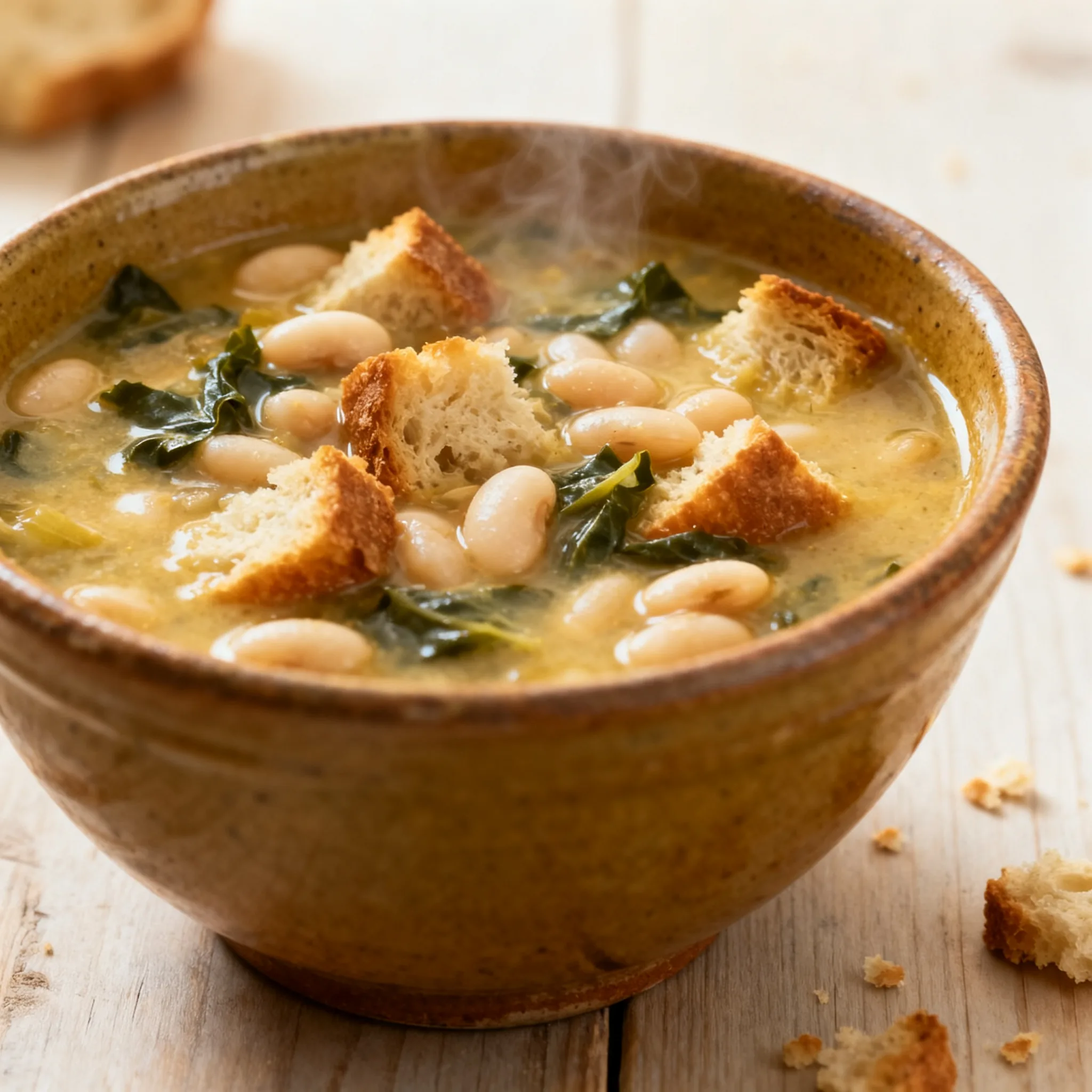
Ribollita Recipe (Tuscan White Bean and Bread Soup)
Ribollita means "reboiled" in Italian, and that single word is this ribollita recipe's whole technique: the soup isn't done when the vegetables go tender, it's done after a rest, once stale bread has had time to swell and half dissolve into the broth until a spoon nearly stands up in it.
If you want more pots like this one simmering on the stove this winter, I keep a running list of cozy soups and stews worth putting on repeat.
Skip that rest and you get a perfectly nice minestrone with bread floating in it. The problem is moisture and time: fresh, soft bread breaks down almost instantly and clouds the broth without ever thickening it, while bread that's properly dried out holds together just long enough to slowly soak up liquid and fall apart into the soup instead of floating on top of it.
I build this one with a short list of pantry vegetables, a can of beans mashed right into the pot for body, and bread I dry out on purpose if it isn't already stale. It takes about the same hands-on time as any vegetable soup, with one extra step that makes all the difference: patience before the bowl.
PrintRibollita Recipe (Tuscan White Bean and Bread Soup)
A thick Tuscan soup of white beans, kale, and stale bread that gets even better after a night in the fridge.
- Prep Time: 20 minutes
- Cook Time: 45 minutes
- Total Time: 1 hour 5 minutes active, plus at least 1 hour resting (overnight for best results)
- Yield: 6 1x
- Method: Stovetop
- Cuisine: Italian
Ingredients
- 1/4 cup olive oil, plus more for serving
- 1 small yellow onion, diced
- 2 carrots, diced
- 2 celery stalks, diced
- 4 cloves garlic, minced
- 1 bunch cavolo nero (Tuscan kale) or lacinato kale, stems removed and leaves chopped
- 1/2 small savoy cabbage, thinly sliced
- 2 (15 oz) cans cannellini beans, drained and rinsed
- 1 (14.5 oz) can diced tomatoes
- 6 cups vegetable or chicken stock
- 1 parmesan rind (optional)
- 1 sprig rosemary
- 1 bay leaf
- 1/2 tsp red pepper flakes (optional)
- Salt and black pepper, to taste
- 4 to 5 cups torn stale rustic bread (such as ciabatta or a country loaf)
- Grated parmesan and extra olive oil, for serving
Instructions
- If your bread isn’t already stale, dry it out: spread the torn pieces on a baking sheet and bake at 300°F for 10 to 15 minutes, until firm and dry but not browned. Set aside.
- Heat the olive oil in a large Dutch oven or heavy pot over medium heat. Add the onion, carrots, and celery and cook, stirring occasionally, for 8 to 10 minutes, until softened. Add the garlic and cook 1 minute more.
- Stir in the cavolo nero and cabbage. Cook, stirring, for 5 minutes, until the greens wilt down.
- Add one can of beans to the pot whole. Mash or puree the second can of beans with a splash of the stock until mostly smooth, then stir that into the pot as well.
- Add the diced tomatoes, remaining stock, parmesan rind, rosemary, and bay leaf. Bring to a simmer, then reduce the heat to low and cook uncovered for 30 to 35 minutes, until the greens are very tender and the broth tastes rich.
- Remove the parmesan rind, rosemary sprig, and bay leaf. Season with salt and pepper.
- Stir in the dried bread, pressing it down so it’s fully submerged in the broth. Turn off the heat, cover, and let the soup rest for at least 1 hour at room temperature, or refrigerate it overnight for the best texture.
- Before serving, reheat the soup gently over low heat, stirring occasionally and adding a splash of water or stock if it’s too thick, until it’s warmed through and reaches 165°F. Ladle into bowls and finish with a drizzle of olive oil and grated parmesan.
Notes
Taste before adding salt: canned beans, stock, and the parmesan rind all bring their own saltiness, so season at the end. The soup looks thin right after simmering; that’s normal, it thickens once the bread has had time to rest in it, so resist the urge to add extra bread to compensate. A parmesan rind is worth saving in the freezer specifically for soups like this one.
Why the Overnight Rest Is What Actually Makes Ribollita
I mash one can of beans right into the broth before the bread ever goes in, and that step alone changes the texture of this ribollita recipe. Mashed cannellini beans add a creamy backbone to the broth, so the soup isn’t relying on bread alone to go from thin to thick. The second can stays whole, so you still get beans you can bite into instead of a pureed soup.
As the torn, dried bread sits in the hot broth and then cools, its starches slowly swell and release, soaking up liquid and binding the vegetables and beans into one dense mass instead of floating on top like croutons. That’s why a rushed bowl, eaten the minute the bread goes in, never has the right texture: the starches haven’t had time to do their job yet. I let mine sit at least an hour off the heat, and if I have the time, I refrigerate it overnight and reheat it the next day, which is the traditional way and the version I like best.
The Pot and Heat Setting I Use for This Soup
Use a heavy pot with a wide base, like a Dutch oven, so the vegetables have room to cook down evenly instead of steaming in a pile. I cook the soffritto (the onion, carrot, and celery) over medium heat until it’s truly soft, about 8 to 10 minutes, not just translucent. Rushing this step leaves raw vegetable flavor sitting underneath everything else later.
Once the stock goes in, drop the heat to low and keep the soup at a gentle simmer, not a rolling boil, for the 30 to 35 minutes it takes the kale and cabbage to turn truly tender. A hard boil breaks the greens down unevenly and can scorch the bottom once the beans start to thicken things. If your bread isn’t a few days old, dry torn pieces on a sheet pan in a 300°F oven for 10 to 15 minutes until firm, not browned. That’s the same texture stale bread reaches on its own, and it’s what lets the bread absorb broth slowly instead of collapsing into paste.
How to Store and Reheat Leftover Ribollita
Ribollita is one of the few soups that’s genuinely better as leftovers, which is convenient, since you’ll want to make a full pot. Cool it down and get it into the fridge within 2 hours of cooking, and it will keep well for 3 to 4 days in an airtight container.
Reheat it gently, over low heat on the stove, stirring often so the bottom doesn’t catch. The soup will have thickened considerably in the fridge; a splash of water or stock whisked in as it warms brings it back to a good spoonable consistency without watering down the flavor. Heat it through until it reaches 165°F before serving. It also freezes well for a few months. I’d freeze it before adding the bread if you’re planning that far ahead, then stir in freshly dried bread and give it its rest after you thaw and reheat it, so the texture stays right.
Ways to Change Up This Tuscan Bean and Bread Soup
Swap the cavolo nero for curly kale, chard, or even spinach if that’s what’s in your fridge; just add tender greens like spinach later in the simmer so they don’t turn to mush. Borlotti or great northern beans work in place of cannellini if that’s what you have on hand.
- Dairy-free: Leave out the parmesan rind while simmering and skip the grated parmesan at the end, finishing instead with a generous drizzle of good olive oil and extra black pepper.
- Gluten-free: Use a sturdy gluten-free country-style loaf in place of the regular bread, dried out the same way in the oven.
- Heartier: Add a rind of pancetta or a diced potato with the soffritto for a more filling bowl.
- Spicier: Increase the red pepper flakes or finish with a swirl of chili oil at the table.
Frequently Asked Questions
What is ribollita made of?
Ribollita is a Tuscan soup built from white beans, dark leafy greens like cavolo nero, a simple vegetable soffritto, and stale bread that's stirred in at the end to thicken the broth into something closer to a stew.
Why is my ribollita too thin?
Thin ribollita almost always means the bread didn't have enough time to break down, or it wasn't dry enough to soak up broth slowly. Give it at least an hour off the heat, longer if you can, and use bread that's properly stale or oven-dried first.
Can I make ribollita ahead of time?
Yes, and it's actually better that way. Make the soup a day ahead, stir in the bread, and refrigerate it overnight so the flavors settle and the texture thickens before you reheat and serve it.
What bread works best for ribollita?
A rustic, country-style Italian loaf with a sturdy crumb, like ciabatta or a dense sourdough, holds up best. It needs to be stale or dried out in the oven first so it absorbs broth gradually instead of turning to mush.
Is ribollita a soup or a stew?
It starts as a soup but ends up somewhere between a soup and a stew once the bread has had time to rest in the broth. Traditionally it's thick enough that a spoon can nearly stand up in it.
Get our 10 best recipes - free
Join the Receipster newsletter and we’ll send you Dorothy’s 10 most-loved recipes as a free PDF.
Free PDF + new recipes every week. Unsubscribe anytime.