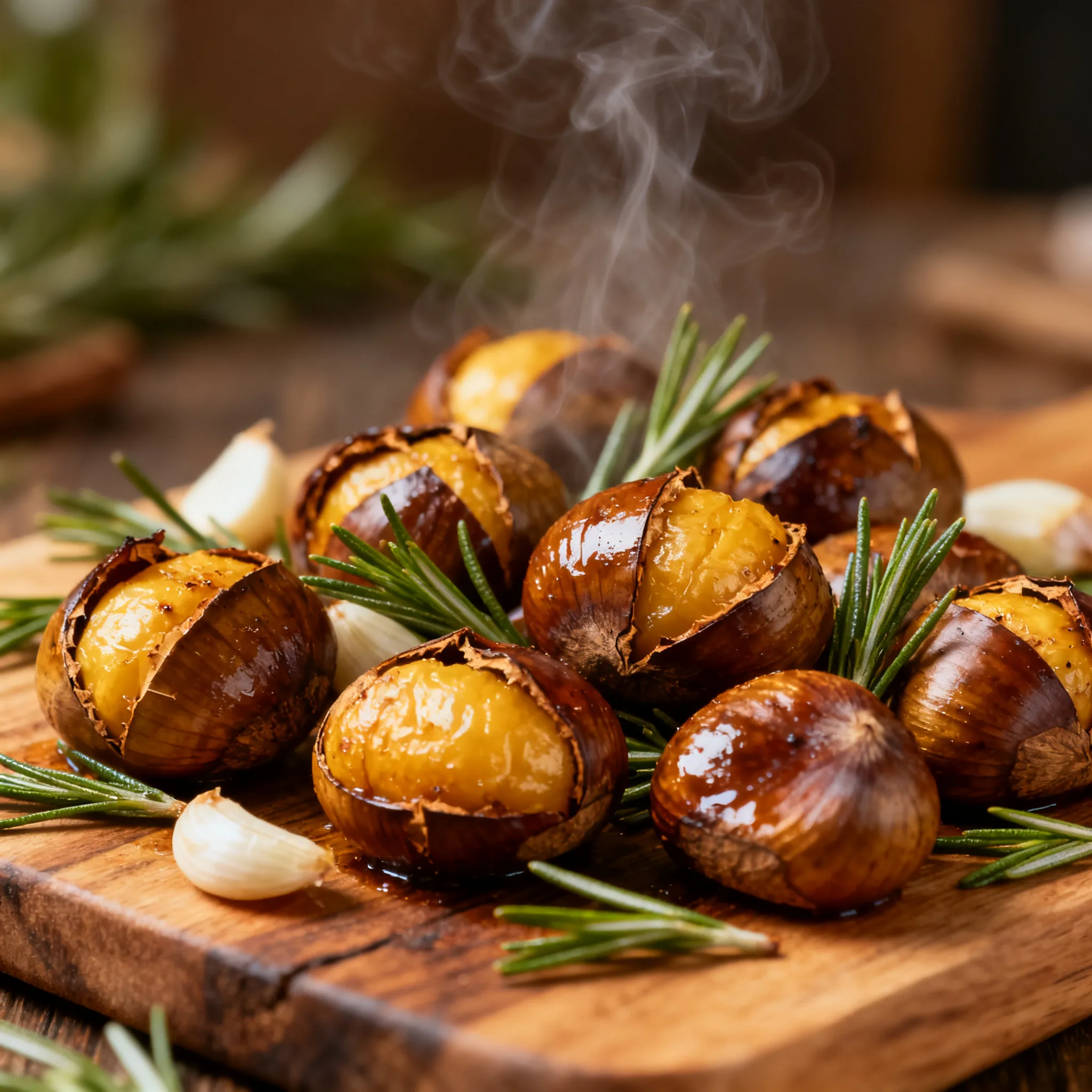
Rosemary Garlic Roasted Chestnuts
Rosemary garlic roasted chestnuts depend on one small cut: the X you score into the rounded side of each shell before they ever hit the oven. Skip that cut, or make it too shallow, and steam has nowhere to go, so the shells stay sealed shut, the nuts roast unevenly, and you're stuck prying at a shell that won't let go. This roasted chestnuts recipe scores deep enough to vent steam and loosen the shell, then saves the garlic and rosemary for after roasting so neither one scorches.
If you want more warm, hands-on snacks like this for a holiday table, I keep a running list of cozy party snacks and dips that work just as well with a cup of mulled cider.
I score every chestnut on the curved side, not the flat one, because that's the side that actually faces the heat and curls back cleanly. The cut needs to go through the shell and the thin brown skin underneath it, about a quarter inch, or the peel will tear off in stubborn pieces instead of lifting away in one motion. A short soak in warm water before roasting softens that shell just enough to make the scoring easier and keeps the inside from drying out under high heat.
The payoff is a soft, slightly sweet nut wrapped in a garlic rosemary butter that never touched the oven. I melt the butter low and slow with the garlic for a minute or two, just until it's fragrant, then pour it over the hot chestnuts straight off the pan so the flavor soaks in while they're still warm enough to peel with your fingers.
PrintRosemary Garlic Roasted Chestnuts
Oven-roasted chestnuts scored for easy peeling and tossed warm in a garlic rosemary butter.
- Prep Time: 20 minutes
- Cook Time: 25 minutes
- Total Time: 45 minutes
- Yield: 4 1x
- Method: Roasted
- Cuisine: American
Ingredients
- 1 lb fresh chestnuts
- 3 tablespoons unsalted butter (or olive oil for dairy-free)
- 2 cloves garlic, minced
- 1 tablespoon fresh rosemary, finely chopped
- 1/2 teaspoon salt
- Pinch of black pepper
- Flaky salt, for serving
Instructions
- Preheat the oven to 425°F and line a rimmed sheet pan with foil or parchment.
- Using a small sharp paring knife, score a deep X through the shell and the thin skin underneath on the rounded side of each chestnut, cutting about 1/4 inch deep without reaching the flesh.
- Place the scored chestnuts in a bowl of warm water and let them soak for 15-20 minutes, then drain and pat dry.
- Arrange the chestnuts cut-side up in a single layer on the sheet pan and roast for 20-25 minutes, until the shells curl back at the cut and the flesh feels tender when pressed.
- While the chestnuts roast, melt the butter in a small skillet over low heat. Add the garlic and cook for 1-2 minutes, just until fragrant, then remove from the heat and stir in the rosemary, salt, and pepper.
- Transfer the hot chestnuts to a bowl and pour the garlic rosemary butter over them, tossing to coat. Let them sit for 2-3 minutes so the flavor soaks in.
- Peel and serve warm, finished with a pinch of flaky salt.
Notes
If your oven runs hot, check the chestnuts at the 20 minute mark since they can dry out fast once the shells open. Smaller chestnuts roast faster than large ones, so pull them out in batches if the sizes in your bag are uneven.
Why Scoring the Shell and Timing the Garlic Make the Difference
The reason this method works is steam. A chestnut shell is dense and nearly waterproof, so as the nut heats up, moisture trapped inside turns to steam with nowhere to escape unless you’ve cut a path for it. The X score through the shell and the papery skin beneath it gives that steam an exit, which is also what makes the shell curl back and loosen from the flesh instead of staying clamped shut. Skip the cut or make it too shallow and you’ll get shells that barely move, flesh that cooks unevenly, and in rare cases a shell that pops from the pressure.
Garlic timing matters just as much. Raw minced garlic left on a pan at 425°F for the full 20 to 25 minutes dries out and turns acrid long before the chestnuts are done, because garlic’s flavor compounds break down fast under sustained dry heat. Cooking it gently in melted butter for only a minute or two, off to the side, keeps it mellow, and tossing it with the chestnuts right when they come out of the oven means the warm, just-opened shells pull in all that flavor instead of none of it. I check doneness by sight more than the clock: the cut edges of the shell should be curling outward and the flesh underneath should give slightly when you press it, not feel hard.
Equipment and Oven Settings for Perfectly Curled Shells
You don’t need special equipment for this, but a few things keep it tidy. A rimmed sheet pan keeps the garlic butter you’ll pour on later from running off the edges, and lining it with foil or parchment saves scrubbing scorched shell bits afterward. For the scoring itself, use a small paring knife with a sharp point rather than a chef’s knife, since a shorter blade gives you more control over depth, and depth is what decides whether the shell pops open cleanly or stays stubborn.
- Rimmed sheet pan, lined with foil or parchment
- Small sharp paring knife for scoring
- Oven rack set in the middle position
- Small skillet for the garlic butter
Keep the oven at 425°F rather than going lower out of worry about the garlic, since the garlic never goes in the oven in this method. The higher heat is what gets the shells curling and the flesh tender without drying it out, and a middle rack gives even heat on both sides of the pan.
Storing and Reheating Leftover Roasted Chestnuts
Peel the chestnuts before you store them. Cold, roasted chestnut shells are far harder to get off than warm ones, and you’ll regret leaving that job for later. Once peeled, keep leftovers in an airtight container in the fridge for 3-4 days, and get them into the fridge within 2 hours of roasting so they don’t sit out too long.
To reheat, spread them on a small pan or in a toaster oven at 300°F for a few minutes with a small pat of butter, just until they’re warmed through to about 165°F if you’re checking with a thermometer. The microwave works in a pinch, but it tends to make the texture a little rubbery compared to a quick pass in the oven.
Variations and Swaps for Your Roasted Chestnuts
Rosemary and garlic are the combination I reach for most, but thyme or sage work just as well if that’s what you have on the counter. A spoonful of grated Parmesan tossed in with the warm chestnuts adds a salty edge, though you’ll want to skip that if you’re keeping this dairy-free, and swap the butter for olive oil in that case too since it’s the only dairy ingredient in the recipe.
- Swap the herb: thyme or sage instead of rosemary
- Make it dairy-free: olive oil instead of butter
- Add heat: a pinch of red pepper flakes in the butter
- Make it sweet: a drizzle of honey after tossing
If you want a deeper, nuttier flavor, let the butter go a shade past melted until it smells toasted before adding the garlic, which gets you closer to a brown butter without the extra step of babysitting it separately.
More Garlicky Roasted Sides to Try Next
If the garlic butter here won you over, it does the same thing to vegetables: try the garlic roasted cherry tomatoes for a quick side, or go bigger with a tray of balsamic glazed roasted vegetables for your next dinner.
Frequently Asked Questions
Do I really need to score the chestnuts before roasting?
Yes. The score lets steam escape as the chestnuts heat up, which is what makes the shells curl back instead of staying sealed. Without it, the shells peel much harder and some nuts can pop from built-up pressure.
How do I know when roasted chestnuts are done?
Look at the cut you scored: the edges should curl outward and pull slightly away from the flesh. Press one and the inside should feel tender, not hard or chalky, which usually happens around the 20 to 25 minute mark at 425°F.
Why are my chestnuts hard to peel even after roasting?
This usually means the score wasn't deep enough to cut through the shell and the skin underneath, or the chestnuts went in cold and dry instead of after a warm water soak. Peeling them while still warm also helps a lot.
Can I make these on the stovetop instead of in the oven?
You can pan roast scored chestnuts in a dry skillet over medium heat, shaking often, but watch them closely since stovetop heat is less even than an oven. The garlic rosemary butter still goes on after roasting, not before.
Can you freeze roasted chestnuts?
Peeled roasted chestnuts freeze reasonably well in an airtight container or bag for up to a few months. Thaw them in the fridge and reheat gently in a low oven rather than the microwave to keep the texture from turning rubbery.
Get our 10 best recipes - free
Join the Receipster newsletter and we’ll send you Dorothy’s 10 most-loved recipes as a free PDF.
Free PDF + new recipes every week. Unsubscribe anytime.