The Crispy Spaghetti Pancake Everyone’s Suddenly Obsessed With
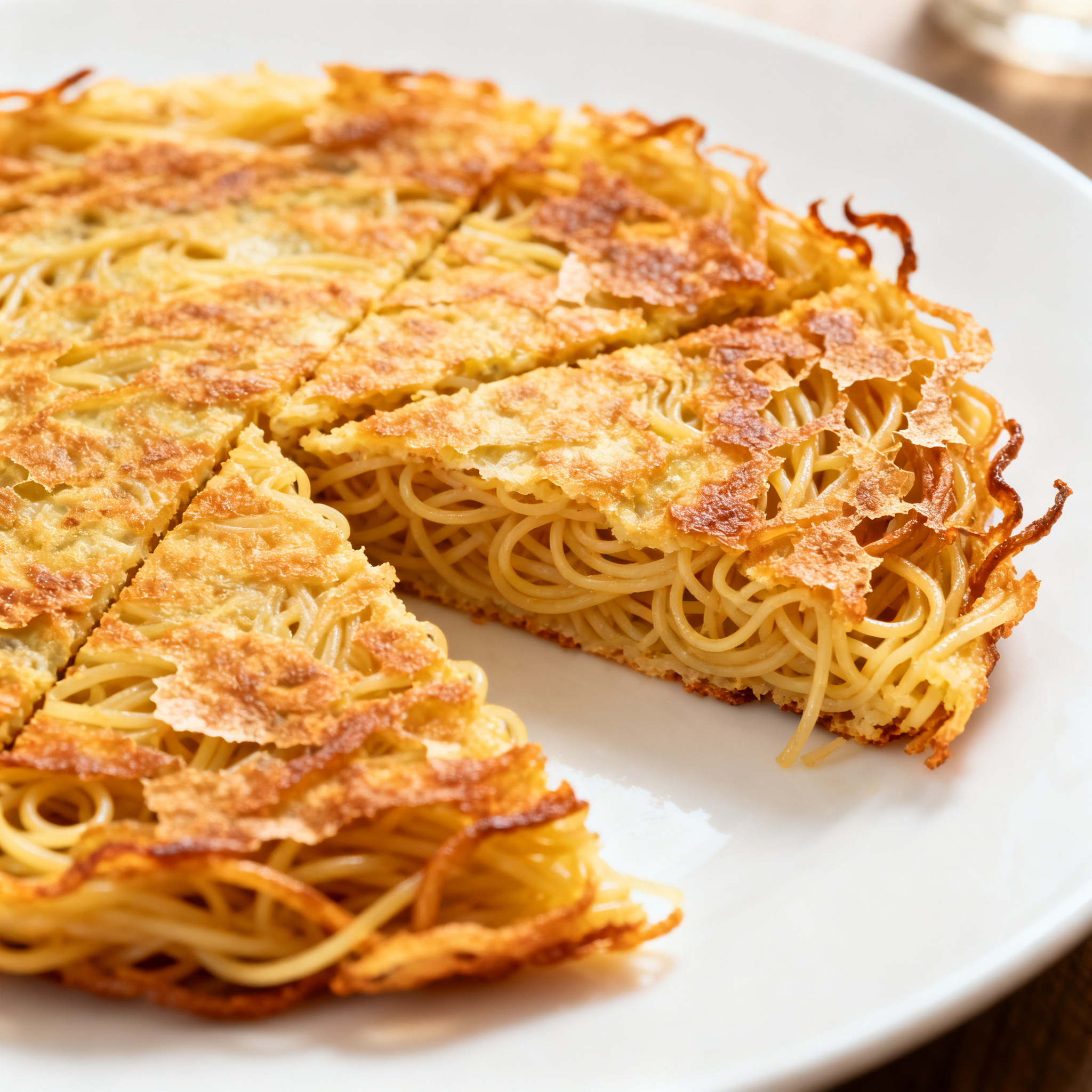
This crispy spaghetti pancake treats leftover noodles like hash browns, not omelet filling — the result is a crust that actually shatters instead of just going 'a little crunchy.' One cold-pasta trick and a two-sided sear are the whole secret, and once you taste that lacy, parmesan-crisped edge, the soft spaghetti frittata version is going to feel like a compromise.
Simple, everyday ingredients and clear, step-by-step instructions — every recipe made in Dorothy’s kitchen before it reaches yours. Jump to the full recipe card below.
PrintThe Crispy Spaghetti Pancake Everyone’s Suddenly Obsessed With
A hash-brown-crisp spaghetti pancake with a shattering parmesan crust, made from cold leftover noodles.
- Prep Time: 15 minutes
- Cook Time: 12 minutes
- Total Time: 27 minutes
- Yield: 4 1x
- Method: Pan-frying
- Cuisine: Italian-American
Ingredients
- 12 oz cooked spaghetti, cold (ideally day-old)
- 3 large eggs, beaten
- 3/4 cup finely grated parmesan
- 2 tablespoons cornstarch
- 2 cloves garlic, minced
- 1/4 cup finely chopped parsley
- 1/2 teaspoon black pepper
- 1/4 teaspoon red pepper flakes (optional)
- 3 tablespoons olive oil, divided
- Flaky salt, to finish
Instructions
- In a large bowl, toss the cold spaghetti with cornstarch until evenly coated.
- Add the beaten eggs, parmesan, garlic, parsley, black pepper, and red pepper flakes. Mix thoroughly until every strand is coated — use tongs to distribute evenly without mashing the noodles.
- Heat 2 tablespoons olive oil in a 10-inch cast iron or heavy nonstick skillet over medium-high heat until shimmering.
- Add the spaghetti mixture, pressing it into an even, compact layer with a spatula.
- Cook undisturbed for 5 to 6 minutes, until the pancake releases freely when you shake the pan and the underside is deep golden.
- Slide the pancake onto a large plate, add the remaining oil to the pan, then invert the pancake back in to cook the second side.
- Cook 4 to 5 minutes more, until equally crisp and golden.
- Slide onto a cutting board, sprinkle with flaky salt, rest 2 minutes, then slice into wedges.
Notes
Cold pasta is essential — fresh, warm spaghetti releases too much moisture and steams instead of crisping. If short on time, spread cooked pasta on a sheet pan and refrigerate uncovered for 20 minutes to fast-track the effect. Don’t skip the cornstarch; it’s what separates a genuinely crispy crust from a merely browned one. Leftovers reheat best in a dry skillet, never the microwave, to preserve the crunch.
Most spaghetti pancake recipes are really just a frittata with noodles in it — eggy, soft, maybe crisp on one face if you’re lucky. That’s not what’s blowing up right now, and it’s not what this recipe does. The move here is borrowed from hash browns, not omelets: cold, day-old spaghetti has already shed and re-set its surface starch in the fridge, which is exactly what lets it fry into a lattice of crisp strands instead of steaming into a soft cake. Toss the noodles in beaten egg, a fistful of finely grated parmesan, and a light dusting of cornstarch — the starch is the part everyone skips, and it’s the part that actually matters, because it pulls surface moisture away and gives the exterior something to crisp against instead of just browning wet egg.
The other non-negotiable is heat discipline. Use a well-seasoned cast iron or heavy nonstick skillet, get it properly hot with a thin layer of olive oil before the pasta goes in, then leave it alone. The single biggest mistake people make is peeking, poking, or trying to loosen the edges too early — every disturbance breaks the crust that’s trying to form. Give it a full 5 to 6 minutes undisturbed on the first side; you’ll know it’s ready when the pancake slides freely in the pan with a shake, not before. Flip it by sliding onto a plate and inverting back into the pan, the same way you’d flip a tortilla española, rather than attempting a mid-air flip that a home skillet rarely survives intact.
Day-old spaghetti is genuinely better here than fresh-cooked and cooled quickly — the extra time lets the starches firm up, so if you’re planning ahead, that’s a feature, not a shortcut. If you’re starting from scratch, cook the pasta, toss it with a little oil so it doesn’t clump, and refrigerate uncovered for at least an hour before building the pancake. Swap in pecorino for a sharper bite, stir in torn basil or crisped pancetta for a heartier version, or finish the whole thing under the broiler for 90 seconds if you want the top as craggy and browned as the bottom.
Frequently Asked Questions
Why is my spaghetti pancake soggy instead of crispy?
Soggy usually means the pasta was warm or freshly cooked, which traps steam under the crust. Use cold, ideally day-old spaghetti, coat it in cornstarch before adding egg, and don't crowd the pan with oil that's too cool.
Can I make a crispy spaghetti pancake without eggs?
Yes — swap the eggs for 1/3 cup of the reserved starchy pasta water mixed with an extra tablespoon of cornstarch and a bit more parmesan for binding. The crust will be slightly less rich but still crisps well.
What's the best pan for this recipe?
A well-seasoned cast iron skillet gives the most even, deeply golden crust. A heavy nonstick pan works too, but avoid thin pans, which heat unevenly and cause burnt spots before the center sets.
Can I use a different pasta shape?
Spaghetti or linguine work best because the long strands weave together into a cohesive crust. Short pasta shapes tend to fall apart when sliced, so stick with long noodles for the classic pancake structure.
Get our 10 best recipes — free
Join the Receipster newsletter and we’ll send you Dorothy’s 10 most-loved recipes as a free PDF.
Free PDF + new recipes every week. Unsubscribe anytime.