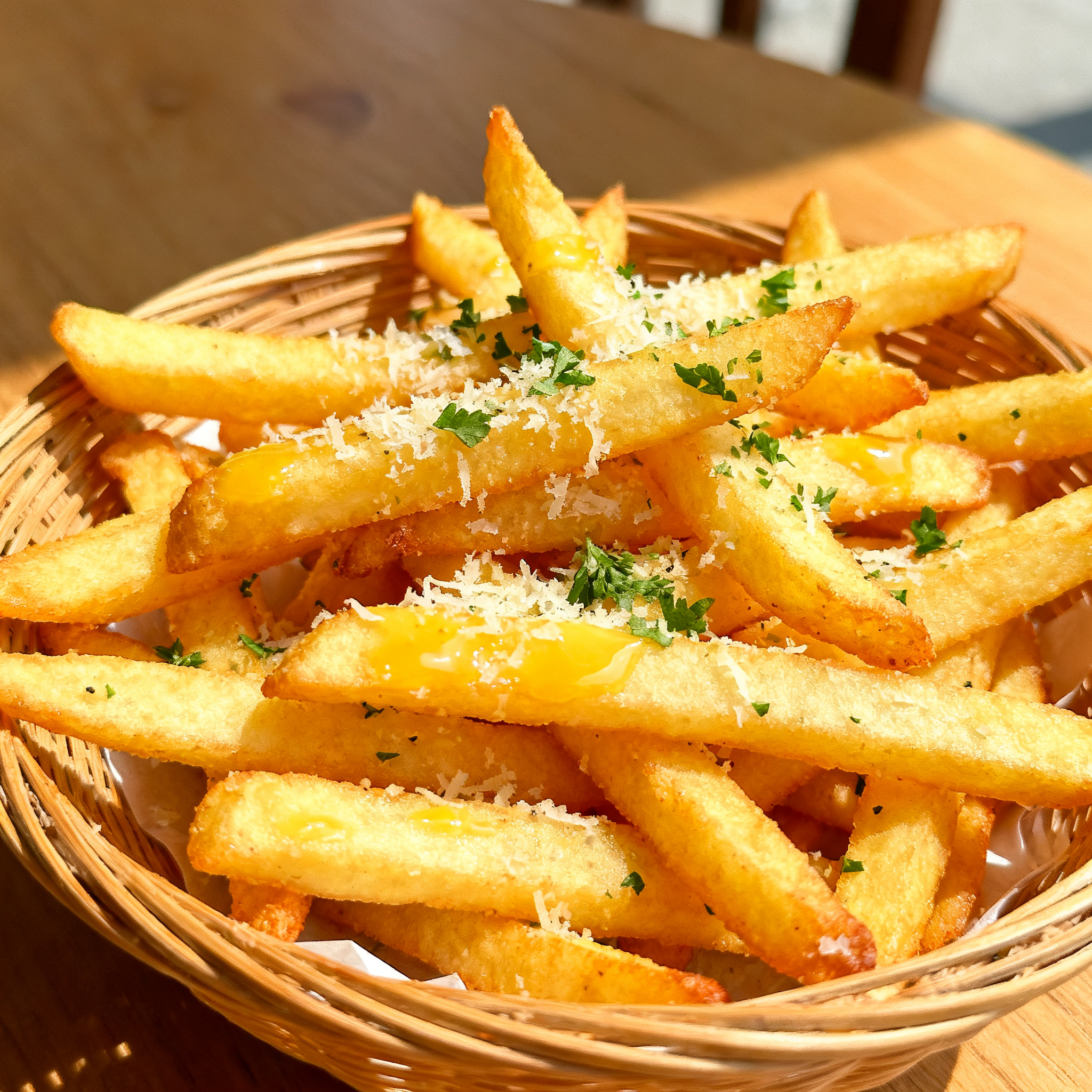
Crispy Garlic Parmesan Julienne Fries (The Shatter-Crisp Method)
Most julienne fries are a bait-and-switch: crackling for two minutes, then limp and greasy by the time they hit the table. This version fixes that with a cornstarch brine instead of a flour dredge, and swaps raw minced garlic for a slow-infused garlic oil so nothing burns bitter before the fries even finish crisping.
Simple, everyday ingredients and clear, step-by-step instructions — every recipe made in Dorothy’s kitchen before it reaches yours. Jump to the full recipe card below.
PrintCrispy Garlic Parmesan Julienne Fries (The Shatter-Crisp Method)
Shatter-crisp garlic parmesan julienne fries made with a fast baking-soda brine and garlic-infused oil so nothing burns bitter.
- Prep Time: 20 minutes
- Cook Time: 15 minutes
- Total Time: 35 minutes
- Yield: 4 1x
- Method: Deep-fried
- Cuisine: American
Ingredients
- 2 lbs russet potatoes, cut into thin julienne (matchstick) strips, about 1/8-inch thick
- 1 tablespoon baking soda
- 1 tablespoon kosher salt, plus more to finish
- 2 tablespoons cornstarch
- Neutral oil for frying (peanut or vegetable), about 6 cups
- 4 tablespoons olive oil
- 4 garlic cloves, smashed
- 1/2 cup finely grated parmesan
- 2 tablespoons chopped fresh parsley
- Zest of 1 lemon
- Freshly cracked black pepper
Instructions
- In a large bowl, combine 6 cups warm water, baking soda, and salt. Add the julienne potatoes and soak for 10 minutes, stirring once halfway through.
- Drain the potatoes and spread on a clean kitchen towel. Pat completely dry, then toss in a dry bowl with the cornstarch until lightly coated.
- Heat neutral oil in a heavy pot to 350°F (175°C). While it heats, warm the olive oil and smashed garlic in a small skillet over low heat for 3-4 minutes until fragrant and just golden at the edges. Remove from heat, discard the garlic, and set the infused oil aside.
- Fry the potatoes in small batches (do not crowd the pot) for 2-3 minutes per batch, until deep gold and crisp. Lift with a spider strainer and drain on a wire rack, not paper towels, to keep the underside crisp.
- While still hot, toss the fries in a large bowl with the garlic-infused oil, parmesan, parsley, lemon zest, and a pinch of salt and pepper. Serve immediately.
Notes
Cut the potatoes as uniformly as possible — a mandoline with a julienne blade beats a knife here, since even fries fry evenly and uneven ones burn before the thick ones cook through. Frying in oil that’s dropped below 325°F is the top cause of greasy fries; let it recover between batches. Leftovers won’t re-crisp well in a microwave — reheat in a 425°F oven or air fryer for 4-5 minutes instead.
The problem with matchstick-cut potatoes is surface area. Cut a potato this thin and you’ve multiplied the amount of starch and moisture exposed to hot oil, which is exactly why julienne fries recipes lifted from steak-fry templates fail — a 30-minute cold water soak that works for a thick-cut fry barely touches the starch on a fry this thin, and it’s gone soft again before you’ve finished plating. The fix is a short baking-soda-and-salt brine in warm, not cold, water. The alkalinity breaks down pectin on the surface faster, so ten minutes does what thirty can’t, and it sets up a shell that fries into shards instead of a soft crust.
Second fix: garlic. Raw minced garlic tossed into 350°F oil, or worse, scattered over the fries before a second fry, scorches into acrid black flecks in under a minute — you’ll taste it as bitterness, not garlic. Instead, warm smashed garlic cloves gently in the parmesan-bound oil off the heat until they’re fragrant and just golden at the edges, then discard the cloves and use the infused oil to coat the hot fries. You get full garlic flavor with zero risk of burnt bits, and the oil helps the parmesan actually stick instead of clumping in wet patches.
Watch the oil temperature more than the clock. Because these are cut so thin, they go from pale to over-browned in the time it takes to get distracted — pull them the moment they’re a deep gold, not brown, since they’ll continue darkening for a few seconds off the heat from residual oil. If you’re scaling this up, fry in smaller batches than you think you need; overcrowding drops the oil temperature and that’s the single most common reason julienne fries turn greasy instead of crisp. No deep fryer required, just a heavy pot, a thermometer, and the discipline to fry less at a time.
Frequently Asked Questions
Why are my julienne fries soggy instead of crispy?
Overcrowding the pot is the usual culprit — it drops the oil temperature and the fries steam instead of fry. Fry in small batches and keep the oil at a steady 350°F, and cool fries on a wire rack instead of paper towels so trapped steam doesn't soften the bottom layer.
Can I bake these instead of frying?
You can, but julienne fries are thin enough that baking tends to dry them out before they brown. If baking, toss with oil, spread in a single layer with space between pieces, and roast at 450°F for 12-15 minutes, flipping once — expect a lighter crunch than frying gives.
Why use baking soda in the soak?
Baking soda raises the pH of the soaking water, which breaks down the potato's surface pectin faster than plain cold water. For fries this thin, it gets you a crisp exterior in about a third of the usual soak time.
Can I make the garlic parmesan topping ahead?
Infuse the garlic oil up to two days ahead and keep it in the fridge, but grate the parmesan fresh and toss everything together only after the fries come out of the oil — pre-tossed parmesan clumps and won't melt evenly into the hot fries.
Get our 10 best recipes — free
Join the Receipster newsletter and we’ll send you Dorothy’s 10 most-loved recipes as a free PDF.
Free PDF + new recipes every week. Unsubscribe anytime.