Introduction
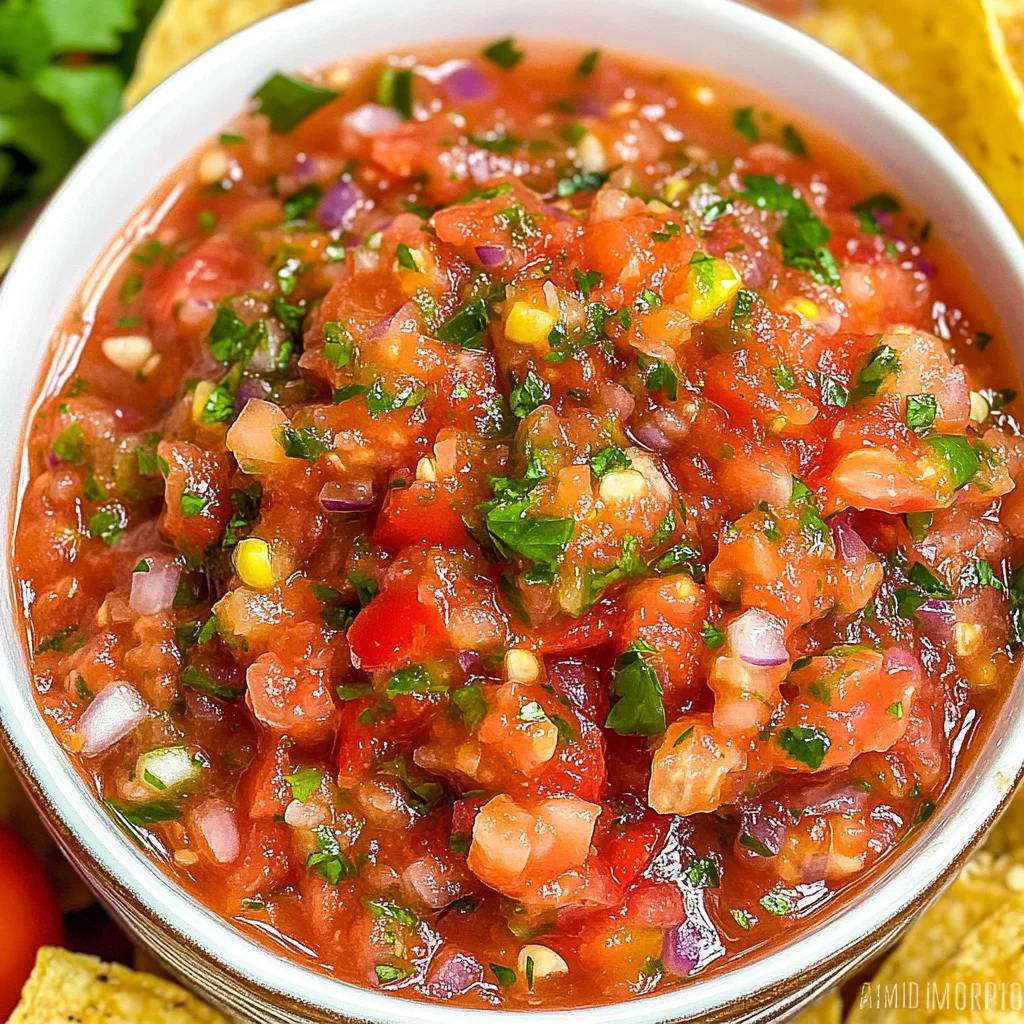
Nothing beats the vibrant, fresh flavor of a Homemade Salsa Recipe with Fresh Tomatoes. This version, perfected through countless summer batches, delivers a bright, chunky texture and a perfect balance of heat and acidity. I’ve found that using peak-season tomatoes and a quick pulse in the food processor creates a salsa that’s far superior to any store-bought jar, making it the ultimate crowd-pleasing dip or taco topping.
Ingredients
The magic of this fresh tomato salsa lies in the quality of its components. Seek out ripe, in-season tomatoes for the sweetest base and use fresh lime juice rather than bottled for a brighter, more authentic tang.
- 4 medium Tomatoes (halved)
- 1 small Onion (cut into large chunks)
- 1 cup Fresh cilantro
- 1 medium Jalapeno (seeds removed and coarsely chopped)
- 3 cloves Garlic (coarsely chopped)
- 1 tbsp Lime juice
- 1/4 tsp Sea salt
Timing
| Prep Time | 15 minutes |
| Cook Time | 0 minutes |
| Total Time | 15 minutes |
Context: This recipe is about 50% faster than traditional cooked salsas, requiring no simmering time. It’s the perfect make-ahead appetizer for gatherings, as the flavors meld and intensify beautifully when chilled for an hour before serving.
Step-by-Step Instructions
Step 1 — Prepare Your Vegetables
Begin by washing and halving your tomatoes. Roughly chop the onion into large chunks, and coarsely chop the jalapeño and garlic cloves. Removing the jalapeño seeds is key for a milder heat; for a spicier salsa, leave some or all of the seeds in. (Pro tip: Wearing gloves while handling hot peppers prevents skin irritation.)
Step 2 — Pulse the Aromatics
Add the onion chunks, chopped jalapeño, and garlic to the bowl of a food processor. Pulse 4-5 times until they are finely chopped but not pureed. This method, known as pulsing, creates an even texture without over-processing any single ingredient.
Step 3 — Add Tomatoes and Cilantro
Add the halved tomatoes and fresh cilantro to the food processor. In my tests, adding the cilantro stems along with the leaves provides a more robust herbal flavor without any bitterness.
Step 4 — Process to Desired Consistency
Pulse the mixture 6-8 times. The goal is a chunky, rustic texture. Unlike blending, which can create a watery puree, pulsing gives you control. Stop and check the consistency frequently to avoid over-processing.
Step 5 — Season the Salsa
Transfer the mixture to a medium bowl. Stir in the fresh lime juice and sea salt. The acid from the lime juice not only adds flavor but also helps preserve the bright color of the tomatoes and cilantro.
Step 6 — Rest and Serve
For the best flavor, let your homemade salsa recipe with fresh tomatoes rest in the refrigerator for at least 30 minutes. This resting period allows the salt to draw out the vegetables’ natural juices and lets the flavors marry, resulting in a more cohesive and delicious dip.
Nutritional Information
| Calories | 25 |
| Protein | 1g |
| Carbohydrates | 5g |
| Fat | 0g |
| Fiber | 1g |
| Sodium | 75mg |
This fresh tomato salsa is a low-calorie, fat-free source of Vitamin C and antioxidants. The sodium content is based on the listed sea salt; for a low-sodium version, reduce or omit it. Note: Estimates are based on typical ingredients and a 1/4-cup serving. Values may vary.
Healthier Alternatives
- Use Cherry Tomatoes — For a sweeter, more concentrated flavor year-round, especially when field tomatoes are out of season.
- Swap Jalapeño for Serrano — Offers a sharper, more intense heat, allowing you to use less for the same kick.
- Add Black Beans or Corn — Boosts fiber and protein, transforming the dip into a more substantial salad or side.
- Reduce Sodium — Start with half the salt and add more to taste; the fresh vegetables provide plenty of flavor on their own.
- Incorporate Mango or Peach — Adds natural sweetness and vitamins for a tropical fruit salsa variation.
- Use Red Onion Instead of White — Provides a milder, slightly sweeter flavor and contains more antioxidants.
Serving Suggestions
- As a vibrant topping for grilled chicken, fish tacos, or breakfast eggs.
- Scooped with sturdy tortilla chips, plantain chips, or endive leaves for a low-carb option.
- Stirred into cooked quinoa or black beans for an instant, flavorful side dish.
- Served alongside a creamy dip like guacamole for a perfect party platter contrast.
- As a fresh relish for burgers, hot dogs, or grilled sausages at summer barbecues.
- Paired with a crisp, cold Mexican lager or a citrus-forward sparkling water.
This homemade salsa recipe with fresh tomatoes is incredibly versatile. I often double the batch for meal prep; it stays fresh for days and can elevate simple weekday meals.
Common Mistakes to Avoid
- Mistake: Using a blender instead of pulsing in a food processor. Fix: Blenders create a watery puree. Use the pulse function for a perfect chunky texture.
- Mistake: Skipping the resting time after Step 6. Fix: The 30-minute chill allows flavors to meld and the salt to draw out juices, creating a more cohesive salsa.
- Mistake: Adding the lime juice to the food processor. Fix: Stir it in by hand afterward to preserve its bright, fresh acidity.
- Mistake: Using under-ripe or refrigerated tomatoes. Fix: Always use room-temperature, ripe tomatoes for peak sweetness and minimal wateriness.
- Mistake: Overcrowding the food processor bowl. Fix: Process in two batches if needed to ensure even, controlled chopping.
- Mistake: Not tasting and adjusting seasoning before serving. Fix: Always do a final taste test and adjust salt, lime, or heat to your preference.
Storing Tips
- Fridge: Store in an airtight container for up to 5 days. In my tests, the flavor peaks at 24 hours.
- Freezer: Freeze in portion-sized containers for up to 3 months. Note: texture will soften upon thawing, making it ideal for cooked dishes.
- Reheat: This fresh salsa is meant to be served cold. If using thawed frozen salsa in a cooked recipe, add it at the end of cooking and just warm through.
For food safety, always use clean utensils to scoop from the container and keep it refrigerated below 40°F. Making a big batch of this fresh tomato salsa is a fantastic weekend prep for easy, healthy snacks all week.
Conclusion
This Homemade Salsa Recipe with Fresh Tomatoes is your secret weapon for effortless entertaining and quick, healthy meals. Its fresh, customizable nature makes it a staple you’ll return to all season long. For another vibrant tomato-based dish, try this Italian Tomato Salad Recipe. Give this salsa a try and share your favorite way to serve it in the comments!
Frequently Asked Questions
How many servings does this fresh tomato salsa recipe make?
This recipe yields approximately 2 to 2.5 cups, which is perfect for 4-6 people as a dip. According to standard serving sizes for condiments, a 1/4-cup portion is typical. If you’re serving it as a primary topping for a taco bar or a larger gathering, I recommend doubling the batch.
Can I make this salsa without cilantro?
Absolutely. If you dislike cilantro, fresh parsley or a combination of fresh basil and a pinch of oregano are excellent substitutes. Parsley provides a similar fresh, green note without the distinctive cilantro flavor, while basil offers a sweet, aromatic twist that pairs wonderfully with tomatoes.
Why did my homemade salsa turn out watery?
This usually happens from over-processing the tomatoes or using tomatoes that are too ripe or refrigerated. The solution is to pulse the ingredients briefly and to use room-temperature, firm-ripe tomatoes. For a quick fix, drain the excess liquid with a fine-mesh strainer before serving.
PrintFresh Salsa Recipe (5 Minutes)
Ingredients
- 4 medium Tomatoes ((halved))
- 1 small Onion ((cut into large chunks))
- 1 cup Fresh cilantro
- 1 medium Jalapeno ((seeds removed and coarsely chopped))
- 3 cloves Garlic ((coarsely chopped))
- 1 tbsp Lime juice
- 1/4 tsp Sea salt
Instructions
- Combine all the ingredients in a food processor.
- Pulse until the salsa reaches your desired consistency. (Check for salt a few pulses before your desired consistency, so that the homemade salsa doesn't get too mushy if you need to adjust salt and pulse again.)