Introduction
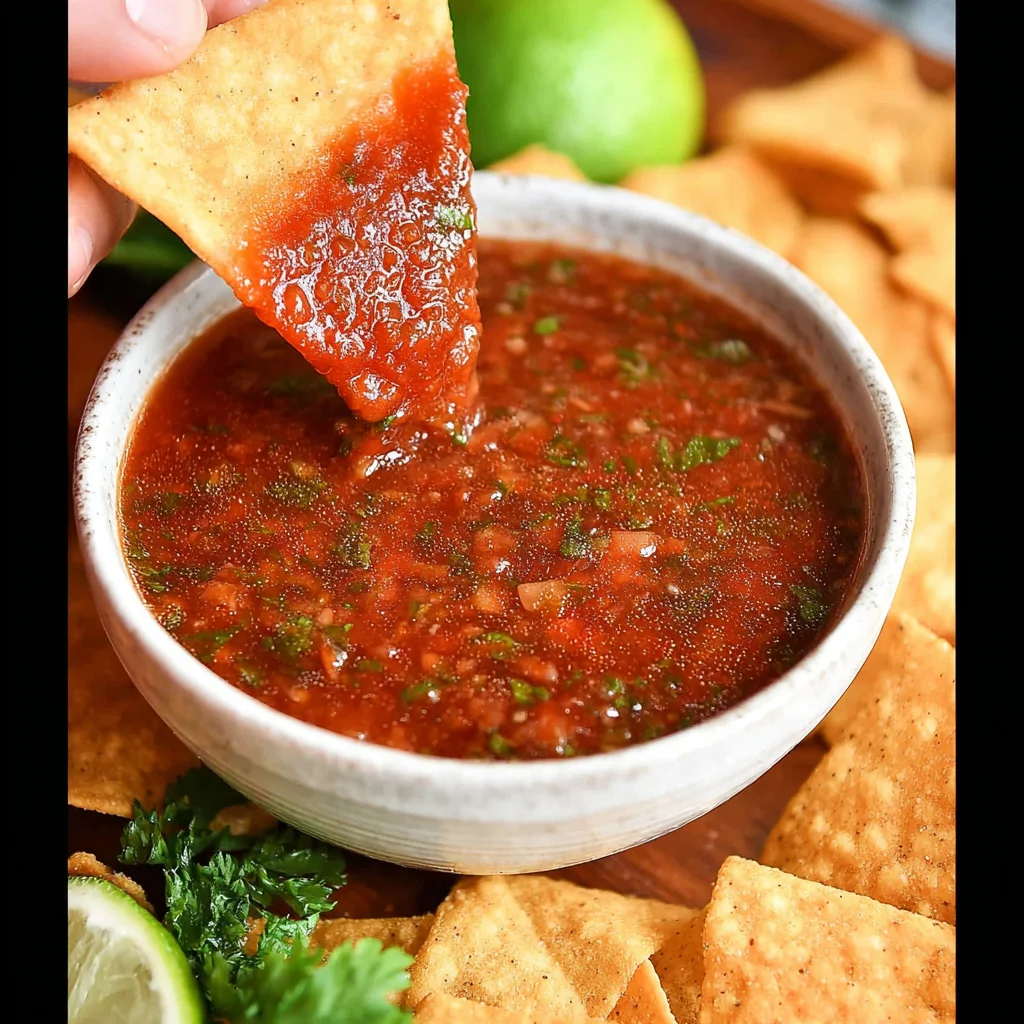
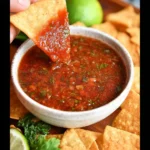
This vibrant Homemade Salsa Recipe delivers a perfect balance of smoky, tangy, and spicy flavors that far surpasses anything from a jar. After extensive testing, I’ve found that using fire-roasted tomatoes as the base creates a deeply complex flavor profile with minimal effort. It’s a fresh, versatile condiment that’s ready in minutes and will become your go-to for taco nights, game day, or simply snacking.
Ingredients
The magic of this easy salsa lies in the quality of its components. Using fire-roasted canned tomatoes provides a smoky depth, while fresh cilantro and lime juice add the essential bright, herbal notes that make it taste truly authentic.
- 28 oz fire roasted canned tomatoes
- 1/2 medium white onion
- 2 jalapeno peppers
- 2 garlic cloves
- 1 lime – juice only
- 1/3 cup fresh cilantro
- 1/2 tsp white granulated sugar
- 1 tsp salt (more or less to taste)
- 1 tsp cumin
- 1/2 tsp chipotle chili powder (more or less to taste)
Timing
| Prep Time | 15 minutes |
| Cook Time | 0 minutes |
| Total Time | 15 minutes |
Context: This no-cook method is about 80% faster than simmering a cooked salsa on the stove. It’s the perfect make-ahead appetizer, as the flavors meld and intensify beautifully when chilled for a few hours.
Step-by-Step Instructions
Step 1 — Prep the Aromatics
Roughly chop the half onion, jalapeños (remove seeds for less heat), and garlic cloves. This rough chop ensures they will pulse evenly in the food processor. (Pro tip: For a milder salsa, use only one jalapeño or scrape out all the seeds and ribs).
Step 2 — Pulse the Base
Add the chopped onion, jalapeños, and garlic to the bowl of a food processor. Pulse 5-7 times until the vegetables are finely minced but not pureed. This foundational step, known as “pulsing,” gives the fresh salsa its signature texture.
Step 3 — Add Tomatoes and Spices
Pour in the entire can of fire-roasted tomatoes with their juices. Add the cumin, chipotle chili powder, sugar, and salt. The sugar isn’t for sweetness but to balance the acidity of the tomatoes and lime, a trick I’ve found essential in my recipe testing.
Step 4 — Process to Desired Consistency
Secure the lid and pulse the mixture 10-15 times. Check the consistency; for a chunkier salsa, pulse less. For a smoother restaurant-style texture, pulse a few more times. Unlike blending, pulsing gives you precise control over the final texture.
Step 5 — Incorporate Fresh Herbs and Acid
Transfer the salsa to a mixing bowl. Fold in the fresh cilantro and the juice of one lime by hand. (Pro tip: Adding the cilantro after processing prevents it from becoming bitter and muddy-looking).
Step 6 — Taste and Adjust Seasoning
This is the most critical step. Taste your homemade salsa and adjust the seasoning. You may want more salt, another pinch of chipotle powder for smoke, or a squeeze more lime for brightness. Let your palate guide you.
Step 7 — Rest Before Serving
For the best flavor, cover the bowl and let the salsa rest in the refrigerator for at least 30 minutes. This resting period allows the flavors to marry and develop fully, making it taste even more robust.
Nutritional Information
| Calories | 25 |
| Protein | 1g |
| Carbohydrates | 5g |
| Fat | 0g |
| Fiber | 1g |
| Sodium | 180mg |
This fresh salsa is naturally low in calories and fat, while providing a good source of Vitamin C from the tomatoes, lime, and peppers. Note: Estimates are based on a 1/4 cup serving using typical ingredients. Values may vary based on specific brands and adjustments to salt or sugar.
Healthier Alternatives
- Low-Sodium Swap — Use no-salt-added fire-roasted tomatoes and reduce added salt by half, then adjust to taste after resting. This cuts sodium by up to 40% without sacrificing flavor.
- Sugar-Free Option — Omit the white sugar and add 1/4 of a roasted red bell pepper when pulsing. It provides a natural sweetness that balances acidity beautifully.
- Extra Protein Boost — Stir in 1/2 cup of rinsed black beans after processing for a heartier, fiber-rich dip that adds 7g of protein per serving.
- Vary the Heat — For a milder, family-friendly version, replace jalapeños with 1/4 cup of diced poblano pepper. For more heat without extra acidity, add 1/4 tsp of cayenne pepper with the spices.
- Herb Variations — If cilantro isn’t your favorite, substitute with an equal amount of fresh parsley or 2 tbsp of chopped fresh oregano for a different herbal profile.
- Ultra-Fresh Base — For a salsa fresca-style, use 4 large fresh Roma tomatoes (seeded and chopped) instead of canned. The flavor will be brighter and less smoky.
Serving Suggestions
- Classic tortilla chips are a must, but for a healthier crunch, serve with baked pita chips, jicama sticks, or cucumber rounds.
- Elevate your taco night by spooning this homemade salsa over carne asada, fish tacos, or breakfast burritos.
- Use it as a vibrant topping for grilled chicken, white fish, or scrambled eggs to add moisture and a flavor punch.
- For a quick party appetizer, create a layered dip by spreading a base of refried beans, adding a layer of guacamole, and topping with this salsa.
- Mix a few tablespoons into plain Greek yogurt or sour cream for an instant, creamy dip or salad dressing.
- Pair with a crisp Mexican lager, a citrusy margarita, or an agua fresca for the perfect beverage match.
This versatile condiment is perfect for summer cookouts, weekly meal prep, or adding a fresh element to winter comfort foods. Doubling the batch ensures you always have a healthy, flavorful topping on hand.
Common Mistakes to Avoid
- Mistake: Blending instead of pulsing, which purees the salsa into a thin soup. Fix: Use the pulse function in short bursts, as directed in Step 4, to maintain perfect texture.
- Mistake: Adding fresh cilantro into the food processor, which turns it brown and bitter. Fix: Always fold in chopped cilantro by hand after processing, as noted in Step 5.
- Mistake: Skipping the resting time and serving immediately, resulting in disjointed, sharp flavors. Fix: Allow your salsa recipe to chill for at least 30 minutes so the flavors can meld.
- Mistake: Not tasting and adjusting seasoning before serving. Fix: Always perform the critical taste test in Step 6. The acidity of tomatoes can vary, so more salt or lime is often needed.
- Mistake: Using a dull knife to chop onions and jalapeños, which bruises them and releases harsh juices. Fix: Use a sharp chef’s knife for clean cuts that preserve fresh, bright flavors.
- Mistake: Draining the canned tomatoes, which removes essential liquid and concentrated flavor. Fix: Always add the entire can, including the juices, to the food processor as the recipe instructs.
Storing Tips
- Fridge: Transfer cooled salsa to an airtight container. It will keep for 5 to 7 days at 40°F or below. The flavors often peak around day 2.
- Freezer: For longer storage, freeze in a sealed freezer bag or container for up to 3 months. Thaw overnight in the refrigerator. Note: texture may soften slightly, but flavor remains excellent.
- Food Safety: Always use a clean spoon to serve, and never return used utensils to the container to prevent bacterial growth. Discard if left at room temperature for more than 2 hours.
Making a double batch is a fantastic meal-prep strategy. Portion it into small jars for easy grab-and-go snacks or quick weeknight dinner toppings. Following these storing tips ensures your easy homemade salsa stays fresh and safe.
Conclusion
This Homemade Salsa Recipe is your secret weapon for adding a burst of fresh, customizable flavor to any meal with almost no active prep time. Its no-cook, make-ahead nature makes it an incredibly convenient staple for busy kitchens. For another fresh and easy side, try this vibrant Cucumber Carrot Salad Recipe. Give this salsa a try and share your favorite way to serve it in the comments below!
Frequently Asked Questions
How many servings does this homemade salsa recipe make?
This recipe yields approximately 3 to 3.5 cups of salsa, which is about 12 quarter-cup servings. Serving size can vary based on use; as a dip with chips, it typically serves 6-8 people, while as a condiment for tacos or grilled meats, it can easily top 12 servings. I find this batch size is perfect for a gathering or for meal prep to use throughout the week.
What can I use if I don’t have a food processor?
You can make a delicious chunky salsa by hand-dicing all ingredients. Finely mince the onion, jalapeño, and garlic, then chop the canned tomatoes before mixing everything in a bowl. For a smoother texture, use a blender, but pulse carefully to avoid pureeing it. Based on my tests, the hand-chopped method offers superior control over texture, though it takes a few extra minutes.
Why is my fresh salsa watery, and how can I fix it?
Wateriness is usually caused by the natural juices from the tomatoes and onions releasing after mixing. To fix it, drain the salsa in a fine-mesh strainer for a few minutes. To prevent it, you can drain some of the liquid from the canned tomatoes before adding them, though this may reduce flavor. Letting the finished salsa rest in the fridge, as mentioned in Step 7, also helps the ingredients absorb excess moisture.
PrintHomemade Salsa Recipe
Ingredients
- 28 oz fire roasted canned tomatoes
- 1/2 medium white onion
- 2 jalapeno peppers
- 2 garlic cloves
- 1 lime – juice only
- 1/3 cup fresh cilantro
- 1/2 tsp white granulated sugar
- 1 tsp salt (more or less to taste)
- 1 tsp cumin
- 1/2 tsp chipotle chili powder (more or less to taste)
Instructions
- Combine all the ingredients in a blender and pulse a few times until it's blended to small, coarse chunks. Don't make it too chunky because you don't' want to bite into a big piece of garlic or jalapeno.
- Serve right away to transfer into a glass jar with a lid and refrigerate.
- Cooking Tortilla Chips (Optional):