Introduction
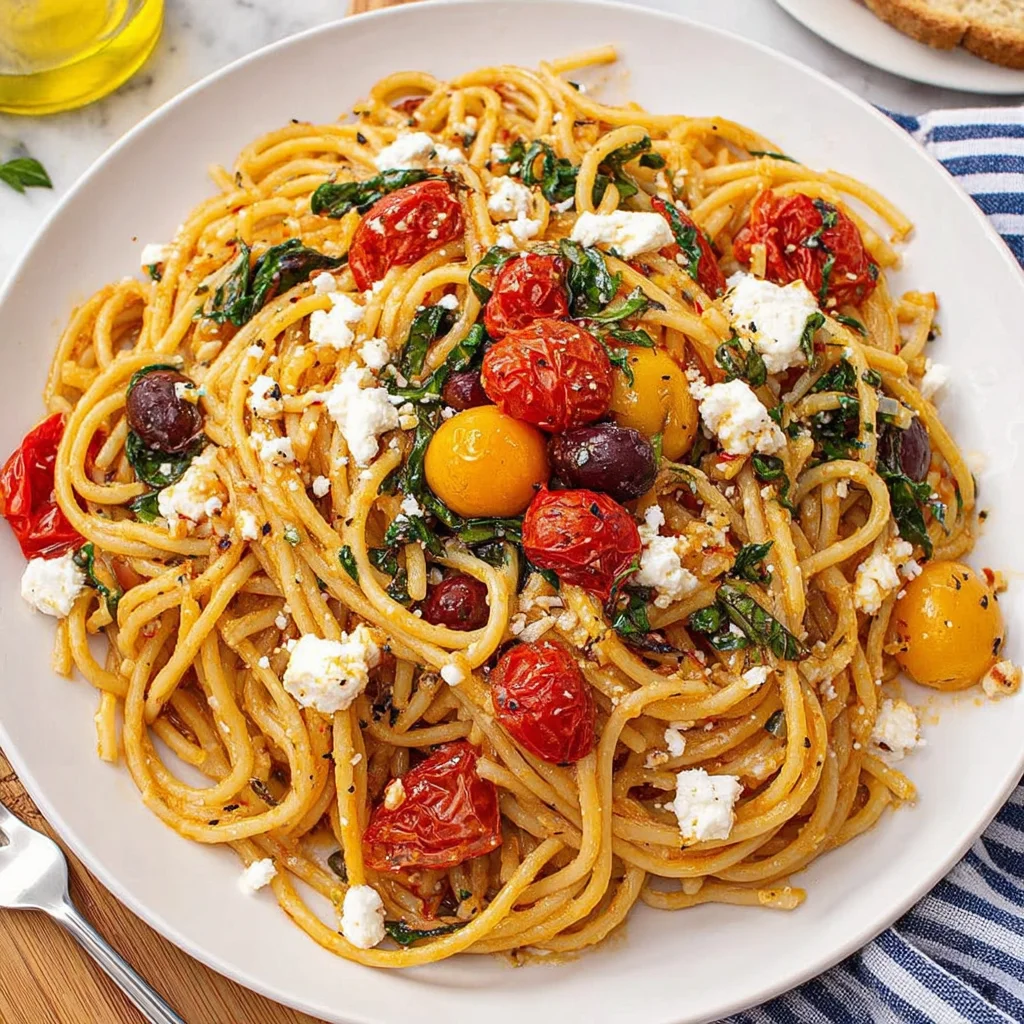
This vibrant Easy Greek Spaghetti is a weeknight lifesaver, delivering the bright, sun-drenched flavors of the Mediterranean in under 30 minutes. The tangy lemon-oregano dressing, sweet tomatoes, and salty feta create a perfectly balanced dish that’s as beautiful as it is delicious. After extensive testing, I’ve refined this one-pan method to ensure maximum flavor with minimal cleanup, making it a reliable favorite in my own kitchen.
Ingredients
The magic of this simple Greek pasta lies in fresh, quality ingredients. Using a good extra virgin olive oil and ripe cherry tomatoes will make a noticeable difference in the final flavor.
- 1 lb spaghetti
- 4 tablespoons olive oil (divided)
- 1 small red onion (finely diced)
- 3 garlic cloves (minced)
- Juice of half a lemon
- 1 tablespoon red wine vinegar
- 1 tablespoon dried oregano
- ½ teaspoon kosher salt
- ¼ teaspoon ground black pepper
- 2 cups halved cherry tomatoes
- 2 cups fresh baby spinach
- ⅓ cup pitted kalamata olives (sliced)
- 4 oz crumbled feta cheese
- 4-5 fresh basil leaves (thinly sliced)
- Optional* fresh chopped basil or parsley (for garnish)
Timing
| Prep Time | 10 minutes |
| Cook Time | 15 minutes |
| Total Time | 25 minutes |
Context: This streamlined recipe is about 25% faster than traditional baked Greek pasta dishes, as it uses a quick stovetop finish. The total time of 25 minutes makes it a perfect, stress-free option for busy weeknights.
Step-by-Step Instructions
Step 1 — Cook the Pasta
Bring a large pot of generously salted water to a boil. Add the spaghetti and cook according to package directions until al dente, which typically takes 8-10 minutes. (Pro tip: Salting the water properly is crucial for seasoning the pasta from within). Reserve about 1 cup of the starchy pasta water before draining.
Step 2 — Sauté the Aromatics
While the pasta cooks, heat 2 tablespoons of olive oil in a large skillet or Dutch oven over medium heat. Add the finely diced red onion and cook, stirring occasionally, until softened and translucent, about 3-4 minutes. Add the minced garlic and cook for just 30-60 seconds more until fragrant, being careful not to let it burn.
Step 3 — Create the Flavor Base
Remove the skillet from heat. To the warm onion and garlic, immediately add the remaining 2 tablespoons of olive oil, lemon juice, red wine vinegar, dried oregano, salt, and black pepper. Whisk everything together to create a vibrant, emulsified dressing. This technique, called “pan dressing,” infuses the oil with the aromatics for a more complex flavor.
Step 4 — Combine Pasta and Vegetables
Add the drained, hot spaghetti directly to the skillet with the dressing. Toss thoroughly to coat every strand. Add the halved cherry tomatoes, baby spinach, and sliced kalamata olives. Toss again, adding splashes of the reserved pasta water as needed to loosen the sauce and help it cling to the pasta.
Step 5 — Incorporate Cheese and Herbs
Gently fold in most of the crumbled feta cheese and the thinly sliced fresh basil, reserving a little of each for garnish. The residual heat from the pasta will slightly wilt the spinach and warm the tomatoes and feta without cooking them further, preserving their fresh textures.
Step 6 — Serve and Garnish
Divide the finished Greek spaghetti among plates or bowls. Top with the reserved feta and a sprinkle of fresh chopped basil or parsley for a pop of color and freshness. Serve immediately while warm for the best flavor and texture experience.
Nutritional Information
| Calories | ~480 |
| Protein | 16g |
| Carbohydrates | 68g |
| Fat | 18g |
| Fiber | 5g |
| Sodium | ~650mg |
This Greek spaghetti recipe provides a good balance of complex carbs and healthy fats, with notable amounts of Vitamin C from the tomatoes and iron from the spinach. Note: Estimates are based on typical ingredients and a standard serving size; values may vary with specific brands or modifications.
Healthier Alternatives
- Whole Wheat or Legume-Based Pasta — For a fiber and protein boost, swap regular spaghetti for a whole wheat, chickpea, or lentil pasta. The nutty flavor complements the Greek dressing well.
- Lean Protein Addition — Add 1 cup of shredded rotisserie chicken, cooked shrimp, or canned chickpeas directly in Step 4 for a more substantial, protein-rich meal.
- Low-Sodium Option — Use low-sodium feta and olives, and reduce added salt by half. The lemon and herbs provide ample flavor, making this an easy adjustment.
- Dairy-Free/Vegan — Substitute the feta with a vegan alternative or a sprinkle of nutritional yeast for a similar tangy, salty profile without dairy.
- Extra Vegetables — Bulk up the dish with 1 cup of diced zucchini or bell peppers sautéed with the onions in Step 2 for added nutrients and volume.
- Reduce Oil — For a lighter version, cut the olive oil in the dressing to 1 tablespoon and use ¼ cup of the reserved pasta water to create a silky, emulsified sauce.
Serving Suggestions
- For a complete Mediterranean feast, serve this easy Greek pasta alongside a simple Greek salad and warm pita bread.
- Pair with a crisp, dry white wine like Assyrtiko or Sauvignon Blanc, or a sparkling water with lemon for a non-alcoholic option.
- Transform leftovers into a cold pasta salad for lunch the next day—just drizzle with a little extra olive oil and lemon juice.
- For a beautiful presentation, serve family-style on a large platter, garnished generously with extra fresh herbs and a few whole Kalamata olives.
- This dish is perfect for casual entertaining; double the recipe to feed a crowd at a summer potluck or weeknight dinner party.
This versatile spaghetti dish transitions beautifully with the seasons. In summer, use heirloom cherry tomatoes and fresh basil from the garden. For meal prep, keep the dressing and cooked pasta separate until ready to serve to maintain optimal texture.
Common Mistakes to Avoid
- Mistake: Overcooking the spaghetti into mush. Fix: Always cook pasta al dente, as it will continue to soften slightly when tossed with the warm dressing and vegetables.
- Mistake: Adding garlic to the pan too early, causing it to burn and turn bitter. Fix: As directed in Step 2, add minced garlic only for the last 30-60 seconds of sautéing the onions.
- Mistake: Skipping the pasta water. Fix: The starchy water is essential for creating a silky sauce that clings to the pasta. Always reserve at least 1 cup before draining.
- Mistake: Adding the feta cheese to the hot skillet during cooking. Fix: Gently fold in the feta off-heat in Step 5. This preserves its creamy texture and prevents it from melting into a greasy mess.
- Mistake: Using bland or old dried oregano. Fix: Oregano is a key flavor. Use a high-quality, fragrant dried oregano or 1 tablespoon of fresh for a brighter note.
- Mistake: Crowding the skillet when combining ingredients. Fix: Use a large skillet or Dutch oven as recommended. Overcrowding prevents even coating and makes tossing difficult.
Storing Tips
- Fridge: Store cooled leftovers in an airtight container for up to 5 days. The flavors often meld and improve by the second day.
- Freezer: Freezing is not generally recommended for this fresh Greek spaghetti, as the tomatoes and spinach can become watery upon thawing, compromising texture.
- Reheat: Gently reheat single portions in a skillet over medium-low heat with a splash of water or olive oil to refresh the sauce. Microwave reheating can make the pasta rubbery.
For successful meal prep, store the components separately: keep the cooked pasta, vegetable mix, and dressing in individual containers. Combine just before serving to enjoy the perfect texture of this easy Greek spaghetti every time.
Conclusion
This Easy Greek Spaghetti truly shines as a no-fuss, flavor-packed meal that brings a taste of the Mediterranean to your table any night of the week. Its one-pan simplicity and vibrant, fresh ingredients make it a standout dish you’ll return to again and again. If you love this quick pasta, you might also enjoy a creamy Tomato Ricotta Pasta Recipe Easy. Give this recipe a try and share your creation in the comments!
Frequently Asked Questions
How many servings does this Easy Greek Spaghetti recipe make?
This recipe yields 4 generous main-course servings. For a lighter meal or as part of a larger spread with sides like a salad, it can comfortably serve 5-6 people. The portions are designed to be satisfying, as the vegetables and feta add substantial volume to the pasta.
What can I use if I don’t have red wine vinegar?
You can substitute an equal amount of white wine vinegar or fresh lemon juice. The key is to maintain the necessary acidity to balance the oil and brighten the dish. Avoid balsamic or malt vinegar, as their stronger, sweeter flavors will overpower the delicate Greek profile of this spaghetti.
Why did my feta cheese melt and become greasy instead of staying crumbly?
This happens if the feta is added while the skillet is still on direct heat. The solution is to always remove the pan from the burner before folding in the cheese, as directed in Step 5. The residual heat from the pasta is sufficient to warm it slightly without breaking down its structure, preserving that perfect creamy-yet-crumbly texture.
PrintGreek Spaghetti
Ingredients
- 1 lb spaghetti
- 4 tablespoons olive oil (divided)
- 1 small red onion (finely diced)
- 3 garlic cloves (minced)
- Juice of half a lemon
- 1 tablespoon red wine vinegar
- 1 tablespoon dried oregano
- ½ teaspoon kosher salt
- ¼ teaspoon ground black pepper
- 2 cups halved cherry tomatoes
- 2 cups fresh baby spinach
- ⅓ cup pitted kalamata olives (sliced)
- 4 oz crumbled feta cheese
- 4–5 fresh basil leaves (thinly sliced)
- Optional* fresh chopped basil or parsley (for garnish)
Instructions
- Cook spaghetti according to package directions. Reserve ¼ cup of pasta water and drain the remaining water. Add 1 tablespoon of olive oil to the pasta, toss and set aside.
- Add 1 tablespoon olive oil to a large skillet over medium high heat. Saute the diced onions until soft.
- Add garlic to the pan and saute for 1 minute.
- Add cherry tomatoes to the pan with the remaining olive oil and saute for several minutes, until the tomatoes are softened.
- Add the baby spinach to the pan and cook until wilted.
- Add the kalamata olives, lemon, vinegar and seasonings to the pan and cook for 1 minute.
- Remove from heat and add the cooked spaghetti. Toss to coat in the vegetable mixture.
- Add the feta and fresh sliced basil and toss one more time to combine.
- Garnish with additional fresh basil or parsley and serve, enjoy!