Introduction
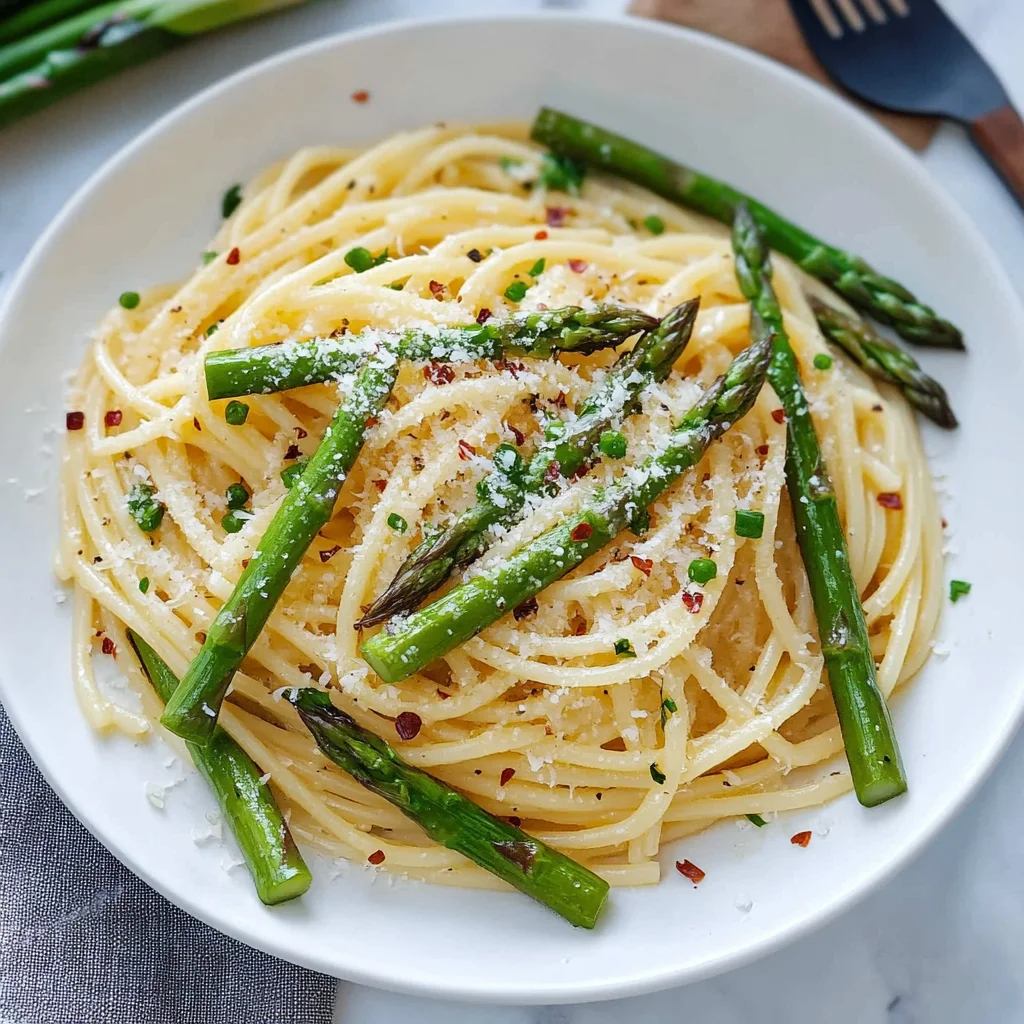
This vibrant Asparagus Pasta is a celebration of spring, where tender-crisp spears meet silky, garlic-infused olive oil and a generous snowfall of Parmesan. After testing numerous variations, I’ve perfected this one-pan method that coaxes maximum flavor from simple ingredients, resulting in a restaurant-quality dish ready in under 30 minutes. It’s the ultimate quick, elegant dinner that truly lets the star ingredient shine.
Ingredients
The beauty of this simple pasta dish lies in using fresh, high-quality components. Look for firm, bright green asparagus with tight tips for the best texture and flavor.
- 1 lb asparagus (cut into 1 1/2 inch pieces)
- 1 lb spaghetti pasta (or linguine)
- 1 cup reserved pasta water
- 1/4 cup olive oil
- 4 garlic cloves (minced)
- 1 cup grated Parmesan cheese (plus more for serving)
- 1/4 tsp crushed red pepper flakes
- Salt and pepper to taste
Timing
| Prep Time | 10 minutes |
| Cook Time | 15 minutes |
| Total Time | 25 minutes |
Context: This streamlined Asparagus Pasta recipe is about 25% faster than traditional methods that cook components separately. By sautéing the asparagus directly in the pasta sauce base, you build layers of flavor while the pasta boils, making it a perfect solution for busy weeknights.
Step-by-Step Instructions
Step 1 — Prepare the Pasta Water
Bring a large pot of generously salted water to a rolling boil. Salting the water properly is crucial, as it seasons the pasta from within; aim for water that tastes like the sea. This is your only chance to season the pasta itself.
Step 2 — Cook the Pasta
Add the spaghetti to the boiling water and cook according to package directions for al dente, usually 8-10 minutes. (Pro tip: Setting a timer ensures perfect texture). Just before draining, carefully scoop out 1 cup of the starchy pasta water—this liquid gold is essential for creating a silky, emulsified sauce later.
Step 3 — Sauté Garlic and Red Pepper
While the pasta cooks, heat the olive oil in a large skillet or Dutch oven over medium heat. Add the minced garlic and red pepper flakes. Sautéing, which means cooking quickly in fat over medium-high heat, should take just 1-2 minutes until the garlic is fragrant but not browned to avoid bitterness.
Step 4 — Cook the Asparagus
Add the asparagus pieces to the skillet, season with salt and pepper, and toss to coat in the oil. Cook for 4-5 minutes, stirring occasionally, until the asparagus is tender-crisp and bright green. Unlike boiling, this quick sauté caramelizes the natural sugars slightly while preserving a pleasant crunch.
Step 5 — Combine Pasta and Sauce
Add the drained al dente pasta directly to the skillet with the asparagus. Pour in about 1/2 cup of the reserved pasta water. Using tongs, toss everything vigorously. The starch in the water will help the sauce cling to each strand of pasta.
Step 6 — Emulsify with Cheese
Remove the skillet from heat. Sprinkle the grated Parmesan cheese over the pasta. Continue tossing until the cheese melts into the liquid, creating a creamy, cohesive sauce that coats everything evenly. If the sauce seems too thick, add more pasta water a tablespoon at a time.
Step 7 — Final Seasoning and Serve
Taste and adjust seasoning with additional salt, pepper, or red pepper flakes as desired. In my tests, finishing with a final drizzle of extra virgin olive oil adds a lovely richness. Serve immediately with extra Parmesan cheese on the side for those who want it.
Nutritional Information
| Calories | ~450 kcal |
| Protein | ~18 g |
| Carbohydrates | ~65 g |
| Fat | ~15 g |
| Fiber | ~5 g |
| Sodium | ~450 mg |
This asparagus pasta dish is a good source of Vitamin K, folate, and antioxidants from the fresh asparagus. Estimates are based on typical ingredients and a single serving size; values may vary with specific brands or modifications.
Healthier Alternatives
- Whole Wheat or Legume Pasta — Boosts fiber and protein content for a more filling meal.
- Spiralized Zucchini or Hearts of Palm Noodles — Creates a delicious low-carb, gluten-free version.
- Nutritional Yeast or Vegan Parmesan — Offers a dairy-free, cheesy flavor with added B vitamins.
- Lean Protein Addition — Toss in grilled shrimp, chicken, or white beans for a more substantial, protein-packed dinner.
- Reduce Sodium — Use low-sodium broth to thin the sauce instead of some pasta water, and adjust salt at the table.
- Boost Greens — Stir in a handful of fresh spinach or arugula at the end for extra nutrients and color.
Serving Suggestions
- Pair with a simple arugula salad dressed with lemon vinaigrette to complement the garlicky pasta.
- For a protein boost, top with a soft-poached or fried egg, letting the yolk enrich the sauce.
- Serve family-style on a large platter for a casual spring gathering or date night at home.
- Drizzle with a high-quality finishing olive oil and a squeeze of fresh lemon juice just before serving for brightness.
- Excellent with a crisp white wine like Sauvignon Blanc or Pinot Grigio, or sparkling water with citrus.
- Garnish with toasted pine nuts or slivered almonds for a delightful crunch.
This versatile dish transitions beautifully from a quick weeknight meal to an elegant seasonal centerpiece. It also holds up well for next-day lunches when packed with a little extra sauce.
Common Mistakes to Avoid
- Mistake: Overcooking the asparagus until it’s mushy and dull. Fix: In Step 4, aim for tender-crisp texture and vibrant green color; it will continue to cook slightly when combined with the hot pasta.
- Mistake: Adding cheese directly to high heat, causing it to clump. Fix: Always remove the skillet from heat (as in Step 6) before adding Parmesan to allow it to melt smoothly into the residual warmth.
- Mistake: Using cold, freshly grated cheese from the fridge. Fix: Let grated cheese sit at room temperature while you cook to help it incorporate more easily.
- Mistake: Not reserving pasta water, resulting in a dry, sticky dish. Fix: Make scooping that starchy cup of water a non-negotiable part of Step 2; it’s the key to a silky sauce.
- Mistake: Crowding the pan when sautéing asparagus. Fix: Use a large enough skillet so pieces have space to sear slightly rather than steam, which concentrates flavor.
- Mistake: Underseasoning the pasta water. Fix: Salt the boiling water generously until it tastes like mild seawater—this seasons the pasta from the inside out.
Storing Tips
- Fridge: Cool completely and store in an airtight container for up to 4 days. The sauce may thicken; revive it with a splash of water or broth when reheating.
- Freezer: While possible, freezing is not ideal for this creamy asparagus pasta as the dairy can separate and the asparagus may become soft. If necessary, freeze for up to 2 months and expect a texture change.
- Reheat: Gently warm in a skillet over medium-low heat with a tablespoon or two of water, broth, or milk, stirring frequently until heated to 165°F. The microwave can work but may overcook the asparagus.
For best quality, enjoy this pasta fresh. If meal prepping, store components separately: keep the cooked pasta, sautéed asparagus, and sauce base divided, combining them with a little fresh pasta water when ready to eat.
Conclusion
This Asparagus Pasta proves that a truly impressive meal doesn’t require hours in the kitchen. Its genius lies in the one-pan technique that builds a rich, cohesive sauce while keeping cleanup minimal. For another elegant way to enjoy this spring vegetable, try the Asparagus Gruyere Tart Recipe. Give this recipe a try and share your creation in the comments below!
Frequently Asked Questions
How many servings does this asparagus pasta recipe make?
This recipe yields approximately 4 main-course servings. For heartier appetites or as a side dish, it can serve up to 6 people. The serving count is based on using one pound each of pasta and asparagus, which is the standard for a balanced dish where the vegetable is a co-star, not just a garnish.
What can I use instead of Parmesan cheese in this pasta?
Pecorino Romano offers a sharper, saltier flavor that pairs wonderfully with the asparagus. For a creamier, milder result, try Asiago or Fontina. If you need a dairy-free option, a tablespoon of white miso paste stirred into the pasta water adds a deep, savory umami that mimics cheese’s complexity.
Why did my asparagus pasta sauce turn out oily and separated?
This usually happens if the skillet is too hot when you add the cheese or if you don’t use enough starchy pasta water to emulsify. The solution is to always remove the pan from heat before adding Parmesan and to toss vigorously with the reserved water. The starch binds the oil and cheese into a smooth, creamy sauce.
PrintAsparagus Pasta
Ingredients
- 1 lb asparagus (cut into 1 1/2 inch pieces)
- 1 lb spaghetti pasta
- 1 cup reserved pasta water
- 1/4 cup olive oil
- 4 garlic cloves (minced)
- 1 cup grated Parmesan cheese
- 1/4 tsp crushed red pepper flakes
- Salt and pepper to taste
Instructions
- Wash and trim the ends of your asparagus. Then cut them into 1 1/2 inch pieces.
- Bring a pot of salted water to a boil and cook 1 lb of spaghetti al dente. Note: Don’t drain the pasta water since you will need it later. When there is about 1-2 minutes left before the pasta is done, throw in the asparagus (just to blanch it). Don’t let the asparagus sit in the boiling water longer than 3 minutes or it will overcook.
- Then remove the asparagus using a large slotted spoon.
- Now bring a large skillet over medium heat and add in 1/4 cup olive oil and 4 minced garlic cloves. Cook the garlic for about 1 minute, then stir in the blanched asparagus.
- Then use tongs to transfer the cooked spaghetti right into the pan, try to keep the pasta moving. Then fill a measuring cup with 1 cup of the pasta water and slowly pour it over the pasta in the pan.
- Then stir in 1 cup of grated Parmesan cheese, 1/4 tsp crushed red pepper flakes, and Salt and pepper to taste. Enjoy!